Smile in a Day — also known as same-day implants or teeth-in-a-day — is a procedure that replaces a full arch of missing or failing teeth with fixed, non-removable teeth in a single appointment. Instead of months with dentures or gaps, you walk out of the clinic with a functioning smile on the day of surgery. This guide explains how the procedure works, what it costs and who it is suitable for.
How Smile in a Day Works
The concept is based on the All-on-4 or All-on-6 implant protocol. Four to six dental implants are strategically placed in the jawbone, and a fixed temporary bridge is attached to these implants on the same day. The posterior implants are typically angled at 30-45 degrees to maximise contact with available bone, often eliminating the need for bone grafting.
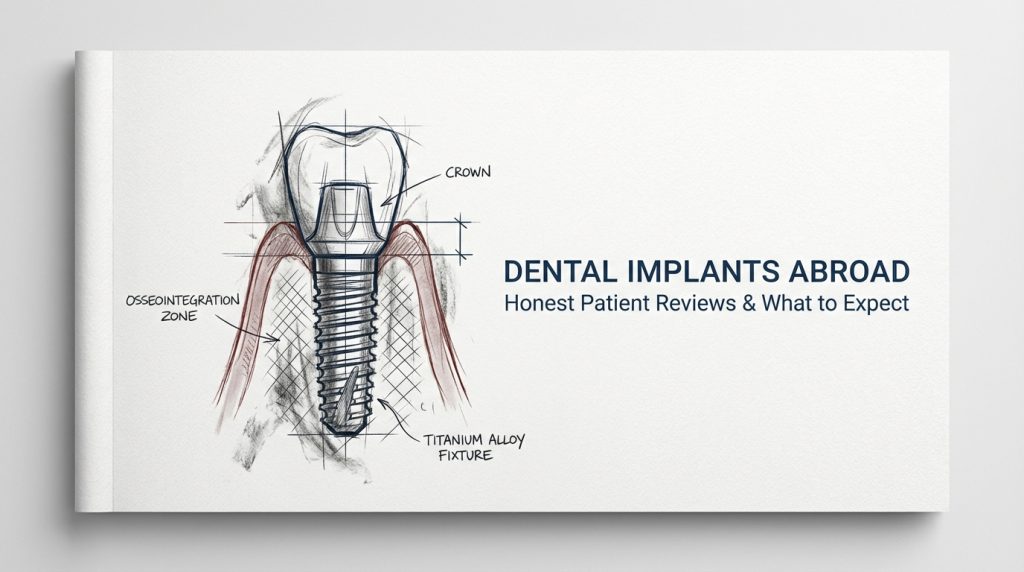
The temporary bridge is a fully functional set of teeth — you can eat soft foods, speak normally and smile with confidence from day one. After a healing period of 4-6 months, during which the implants integrate with your jawbone (osseointegration), you return for a permanent bridge made from high-strength materials like zirconia or porcelain-fused-to-metal.
What Does Smile in a Day Cost?
In the UK, a Smile in a Day procedure costs £10,000-20,000 per arch depending on the clinic and materials. In Turkey, the same procedure costs £3,000-6,000 per arch including the temporary bridge. The permanent bridge fitted on the return visit adds approximately £1,000-2,500 depending on the material chosen.
For both arches (upper and lower), UK patients face bills of £20,000-40,000 versus £7,000-15,000 in Turkey. Even including two return flights and accommodation, the savings are substantial. The procedure uses the same implant brands and bridge materials regardless of location — the Nobel Biocare All-on-4 protocol used in Turkey is identical to that used in UK clinics.
The Treatment Timeline
Before your trip: A virtual consultation with your chosen clinic, sharing X-rays and CBCT scans for initial assessment. The clinic confirms your suitability and provides a treatment plan with pricing.
Day 1: In-person examination, final CBCT scan and treatment planning. Shade selection and bite registration for the temporary bridge. Day 2: Surgery day — implants are placed under local anaesthetic (IV sedation available). Impressions are taken and sent to the laboratory. Day 3: The temporary fixed bridge is fitted to the implants. Bite adjustment and aftercare instructions. Days 4-7: Recovery and follow-up appointments before flying home.
4-6 months later: Return visit (3-5 days) for the permanent bridge. New impressions, try-in and final fitting of the definitive prosthesis.
Who Is a Good Candidate?
Smile in a Day suits patients with multiple missing teeth, failing teeth or loose dentures who want a fixed, permanent solution. Good candidates have sufficient jawbone density for implant placement (assessed via CBCT scan), are in reasonable general health, and are committed to maintaining oral hygiene around the implants long-term.
The procedure is not suitable for patients with uncontrolled diabetes, active gum disease that has not been treated, heavy smokers unwilling to quit, or patients with insufficient bone density who are not candidates for the angled implant approach. In some cases, bone grafting can make patients eligible, but this adds time and usually means the same-day loading is not possible. The Association of Dental Implantology provides guidance on patient selection criteria for immediate-load protocols.
Smile in a Day vs Traditional Implants
Traditional implant treatment involves placing implants, waiting 3-6 months for healing, then fitting the prosthesis — meaning months with gaps or removable dentures. Smile in a Day eliminates the edentulous period entirely. You are never without teeth.
The trade-off is that same-day protocols require higher primary stability at placement (minimum 35 Ncm insertion torque). If the surgeon cannot achieve this — due to bone quality or other factors — they should switch to the conventional delayed-loading approach rather than risk overloading an unstable implant. A responsible clinic will have this contingency plan in place.
Aftercare and Long-Term Maintenance
The temporary bridge requires a soft food diet for 6-8 weeks while the implants integrate. Avoid hard, crunchy or chewy foods during this period. Oral hygiene around the bridge is essential — use a water flosser and interdental brushes to clean under and around the prosthesis daily.
Once the permanent bridge is fitted, maintenance involves regular brushing, water flossing, and professional cleaning every 4-6 months. With proper care, a Smile in a Day restoration can last 15-20 years or longer. The implants themselves can last a lifetime — it is the prosthetic bridge that may eventually need replacing.
Smile in a Day is one of the most transformative procedures in modern dentistry. For patients who have suffered with missing teeth or uncomfortable dentures, it delivers a life-changing result — and Turkey makes it accessible at a price that most UK patients can realistically afford.