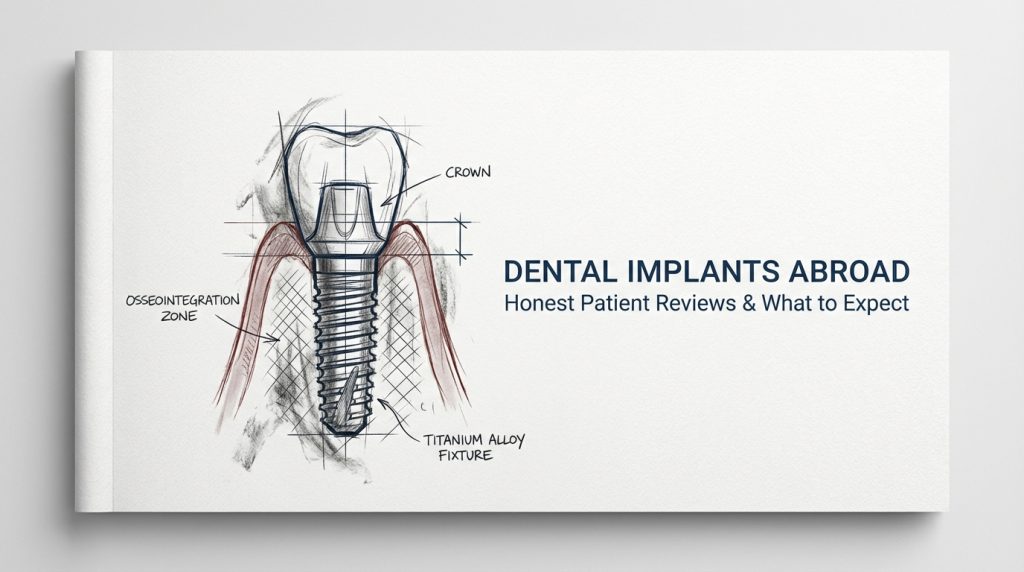
Every year, thousands of UK patients travel abroad for dental treatment. The motivation is simple: savings of 50-70% compared to UK private prices, often for identical materials and procedures. But how do you ensure quality when choosing a dentist in another country? This guide covers the practicalities, risks and rewards of getting dental care abroad.
Why Dental Care Costs Less Abroad
The price difference is not about cutting corners. Dental clinics in countries like Turkey, Hungary and Poland benefit from lower operating costs — cheaper rent, lower staff salaries and reduced regulatory overhead. Many also operate at higher volumes than UK practices, spreading fixed costs across more patients. The dental materials and implant brands used are often identical to those in UK clinics, sourced from the same international manufacturers.
A dental implant with crown costs £2,000-3,500 in the UK versus £400-700 in Turkey. Porcelain veneers run £500-1,000 per tooth in the UK compared to £150-300 in Turkey. Even including flights and accommodation, patients typically save 40-60% on their total dental bill.
Most Popular Destinations for UK Patients
Turkey is the leading destination, particularly Istanbul and Antalya. Turkish clinics excel in cosmetic dentistry — veneers, smile makeovers and Hollywood smiles — and offer competitive implant pricing. All-inclusive packages with transfers and accommodation are widely available. Hungary, especially Budapest, has three decades of dental tourism heritage and is particularly strong in implantology. Poland offers EU consumer protections with short flights from the UK.
Each destination has its strengths. Turkey offers the lowest prices and the most developed package model. Hungary provides established expertise with EU regulatory oversight. Poland combines proximity with quality. The right choice depends on your specific treatment needs, budget and travel preferences.
How to Choose a Clinic Abroad
Start by getting a UK dental assessment with current X-rays. Send these to at least three overseas clinics for treatment plans and quotes. Compare not just price but the detail of each plan: what procedures are proposed, what materials and brands will be used, and what is included in the quoted price.
Evaluate each clinic on: dentist qualifications (check their registration with the relevant national dental body), before-and-after photos of cases similar to yours, independent patient reviews across multiple platforms, the technology and equipment they use, and their communication quality and responsiveness. The General Dental Council recommends researching overseas dental providers with the same diligence you would apply to choosing a UK dentist.
What to Expect During Your Trip
Plan for a stay of 5-7 days for most treatments. Day one typically involves an in-person consultation, scans and finalising the treatment plan. Treatment days follow, with rest days built in for the laboratory to fabricate crowns or veneers. Your final days include fitting appointments and aftercare instructions.
For implant cases requiring osseointegration, you will need two trips: one for implant placement (5-7 days) and a return visit 4-6 months later for the permanent restorations (3-5 days). Some treatments like teeth whitening or composite bonding can be completed in as little as 2-3 days.
Protecting Yourself Financially and Legally
Pay by credit card for purchases over £100 to benefit from Section 75 consumer protection. Get all treatment plans, pricing and guarantees in writing before committing. Consider specialist dental tourism insurance to cover complications and extended stays. Check whether the clinic offers written guarantees on their work — most reputable clinics guarantee implants for 5-10 years and crowns and veneers for 3-5 years.
Keep comprehensive records: treatment plans, invoices, X-rays before and after, photographs, implant passports (if applicable), and all correspondence. These documents are essential if you ever need follow-up care from a UK dentist or need to make a warranty claim.
Arranging UK Aftercare
Before travelling, arrange a UK dentist for ongoing maintenance. You will need check-ups, hygiene appointments and a point of contact for any concerns after returning home. Not all UK dentists accept patients with dental work done abroad, so confirm this in advance. Maintain communication with your overseas clinic throughout healing — good clinics check in regularly and remain available for questions via email or WhatsApp.
Dental care abroad is a well-established, practical option for UK patients priced out of private treatment at home. With thorough research, realistic expectations and proper planning, the experience can deliver exceptional results at a fraction of the cost.