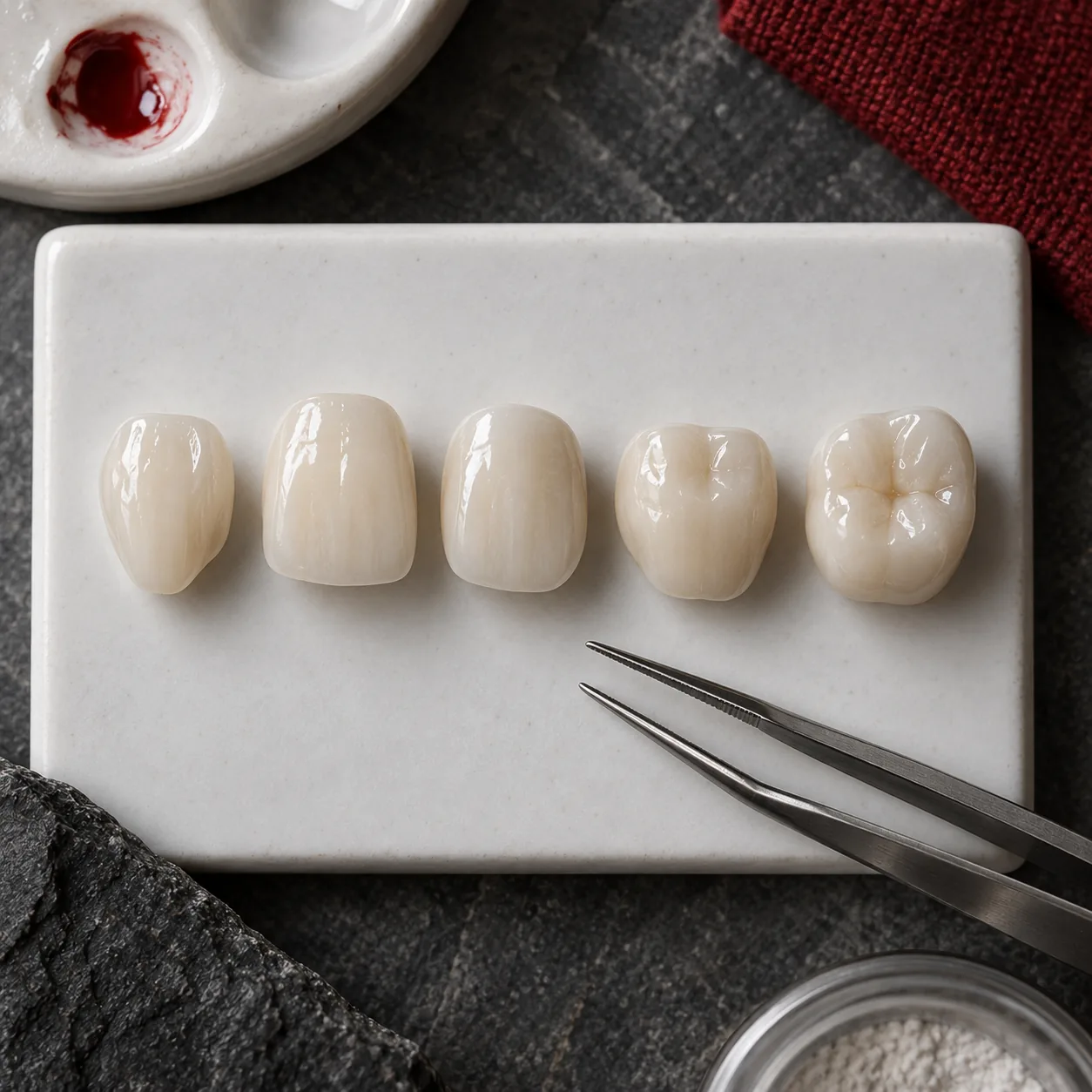
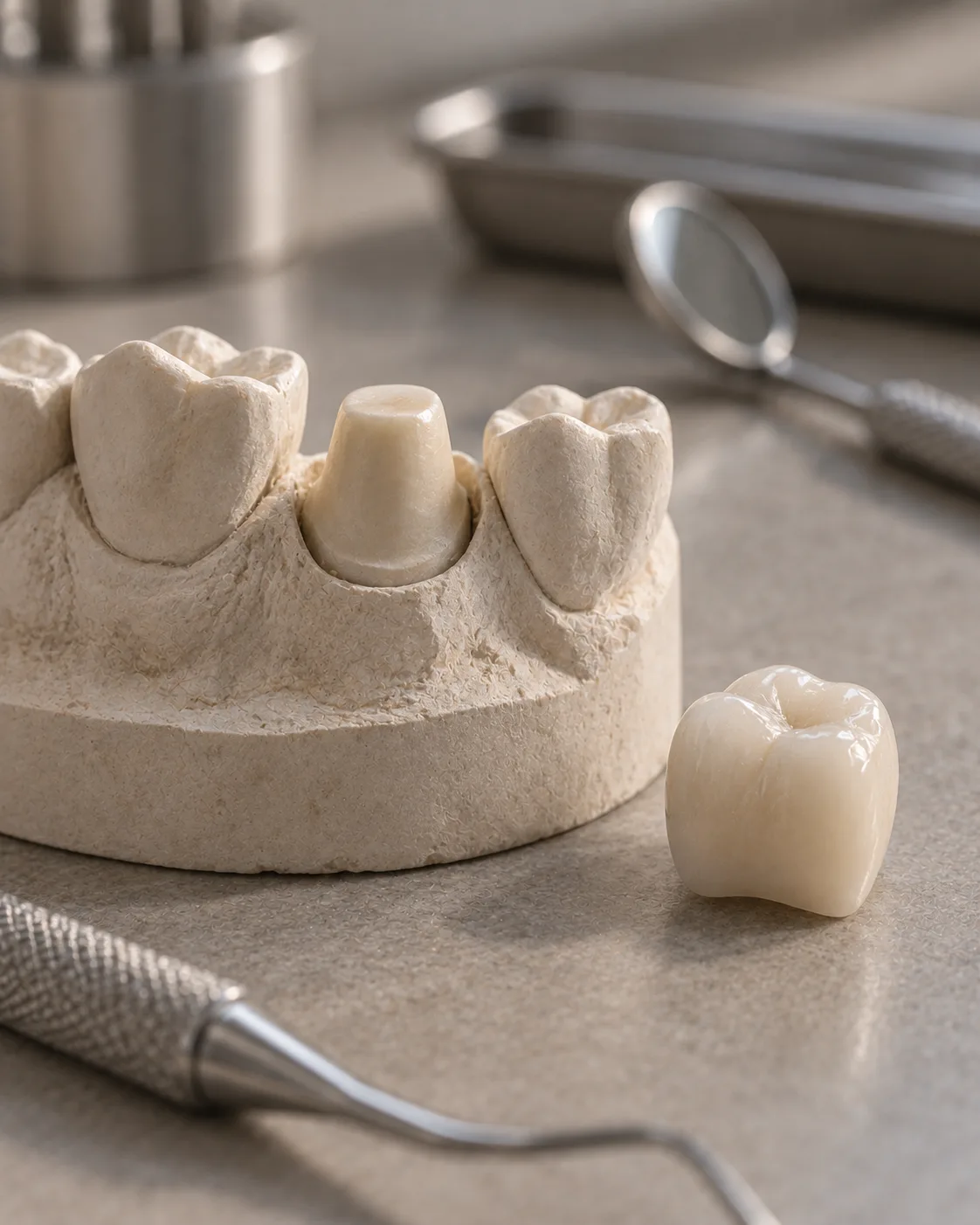
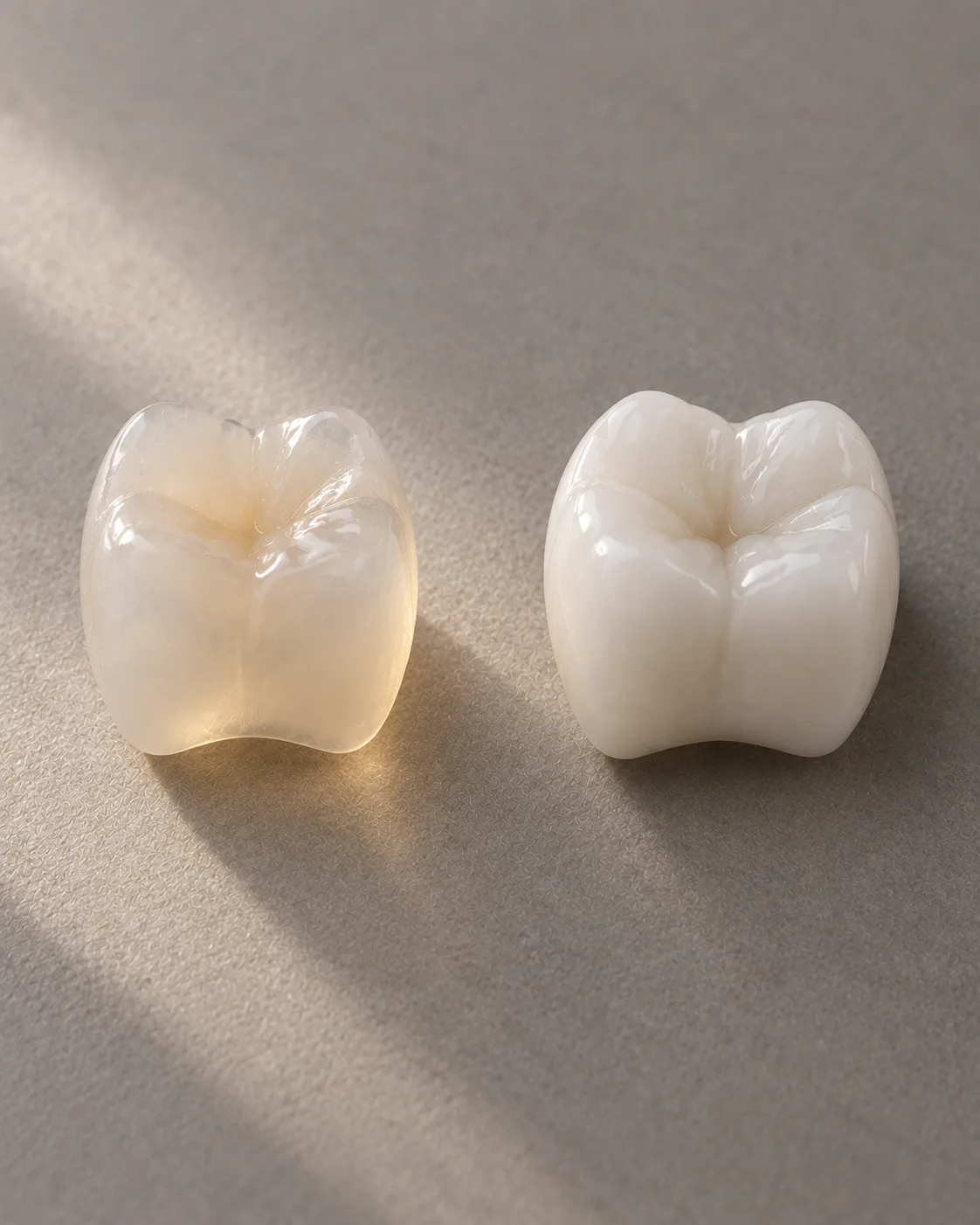
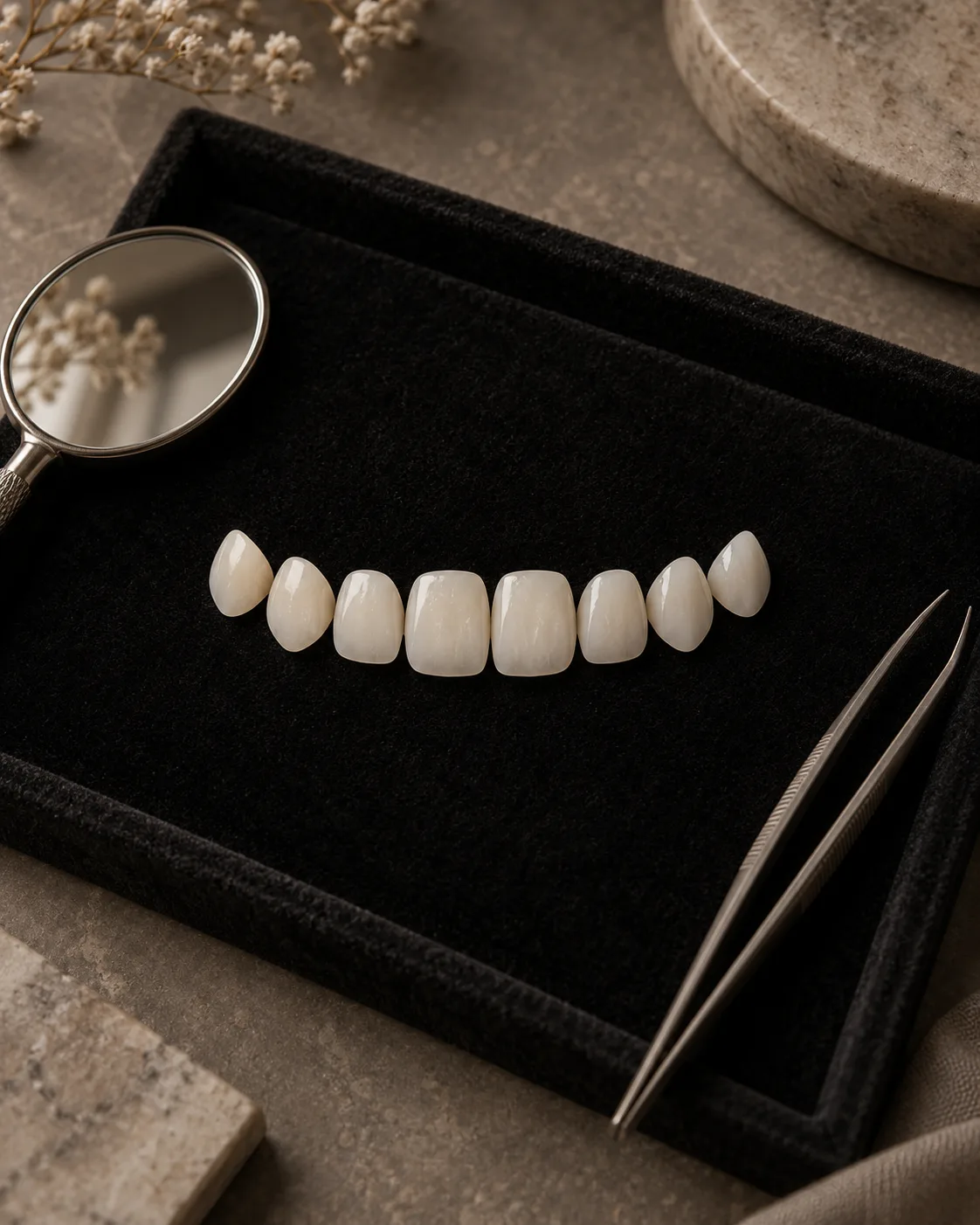
A crown is a cap that covers a whole tooth. It is what you need when there is not enough sound tooth left to hold a filling - after a root canal, a fracture, or a very large old restoration that has finally given up.
No payment taken here. Your price is confirmed after a clinical assessment - and that is the price you pay.
01
What a dental crown is
A crown is a cap that covers a whole tooth. It is what you need when there is not enough sound tooth left to hold a filling - after a root canal, a fracture, or a very large old restoration that has finally given up.
The short answer. A zirconia crown in Antalya is £170 a tooth and an E-max crown is £200. The same crowns quote at around £850 each privately in the UK. One trip of about a week fits them.
Because it covers everything, a crown protects a weak tooth in a way a veneer cannot. It also takes more away, and that is the trade you are making. If your tooth is sound and you only dislike its colour or shape, read the veneers page first.
02
When you need a crown rather than a filling
A filling replaces missing tooth. A crown replaces the strength that went with it. Past a certain size, adding more filling material makes the tooth weaker, not stronger, because the remaining walls get thinner and eventually one splits - usually at the worst moment, on holiday, on something soft.
A root-treated back tooth is the clearest case: the nerve is gone, the tooth is dry and brittle, and it is far more likely to fracture. Crowning it is not upselling, it is what keeps it. A root canal here is £120 against about £350 at home, and the crown that should follow is £170.
03
Your New Crown in 6 Steps
From initial assessment to your final fit. Here is exactly how we restore your tooth's strength and appearance.
01Start
Assessment & Plan
We check the tooth with X-rays and a clinical exam. If decay is present, we remove it first. If the tooth is very weak, we may place a core build-up or a post after root canal treatment to hold the crown safely.
02Prepare
Tooth Preparation
The tooth is made numb. We shape it gently to create space for the crown. We protect the nerve and keep the margins smooth. Where suitable, minimal-prep designs may be used to save tooth tissue.
03Scan
Impressions / Digital Scan
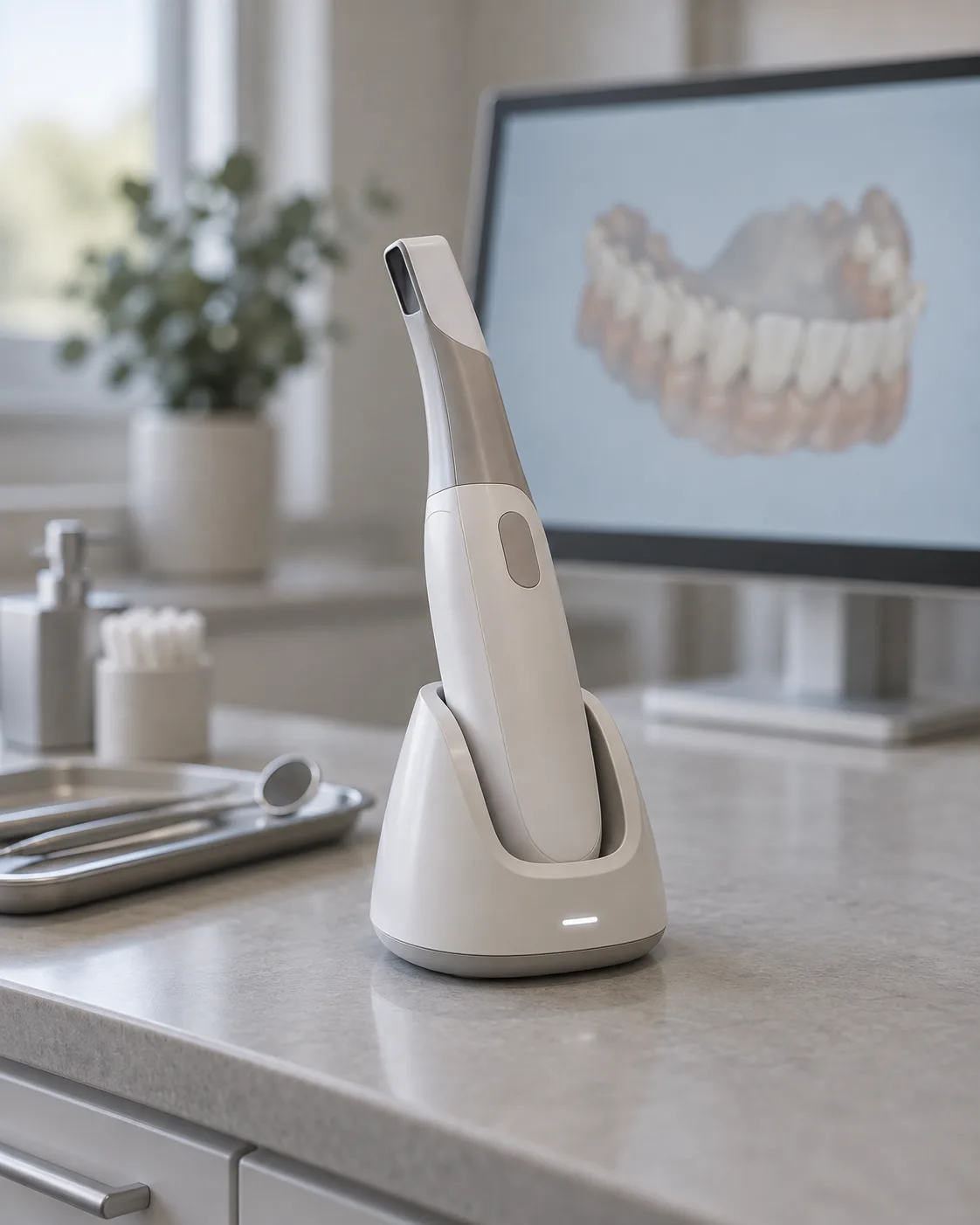
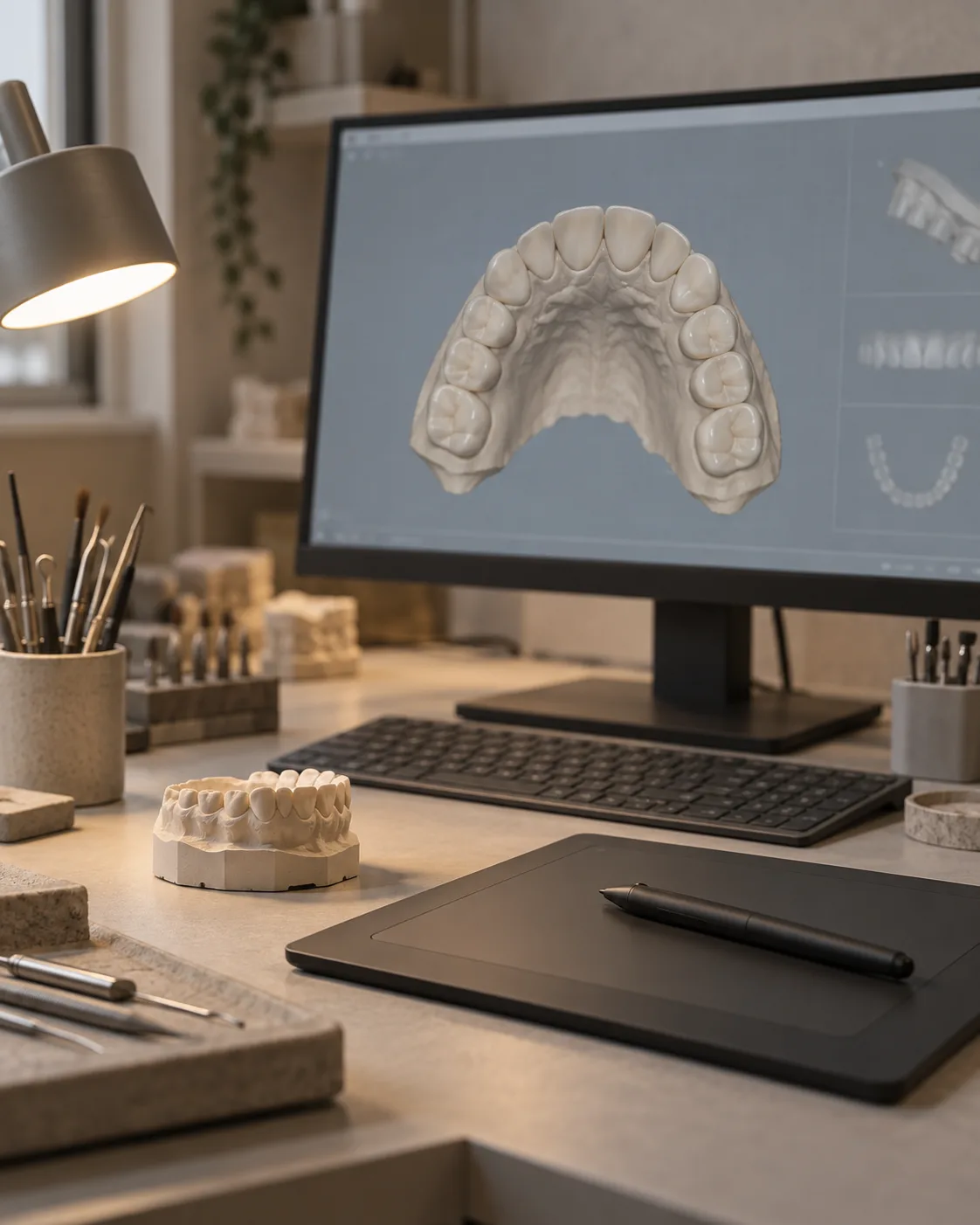
We take a precise mould or a digital scan instead of messy goo. We record your bite and shade meticulously so the laboratory can match your natural smile perfectly.
04Protect
Temporary Crown
You usually leave with a temporary crown to protect the tooth while the lab makes your final crown. It looks tidy but isn't as strong-avoid very sticky or hard foods on it.
05Create
Lab Fabrication
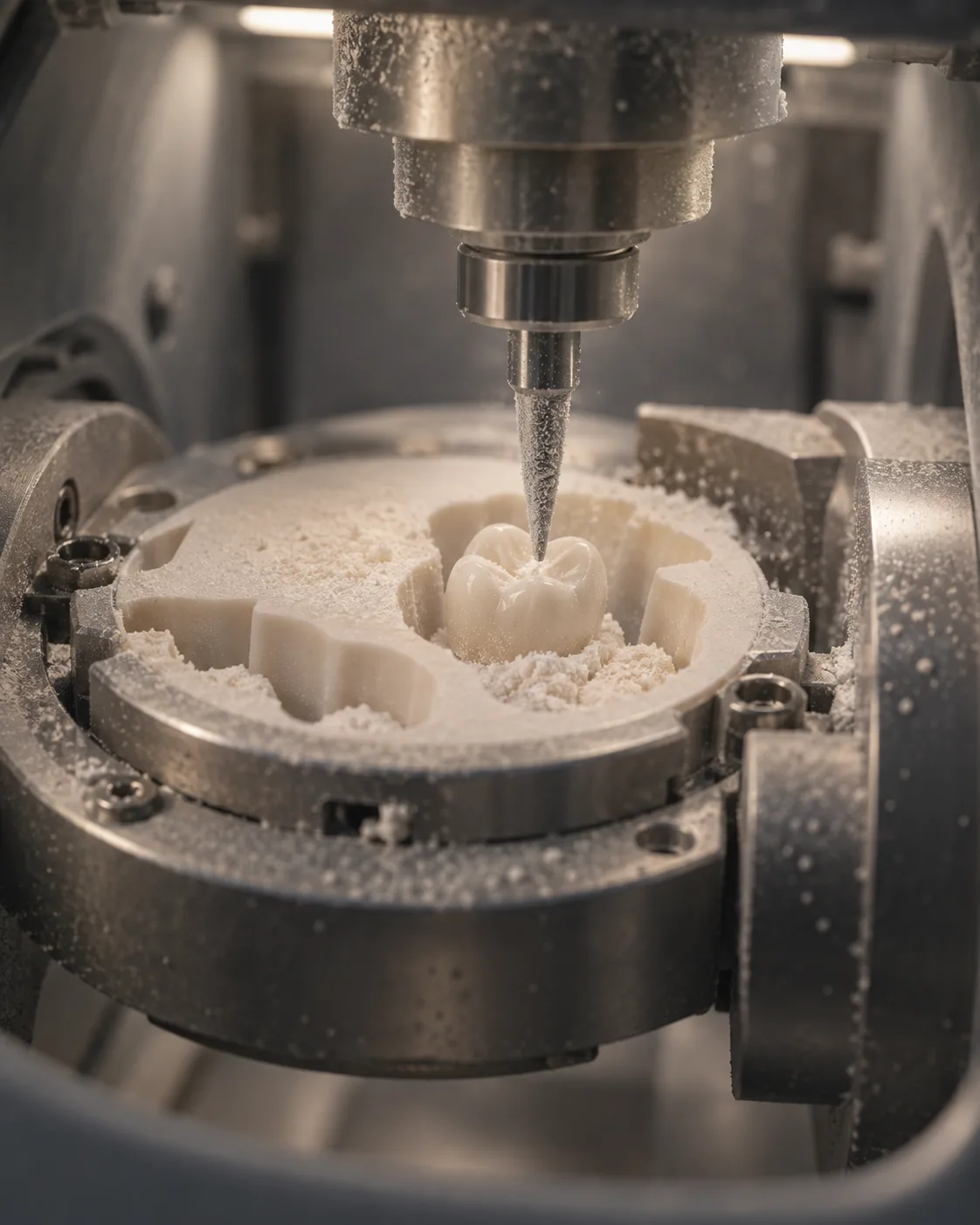
The lab makes your custom crown (colour, shape, contact points). For same-day systems, a milled crown may be made in-house using CAD/CAM technology.
06Finish
Fit Visit
We remove the temporary, try in the new crown, check fit, bite, and colour, then cement or bond it in place. We give care advice and book a review.
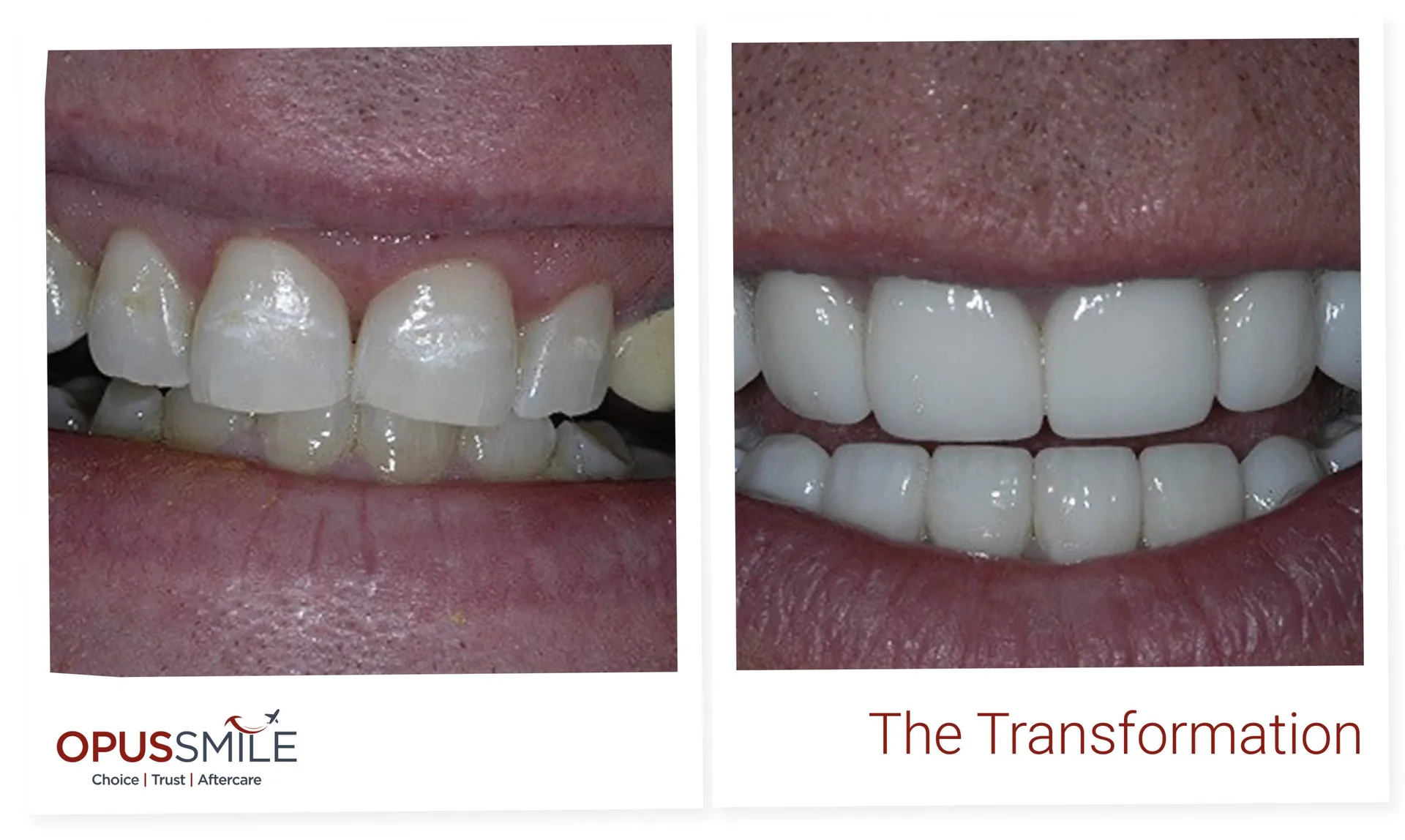
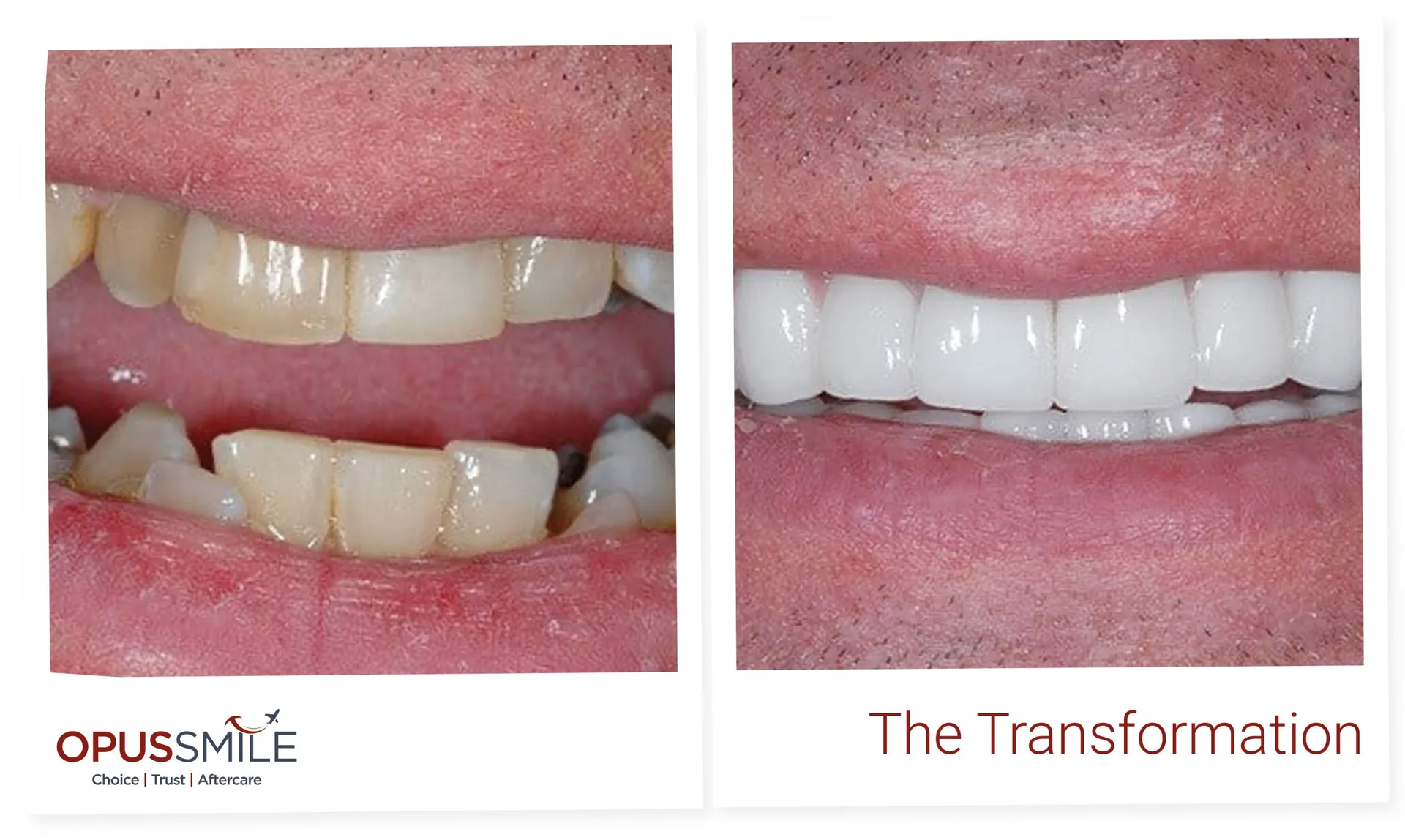
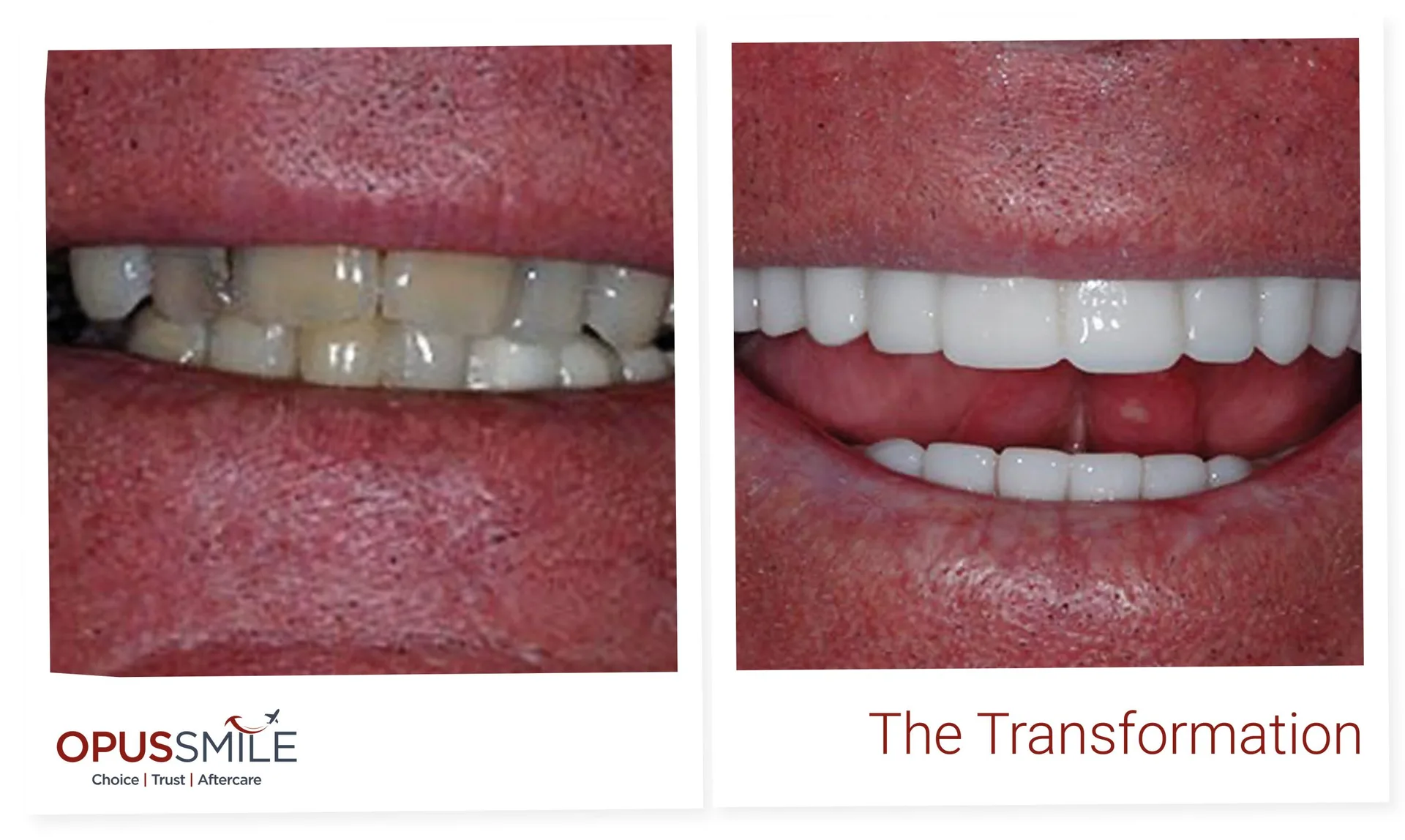
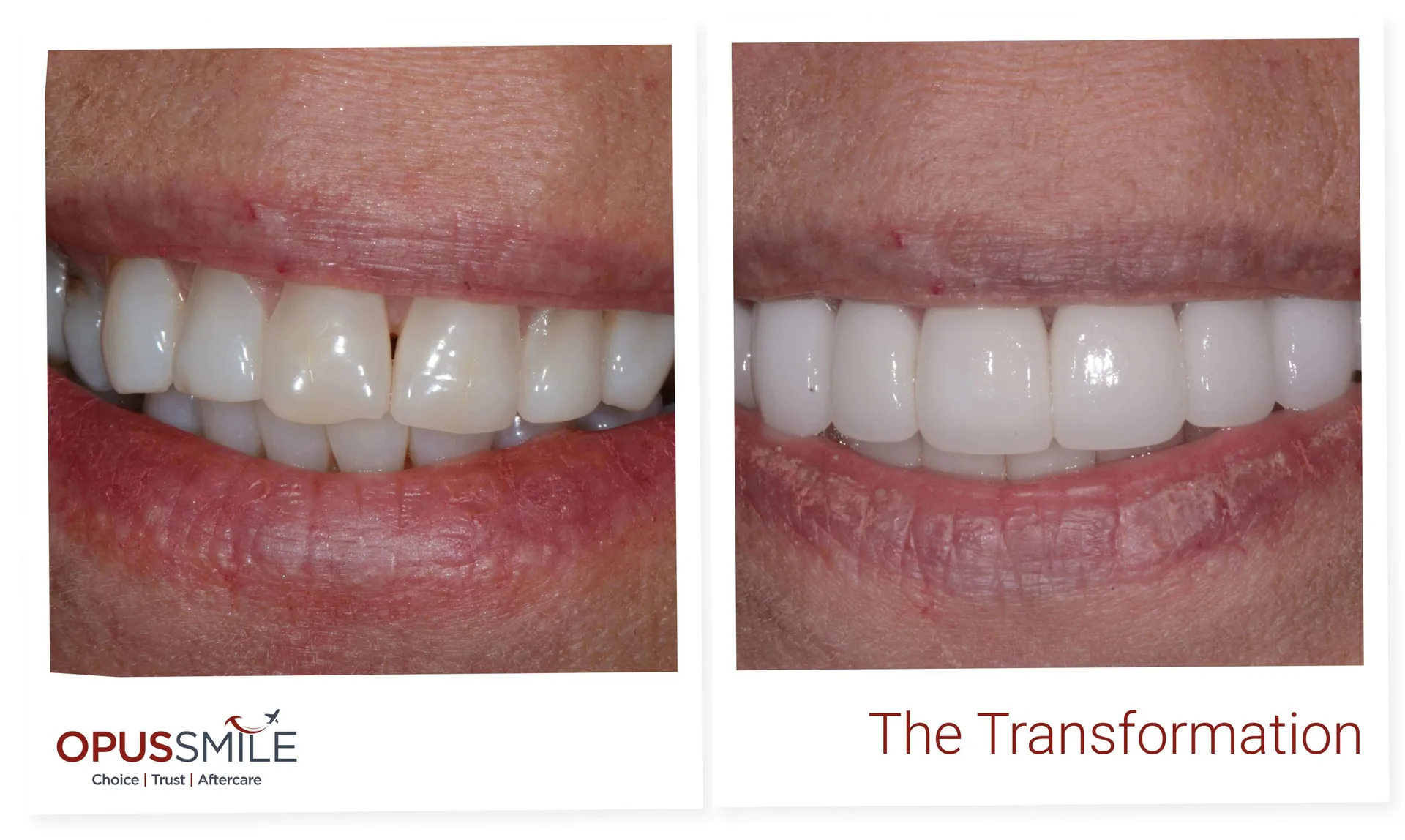
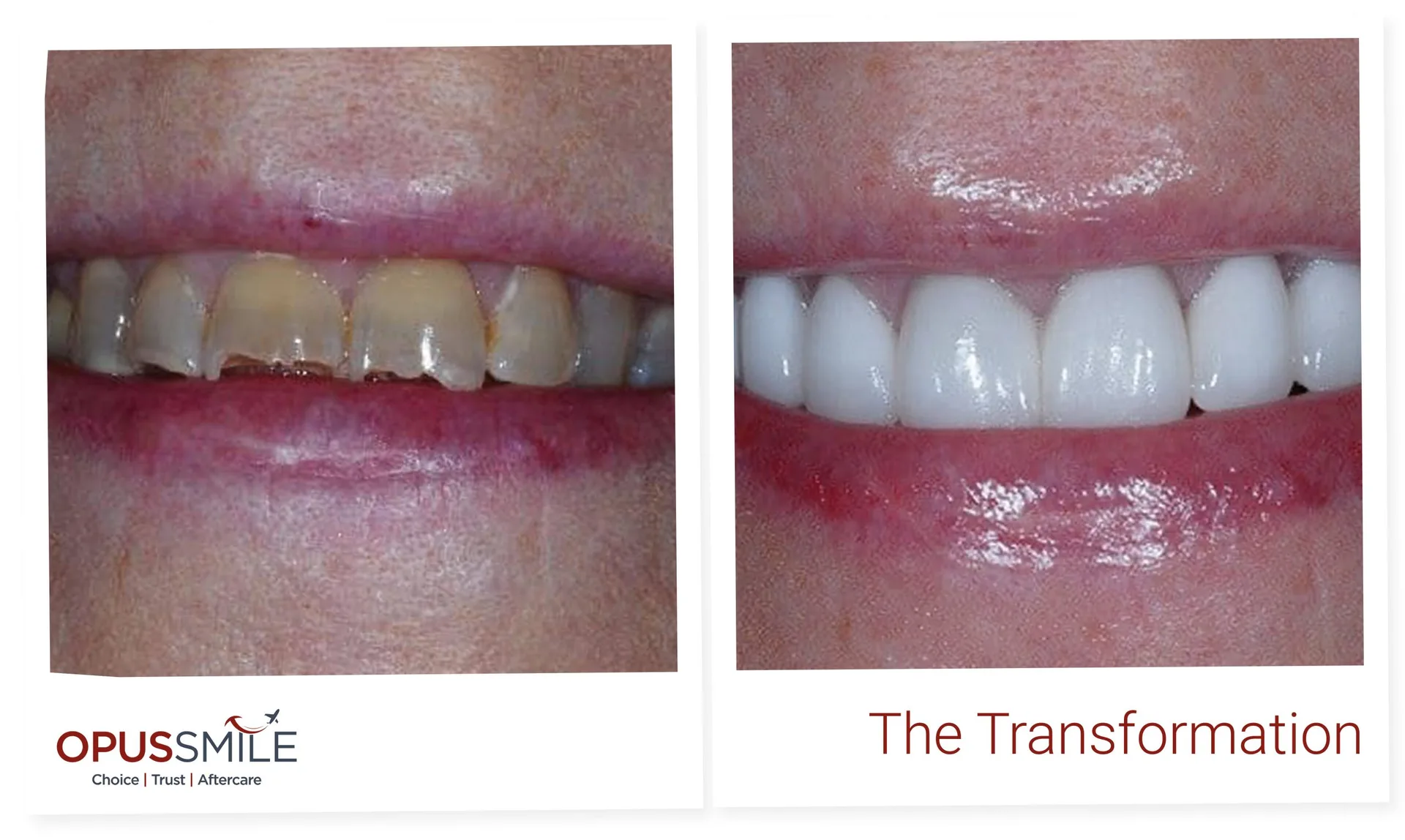
The record
Before & After Photos
05
Does getting a crown hurt?
Preparation is under local anaesthetic. You feel pressure and the vibration of the handpiece, not pain. Where the tooth has had a root canal there is no nerve left to feel anything at all.
Temporaries go on while the lab works, and they are the awkward few days: slightly bulky, sensitive to cold, and occasionally one comes loose on something sticky. Say so rather than pushing it back yourself. The permanent crown, once cemented, should feel like a tooth within a day.
06
Crown, onlay, veneer or extraction
An onlay covers only the damaged cusps and keeps more of the tooth. Where a tooth is repairable it is the better option, and a good dentist offers it before reaching for a crown.
A veneer at £210 covers the front face only. It is for appearance on a sound tooth, not for strength.
An extraction at £60, followed by an implant, is the honest answer for a tooth that is cracked below the gum. Crowning a tooth that cannot be saved wastes both the crown and the year that follows.
07
How long do crowns last?
Our crowns carry five years of guarantee against breakage, chipping and cement failure. Realistically a well-fitted crown on a healthy root lasts ten to fifteen years, and often much longer.
What ends them is rarely the porcelain. It is decay creeping in at the margin where the crown meets the tooth, which is invisible to you and obvious on an X-ray. That is why the guarantee asks for annual hygiene visits and X-rays: not as a hoop, but because that is the thing that catches it.
08
Looking after a crown
Brush the margin properly - the line where crown meets gum is the vulnerable part - and clean between the teeth daily. A crown cannot decay but the tooth under it can, and the join is where that starts.
If you grind, wear a night guard: £120 a jaw here against about £200 at home. Grinding is the single most common reason a crown chips, and it is the one risk you can remove cheaply.
Shade, shape and material
How your new smile is designed and made
Nothing is taken off a shelf. The colour, the shape of each tooth and the material are decided with you at the planning stage, then each piece is made for you in the laboratory inside the clinic building and tried in before it is fixed. This is what each of those decisions involves.
01
The shade
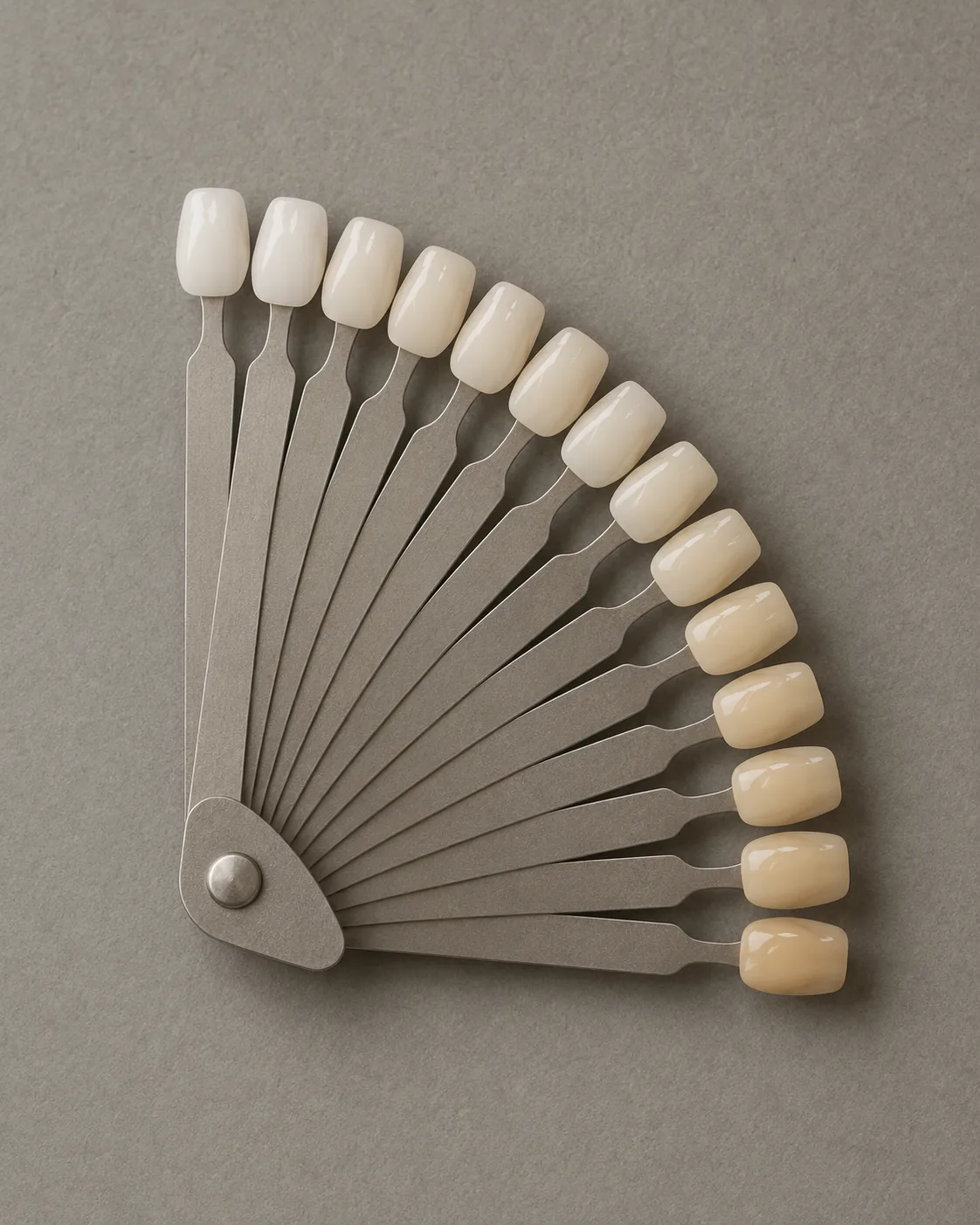
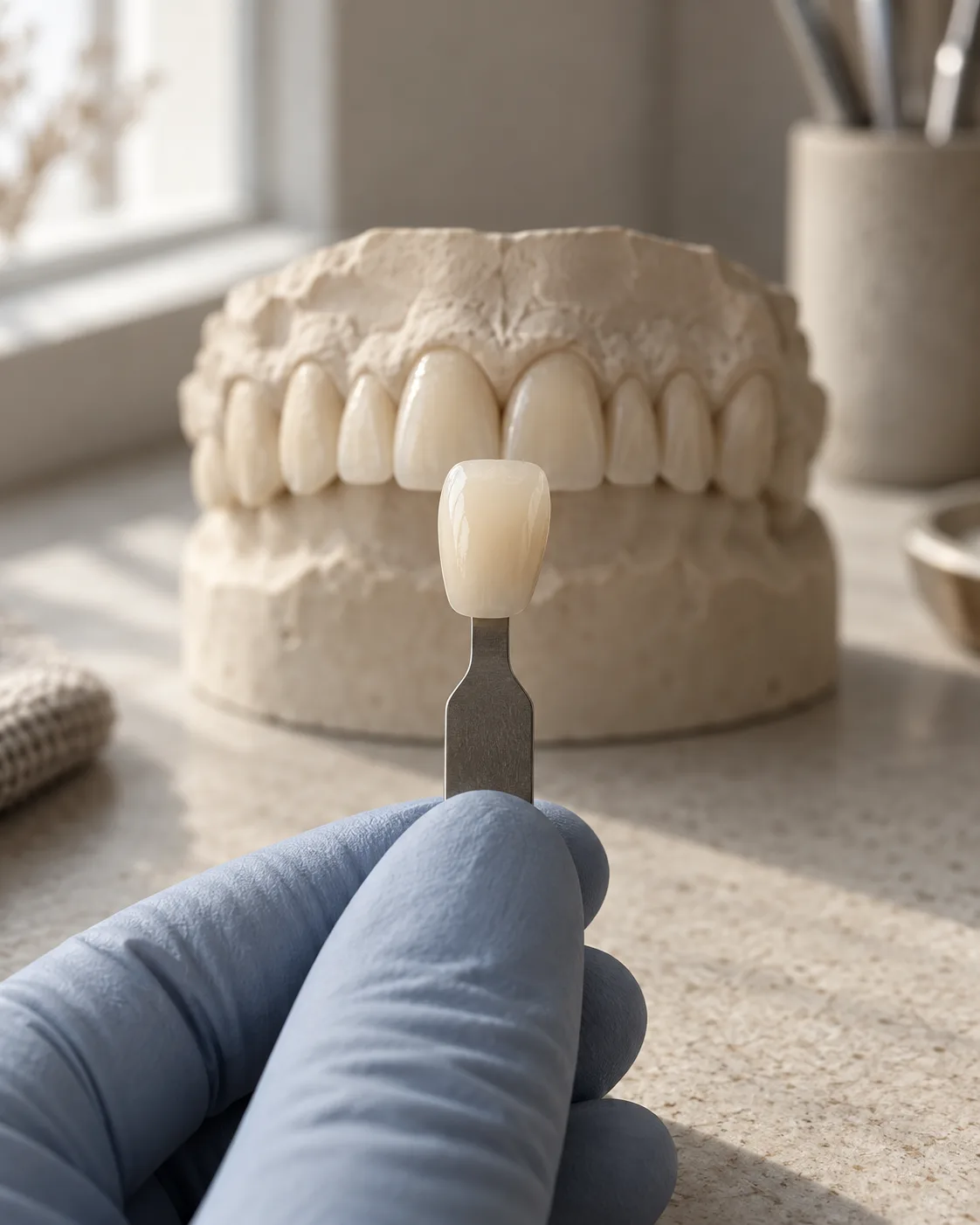
Tooth colour is chosen from a standard shade guide, the same one dentists and laboratories use worldwide. It runs from the bleached whites, BL1 to BL4, into the natural range, where B1 and A1 are the brightest shades a tooth is born with and A2 is the most common colour in adults. The tabs are held against your own teeth, your skin and the whites of your eyes in daylight, because a shade that looks right under a lamp can look wrong outside.
Bleached shadesNatural shades
BL1
BL2
BL3
BL4
B1
A1
B2
D2
A2
C1
C2
D4
A3
D3
B3
A3.5
Where most patients landThe most common natural shade
Two or three steps brighter than your ownThat reads as fresh. Much more than that, and the teeth start to look brighter than the face around them.
Bleached shades suit a full setA single veneer or crown is matched to the teeth beside it, not to the chart, so it disappears among them.
Whiten first if you are keeping natural teethPorcelain does not change colour later. If some of your own teeth stay, they are whitened first and the shade is chosen against the result.
03
The shape
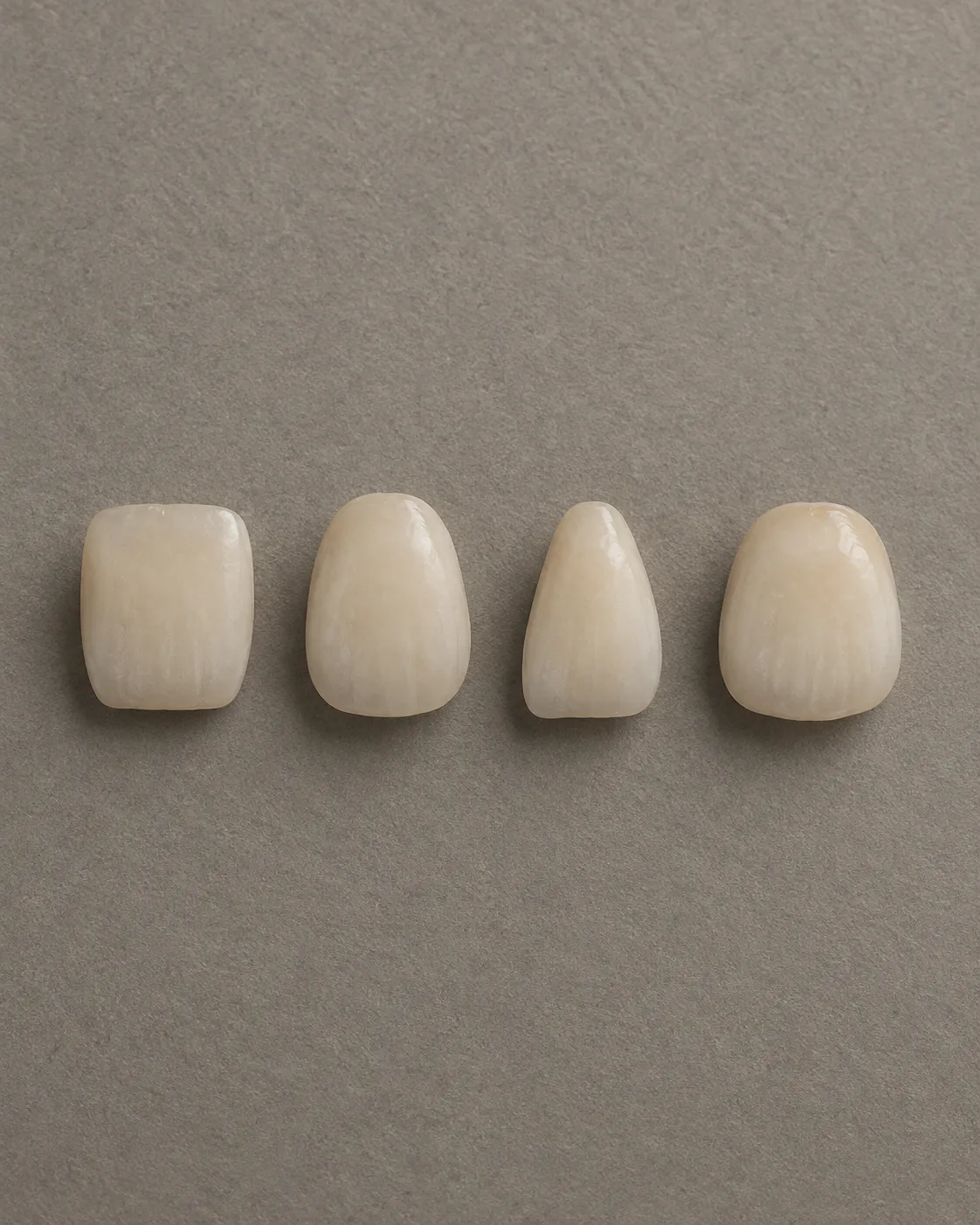
Front teeth come in four broad families, and a smile design starts by choosing the one that suits your face. Length, width and how the edges sit against your lip when you speak are set at the same time.
SquareStraight edges and flat corners. Reads as strong and assured, and suits a broad or angular face.
OvoidSoftly rounded corners on a longer body. The most natural choice for most faces, and the most often chosen.
TaperedNarrower at the gum, widening towards the edge. Delicate and youthful, and suits a slim face.
RoundedFull curves at every corner. Gentle and friendly, often chosen to soften a strong jaw.
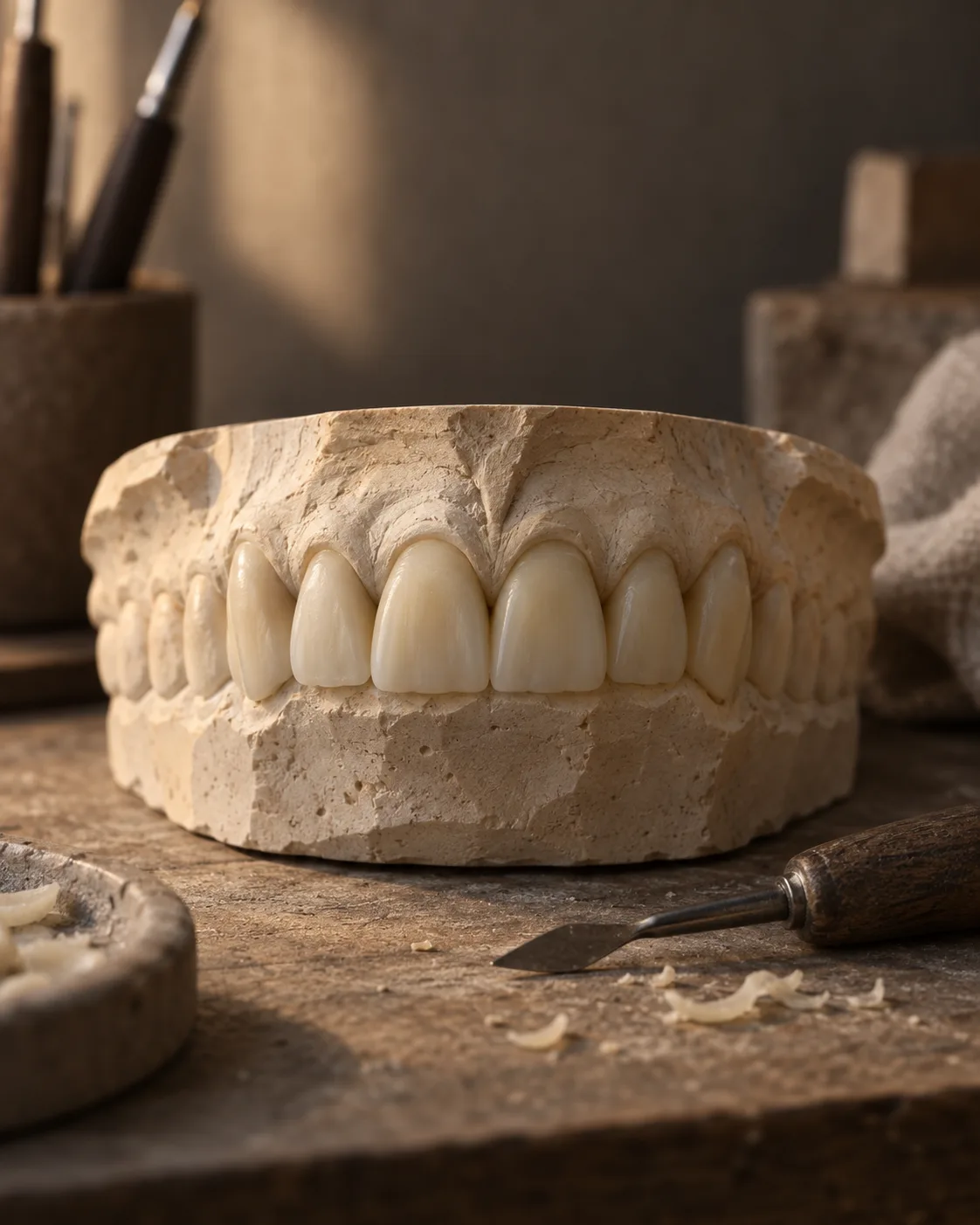
Before any tooth is prepared, the design is built in wax on a model of your teeth and then placed over your own teeth as a temporary mock-up. You see the shade, the shape and the length in your own mouth and in your own photographs. Anything you want changed is changed then, before the porcelain is made, not after.
05
The material
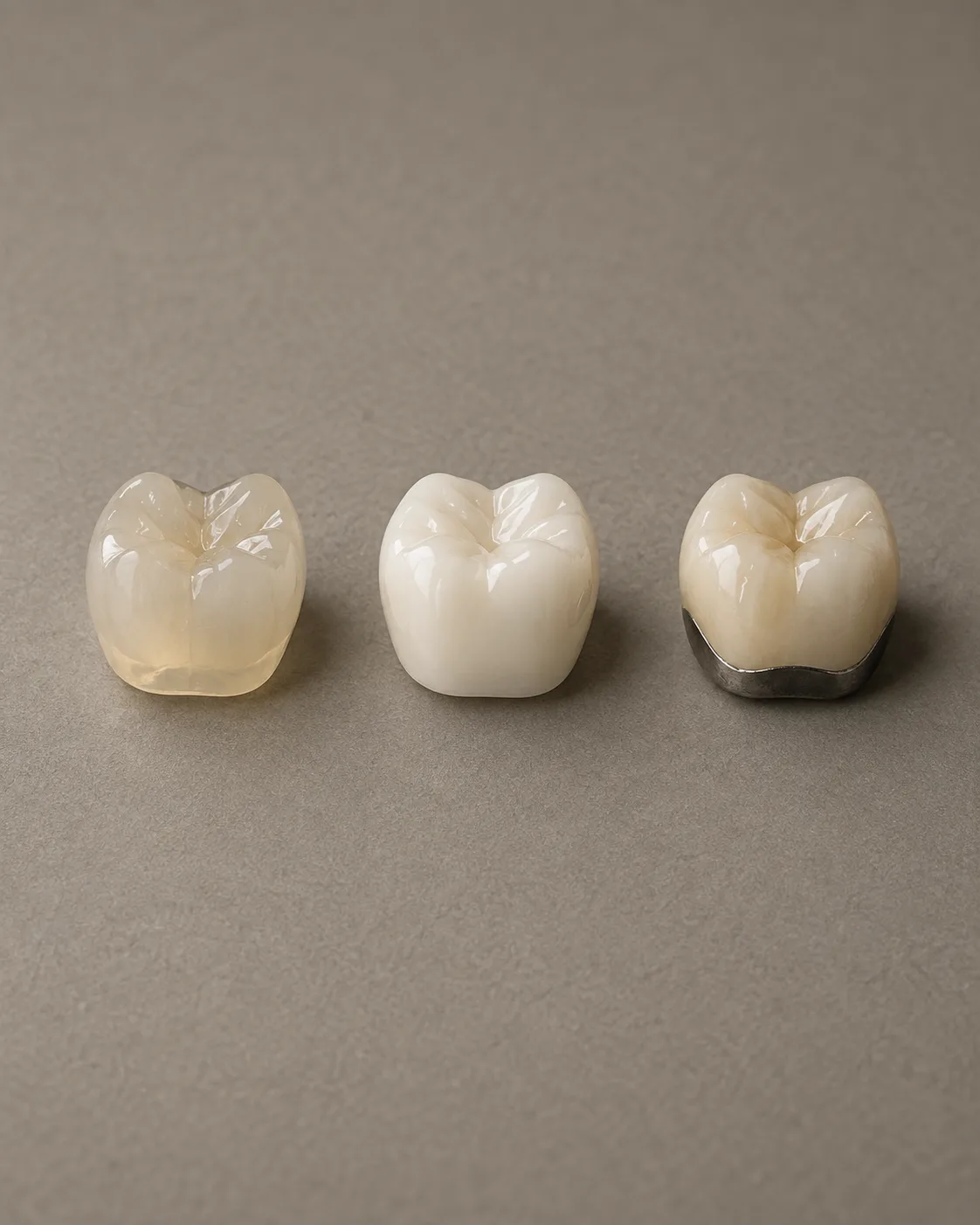
There is no best material, only the right one for each tooth. Front teeth are usually about how the light passes through; back teeth are about the bite. Your plan names the material for every tooth before you pay anything.
Material
How it looks
How strong
Best for
E-max (lithium disilicate)
The most lifelike. Light passes through it the way it passes through enamel.
Strong enough for any front tooth and for single crowns.
Veneers and front crowns, where looks matter most.
Zirconia
Bright and slightly more opaque, which is useful over a dark tooth.
The strongest ceramic there is. It does not chip.
Back teeth, bridges, full arches and heavy biters.
Layered zirconia
A zirconia core with porcelain layered on by hand for a natural surface.
The strength of zirconia underneath, the finish of porcelain on top.
Full smile makeovers that need both strength and looks.
Metal-ceramic
Porcelain over a metal cap. A dark line can show at the gum in time.
Proven over decades.
Back teeth where cost matters more than looks.
Six steps in the laboratory upstairs
How each piece is made
Every veneer and crown is made for one tooth in one mouth, in a laboratory inside the clinic building, so a try-in and an adjustment happen the same day rather than after a courier. Machines do the measuring and the cutting; people do the colour, the surface and the final check against your own teeth.
01The scanA digital scanner records your prepared teeth in a few minutes. No trays of impression putty.
02The designA technician designs each tooth on screen against your photographs and the trial smile you approved.
03MillingThe design is cut from a solid disc of zirconia, or pressed from an E-max ingot, to a tenth of a millimetre.
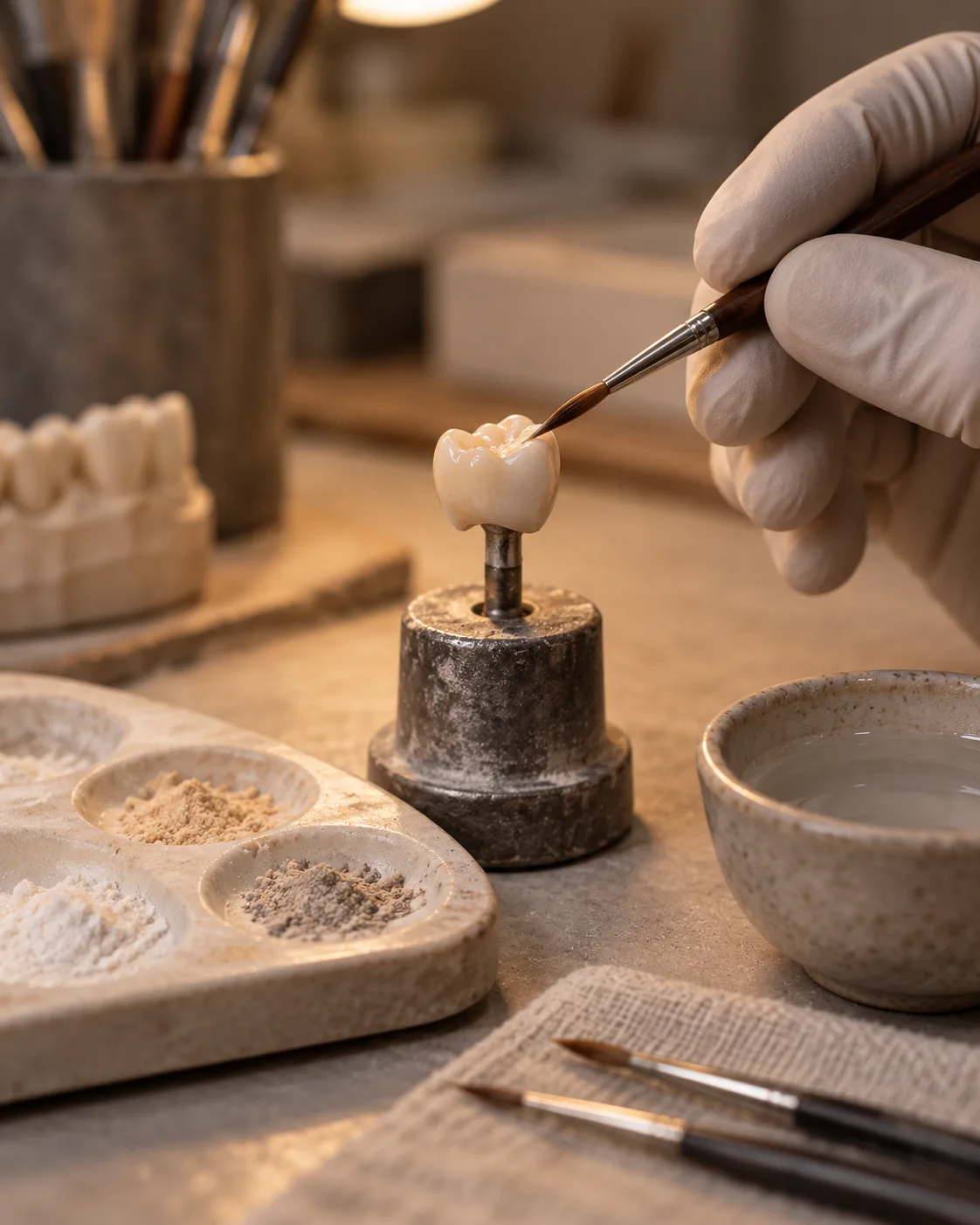
04LayeringPorcelain is painted on by hand in thin layers to build the depth and translucency of a real tooth.
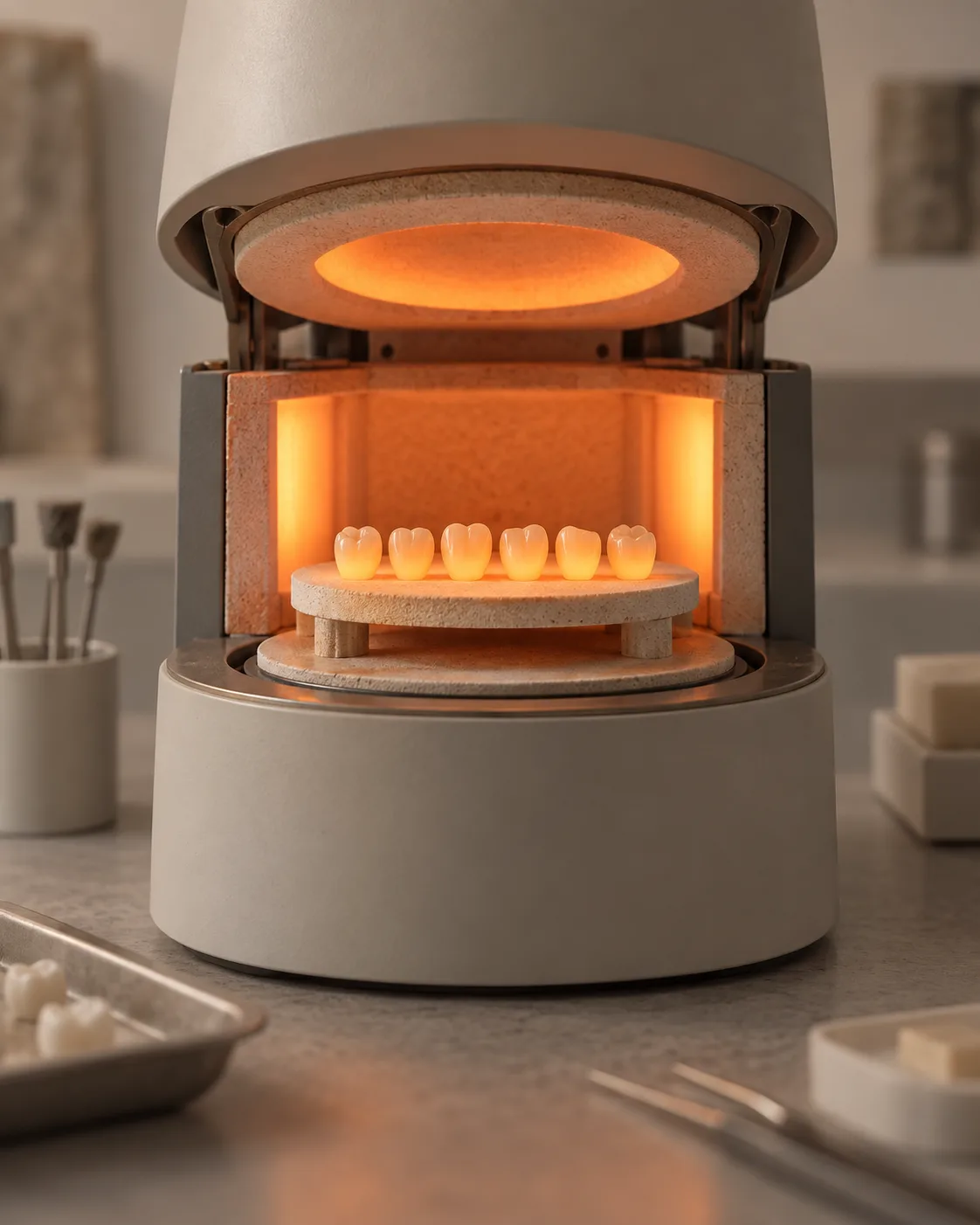
05Firing and glazingEach piece is fired, then stained and glazed by hand and checked against your shade tab in daylight.
06The try-inEvery piece is tried in and adjusted before it is bonded. You approve it in the mirror first.
Answered plainly
Dental crowns in Turkey: your questions answered
Still not sure? A clinician talks it through before you commit to anything.
A zirconia crown is £170, a ZirCad Prime is £200 and an E-max is £200. UK private equivalents run around £850 each. Every figure is on the published price list.
Zirconia or E-max - which crown should I choose?
Zirconia for strength, so back teeth and heavy bites. E-max for translucency, so front teeth where it sits next to natural enamel. On visible back teeth either is defensible and the dentist should say which and why.
Why are crowns so much cheaper in Turkey?
Wages, premises and laboratory costs, plus the exchange rate. The materials are the same materials. A price that is low because the lab is offshore or the ceramic is unbranded shows up on the plan, which is why the plan names it.
How many crowns will I need?
As many teeth as are actually broken down. A full arch of crowns on healthy teeth is a cosmetic decision being sold as a clinical one, and we will tell you when that is what you are being offered.
How long does the trip take?
About a week: preparation and scans at the start, temporaries in between, the finished crowns fitted before you fly.
Do crowns hurt?
No. Local anaesthetic for the preparation, and a root-treated tooth has no nerve at all. Temporaries can be sensitive to cold for a few days.
Will a crown match my other teeth?
It is shade-matched in the clinic against your own teeth, in daylight where possible. If you plan to whiten, whiten first - porcelain will not lighten later.
What happens if a crown comes off at home?
Keep it, do not glue it, and message your patient manager. Recementing is covered under the guarantee, and where returning is impractical we contribute up to £90 toward having it done locally.
Antalya or Istanbul for crowns?
Antalya, for direct UK flights and short transfers between hotel and clinic while the lab turns your crowns around.
Are crowns available on the NHS?
Yes, on a Band 3 charge, where there is clinical need. Availability of an NHS appointment is the part most people struggle with.
Why choose us
Why Choose Opus Smile for Crowns
01UK-backed restorative care
02Named materials
03Digital design and precise fit
We set clear expectations, use digital diagnostics, and work with internationally trained clinicians. You keep the best of both worlds-significant savings versus typical UK private fees plus a written warranty and UK-based aftercare. No bait pricing. No pressure. We confirm exact costs only after proper diagnostics and list the named materials in your plan.
Tell us what you need. We will price it in writing.
One message and a coordinator replies with an indicative plan and price. Send a photograph of your smile if you have one - it makes the answer better, and it is never a call unless you ask for one.
We use a few cookies to keep the site working - your language, your currency, and your
session if you are signed in. Those are always on because the site cannot work without them.
We would also like to use one that measures how people find us and pays us a commission
on travel booked through the site. That one is entirely your call.
Read the privacy policy.