What Do Veneers Cost in Turkey in 2026?
Turkey has become one of the most popular destinations for UK patients seeking affordable, high-quality dental veneers. In 2026, veneer prices in Turkey range from £100 to £350 per tooth depending on the type, material, and clinic — compared with £400 to £1,000+ per tooth in the UK. For a full set of 20 veneers, patients typically pay between £2,000 and £7,000 in Turkey, a fraction of the £8,000 to £20,000 they would spend at home.
But price alone does not tell the full story. The type of veneer you choose affects durability, appearance, and long-term value. This guide breaks down every option available in Turkish clinics so you can make an informed decision before booking.
Porcelain Veneers: The Gold Standard
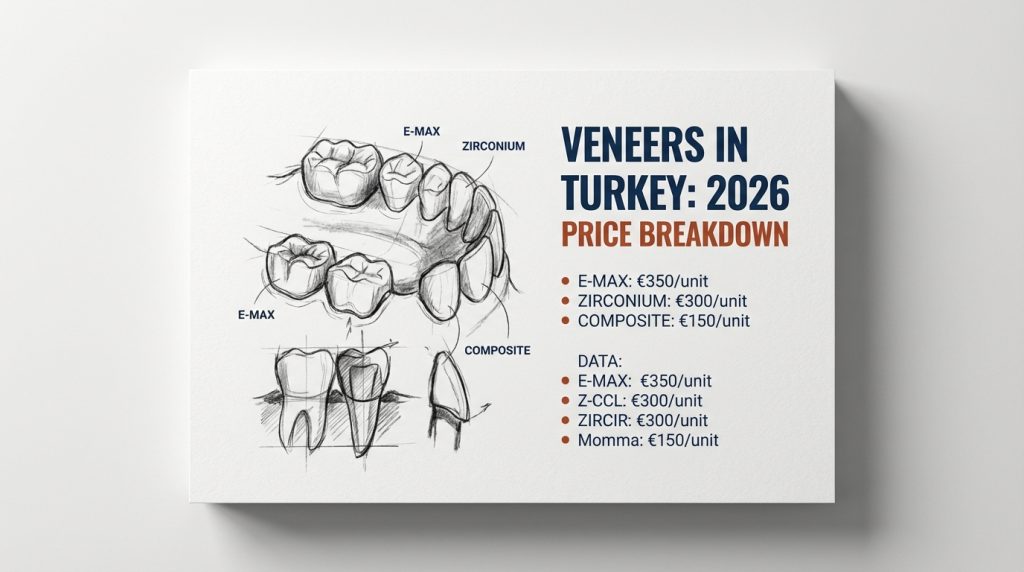
Porcelain veneers remain the most popular choice among international patients visiting Turkey. These are custom-crafted shells of dental-grade ceramic bonded permanently to the front surface of your teeth. In Turkish clinics, porcelain veneers typically cost between £180 and £300 per tooth.
The material offers excellent translucency that closely mimics natural enamel, and with proper care porcelain veneers can last 15 to 20 years. Leading Turkish clinics use established porcelain systems from manufacturers such as Ivoclar Vivadent (IPS e.max), which are the same brands used in top UK practices. The key advantage is stain resistance — porcelain does not discolour from tea, coffee, or red wine the way composite can.
Composite Veneers: The Budget-Friendly Option
Composite veneers are sculpted directly onto your teeth using tooth-coloured resin. In Turkey, composite veneers cost between £80 and £150 per tooth, making them the most affordable option. The procedure is typically completed in a single appointment with minimal tooth preparation.
However, composite veneers have a shorter lifespan of 5 to 7 years and are more prone to staining and chipping than porcelain. They can be a good choice for younger patients or those who want a reversible cosmetic improvement. If you are considering this route, our guide on composite veneers in Turkey covers durability and suitability in detail.
Laminate Veneers: Ultra-Thin and Minimally Invasive
Laminate veneers — sometimes called Lumineers or no-prep veneers — are wafer-thin porcelain shells (as thin as 0.2mm) that require little to no enamel removal. In Turkey, laminate veneers cost between £200 and £350 per tooth. The major benefit is that the procedure preserves more of your natural tooth structure.
These are ideal for patients with minor cosmetic concerns such as slight discolouration, small gaps, or uneven edges. They are not suitable for severely misaligned or heavily damaged teeth. Turkish clinics offering laminates typically use CAD/CAM technology for precision fitting. For a closer look at the process, see our laminate veneers Turkey guide.
Zirconia Veneers: Maximum Strength
Zirconia veneers are made from zirconium dioxide, an exceptionally strong ceramic material. Priced between £150 and £280 per tooth in Turkey, they offer superior durability and are virtually unbreakable under normal conditions. Zirconia is often recommended for patients who grind their teeth (bruxism) or need veneers on their back teeth.
The trade-off is that zirconia is slightly less translucent than porcelain, though modern multi-layered zirconia has improved aesthetics significantly. According to research published in the National Library of Medicine (PubMed), zirconia restorations demonstrate excellent biocompatibility and fracture resistance in clinical studies.
Full Set Pricing: What to Expect for 10 or 20 Veneers
Most UK patients travelling to Turkey for veneers opt for a full smile makeover covering either the upper arch (10 veneers) or both arches (20 veneers). Here is what you can expect to pay in 2026:
10 veneers (upper arch): Composite £800–£1,500 | Porcelain £1,800–£3,000 | Laminate £2,000–£3,500 | Zirconia £1,500–£2,800
20 veneers (both arches): Composite £1,600–£3,000 | Porcelain £3,600–£6,000 | Laminate £4,000–£7,000 | Zirconia £3,000–£5,600
Many clinics bundle veneers into all-inclusive packages that cover airport transfers, hotel accommodation, and dental consultations. Our Turkey dental packages guide explains what these typically include.
What Is Included in the Price?
Reputable Turkish dental clinics typically include the following in their veneer package price: initial consultation and digital smile design, X-rays and 3D scans, temporary veneers while permanent ones are fabricated, the final veneers with fitting and bonding, and a follow-up check before you fly home. Some clinics also cover hotel stays (3 to 7 nights), airport-to-clinic transfers, and a dedicated patient coordinator who speaks English.
Always ask what is excluded. Items that may carry additional charges include panoramic X-rays, sedation, teeth whitening on non-veneered teeth, and replacement veneers if adjustments are needed after your return to the UK.
Why Are Veneers So Much Cheaper in Turkey?
The price difference is not a reflection of inferior quality. Turkish dental costs are lower primarily because of favourable exchange rates, lower labour and operating costs, government incentives for medical tourism, and high patient volume that allows clinics to offer competitive pricing. Many top clinics in Istanbul and Antalya are accredited by Joint Commission International (JCI), the global gold standard for healthcare quality.
Turkey trained over 5,000 dentists annually as of 2024, creating a highly competitive market that benefits international patients. The country’s position as a medical tourism hub means clinics invest heavily in the latest technology to attract and retain overseas visitors.
How to Verify Quality Before You Book
Price should never be your only consideration. Before committing to a clinic, check that your dentist is registered with the Turkish Ministry of Health and ideally holds international accreditations. Ask which veneer brands and materials the clinic uses — reputable practices will name specific manufacturers like Straumann or Ivoclar rather than giving vague answers.
Request to see before-and-after photos of previous patients, and look for independently verified reviews on platforms like Google, Trustpilot, or the General Dental Council (GDC) equivalent in Turkey. Our teeth Turkey before and after page features real patient outcomes to give you a realistic picture of results.
Risks and What Could Go Wrong
Veneer treatment in Turkey carries the same risks as anywhere else: sensitivity after enamel removal, poor colour matching, veneers that feel bulky or unnatural, and in rare cases debonding. The added risk with dental tourism is the distance from your treating dentist if complications arise after you return home.
To mitigate this, choose a clinic that offers a written guarantee (typically 5 to 10 years for porcelain), ensure you receive all dental records and X-rays before flying home, and register with a UK dentist who can provide aftercare. The British Dental Association (BDA) recommends that patients seeking treatment abroad always have a UK-based dentist for follow-up care.
Making Your Decision
The right veneer type depends on your budget, cosmetic goals, and how much tooth preparation you are comfortable with. Composite suits patients wanting an affordable, reversible option. Porcelain is the best all-round choice for longevity and aesthetics. Laminates work well for minor corrections with minimal drilling. Zirconia is ideal if strength is your priority.
Whatever you choose, getting veneers in Turkey in 2026 offers significant savings without compromising on quality — provided you research your clinic thoroughly and understand exactly what your quoted price includes. For a full comparison of veneer options and destinations, explore our complete veneers Turkey guide.