
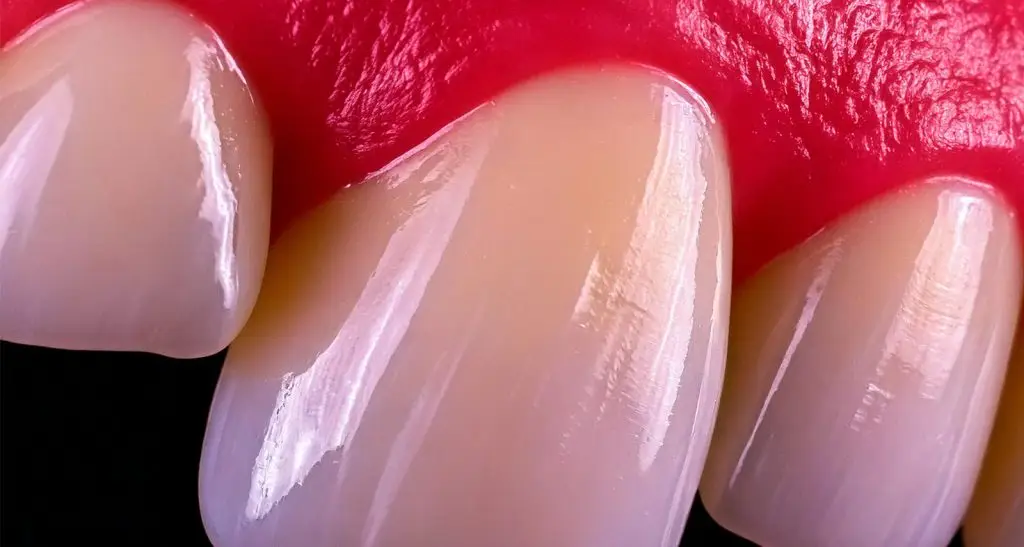
Composite resin veneers are one of the most popular and affordable cosmetic dental treatments available. They offer a way to transform chipped, stained, gapped or uneven teeth without the commitment or cost of porcelain veneers. This guide explains how composite veneers work, what they cost, how they compare to alternatives and who they suit best.
What Are Composite Resin Veneers?
Composite resin veneers are thin layers of tooth-coloured resin material applied to the front surface of teeth to improve their appearance. Unlike porcelain veneers, which are fabricated in a laboratory, composite veneers are typically sculpted directly onto your teeth by the dentist in a single appointment. The resin is applied in layers, shaped by hand, then hardened with UV light and polished to a natural finish.
There are two types: direct composite veneers, where the dentist applies and shapes the resin chairside, and indirect composite veneers, where the veneers are crafted on a model in a laboratory then bonded to your teeth at a second appointment. Direct veneers are more common due to their speed and lower cost.
How Much Do Composite Veneers Cost?
In the UK, composite veneers typically cost £150-400 per tooth depending on the dentist’s experience and location. In Turkey, the same treatment costs £50-120 per tooth. For a full smile makeover covering 8-10 teeth, UK patients pay £1,500-4,000 compared to £500-1,200 in Turkey.
This makes composite veneers significantly more affordable than porcelain veneers, which cost £500-1,000 per tooth in the UK and £150-300 in Turkey. The lower price point makes composite veneers accessible for patients on tighter budgets or those wanting to try a cosmetic improvement before committing to a permanent solution.
Composite vs Porcelain Veneers: Key Differences
Durability: Porcelain veneers last 15-20 years while composite veneers last 5-7 years with proper care. Porcelain is harder and more resistant to chipping and staining. Appearance: Porcelain offers superior translucency that more closely mimics natural enamel, particularly in varying light conditions. Composite can look excellent but may appear slightly less natural on close inspection.
Tooth preparation: Composite veneers usually require minimal or no enamel removal, making them reversible. Porcelain veneers require 0.3-0.7mm of enamel reduction, which is permanent. Speed: Composite veneers are completed in a single visit. Porcelain veneers require at least two appointments with laboratory time in between. The British Academy of Cosmetic Dentistry notes that both options have their place depending on the patient’s goals and circumstances.
The Composite Veneer Process
For direct composite veneers, the entire procedure takes 1-3 hours depending on how many teeth are being treated. Your dentist begins by lightly roughening the tooth surface with a mild acid etch to help the resin bond. The composite resin is then applied in thin layers, with each layer shaped and cured with UV light before the next is added.
Once the desired shape and thickness is achieved, the veneer is refined, polished and checked for bite alignment. The result is a natural-looking tooth surface that blends with your surrounding teeth. Most patients experience no pain during the procedure and no anaesthetic is needed unless enamel reduction is required.
Benefits of Composite Veneers
The biggest advantage is reversibility. Because little or no tooth structure is removed, you can return to your natural teeth if you choose not to replace the veneers in future. They are also easy to repair — if a composite veneer chips, the dentist can simply add more resin and reshape it, often in a single short appointment. Porcelain veneers that chip typically need complete replacement.
Composite veneers are particularly well-suited for younger patients who want cosmetic improvement but may not be ready for the permanent commitment of porcelain. They serve as an excellent trial run — you can live with improved teeth for several years before deciding whether to upgrade to porcelain veneers later.
Who Is a Good Candidate?
Composite veneers work best for patients with minor cosmetic concerns: small chips, slight gaps between teeth, mild discolouration, minor size or shape irregularities, and teeth that are slightly uneven. They are ideal for patients who want a noticeable but not dramatic improvement.
They may not be the best choice if you need significant colour change (heavily stained or darkened teeth), have large areas of decay or structural damage, grind your teeth severely (bruxism wears composite faster), or want the longest-lasting possible result. In these cases, porcelain veneers or crowns may be more appropriate.
How Long Do Composite Veneers Last?
With proper care, composite veneers last 5-7 years on average, though some patients get 10 years or more. Longevity depends on your oral hygiene habits, diet, whether you grind your teeth and how well you follow aftercare advice. Composite resin is softer than porcelain and natural enamel, making it more susceptible to staining from coffee, tea, red wine and smoking.
To maximise their lifespan: brush twice daily with a non-abrasive toothpaste, avoid biting hard objects like ice or pen caps, limit staining foods and drinks, attend regular dental check-ups, and have them professionally polished annually to maintain their surface finish and shine.
Composite Veneers in Turkey
Turkish dental clinics offer composite veneers at a fraction of UK prices, and many have highly skilled cosmetic dentists experienced in freehand composite artistry. Because composite veneers can be completed in a single appointment, they are one of the easiest cosmetic procedures to combine with a short trip abroad — even a long weekend is sufficient.
When choosing a Turkish clinic for composite veneers, look at the dentist’s composite-specific portfolio. Composite veneer work is highly technique-dependent — the result depends as much on the dentist’s artistic skill as their clinical ability. Before-and-after photos of composite cases (not just porcelain) will give you a realistic idea of what to expect.