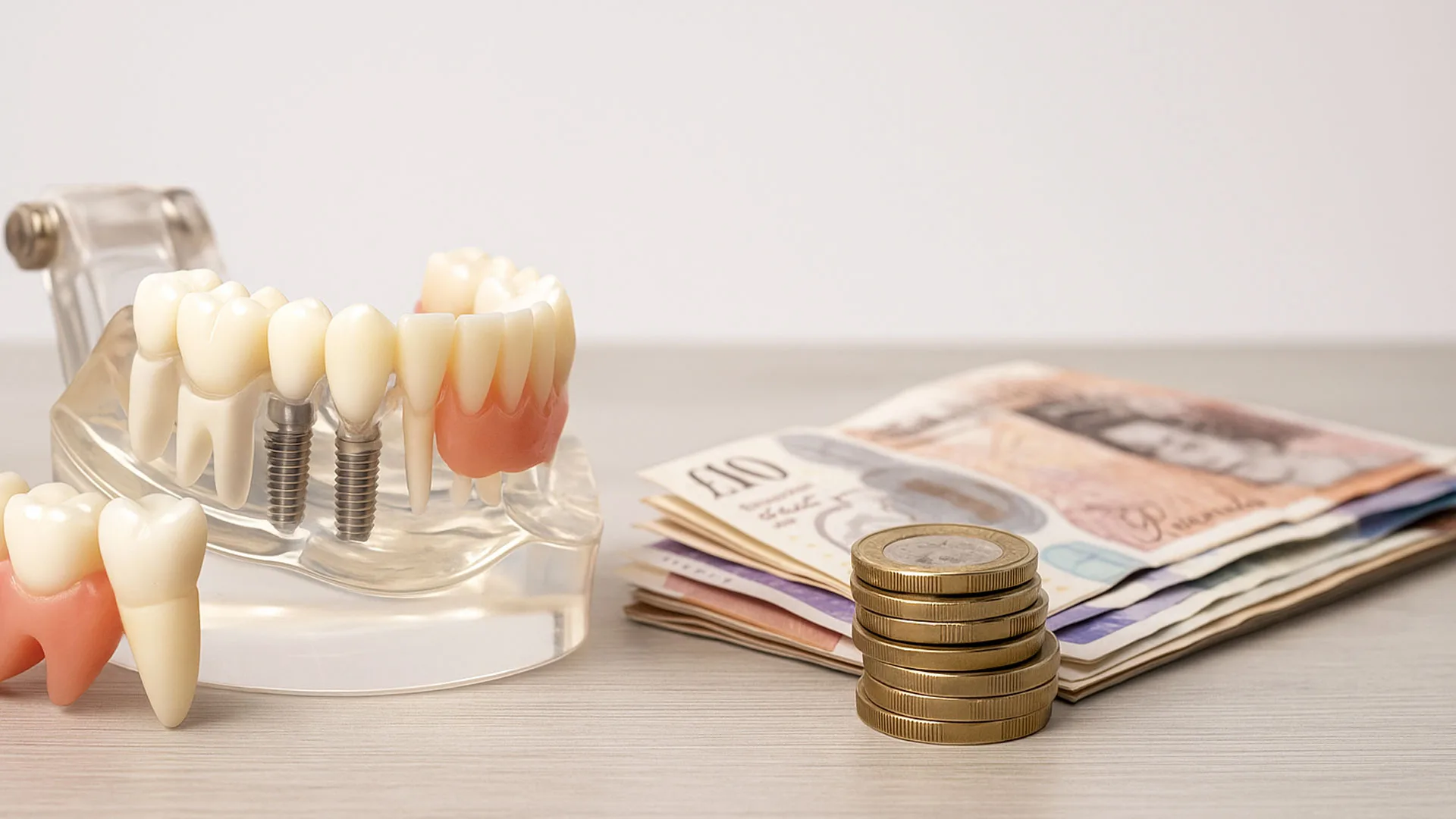
What Do Dental Implants Cost in the UK?
The cost of dental implants in the UK varies significantly depending on the type of implant, the number of teeth being replaced, your location, and whether you choose NHS or private treatment. In 2026, UK patients can expect to pay between £1,500 and £3,000 for a single dental implant including the crown, with full-mouth solutions ranging from £10,000 to £30,000 per arch.
Understanding these costs - and the factors that drive them - helps you make an informed decision about whether to proceed in the UK, explore dental implants abroad, or combine both options.
Single Dental Implant Cost UK: 2026 Prices
A single dental implant in the UK typically costs £1,500–3,000 in a private practice. This includes the titanium implant post, the abutment connector, and the porcelain crown. The NHS provides an overview of dental implants including what they involve. Here is how costs break down by region:
London and South East - £2,200–3,500 per implant. London commands the highest prices due to overhead costs and demand.
Midlands and North of England - £1,800–2,800 per implant. Prices are moderately lower outside of London.
Scotland, Wales, and Northern Ireland - £1,500–2,500 per implant. Generally the most affordable UK regions for implant treatment.
These prices assume a straightforward case with adequate bone density. If bone grafting is required, expect an additional £400–1,200 per graft site.
Full Mouth Dental Implants: UK Cost Breakdown
For patients needing multiple or all teeth replaced, full-arch implant solutions offer the best value per tooth. The most common options in the UK are:
All-on-4 implants - £8,000–15,000 per arch. Four implants support a full set of fixed teeth. This is the most cost-effective full-arch solution and the most popular choice for patients with significant tooth loss. Compare this with All-on-4 prices in Turkey where the same treatment costs £2,500–4,000.
All-on-6 implants - £10,000–18,000 per arch. Six implants provide additional stability, recommended for patients with strong bite forces or adequate bone density.
Individual implants (full mouth) - £20,000–45,000 for a complete set. Each missing tooth is replaced individually, which provides the most natural result but at the highest cost.
Implant-supported dentures - £4,000–8,000 per arch. Two to four implants secure a removable denture, offering a middle ground between traditional dentures and fixed implants.
NHS Dental Implants: Are They Available?
Dental implants are generally not available on the NHS. The NHS considers implants a cosmetic treatment in most cases. According to NICE (National Institute for Health and Care Excellence), implant provision on the NHS is limited to specific clinical criteria. However, there are limited exceptions where implants may be funded:
Trauma or accident - if tooth loss results from an accident, NHS funding may cover implant treatment.
Medical conditions - patients with conditions affecting the jaw (such as oral cancer reconstruction) may qualify.
Hypodontia - patients born without adult teeth may be eligible for NHS implant treatment at specialist dental hospitals.
For most patients, private treatment is the only option. Read our full guide on dental implants on the NHS for more detail on eligibility criteria.
What Affects the Cost of Dental Implants?
Several factors determine what you will actually pay:
Implant brand - premium brands like Straumann and Nobel Biocare cost more than budget alternatives like Osstem or MIS. Premium brands typically add £300–600 per implant to the total cost, but come with longer warranties and more extensive clinical research.
Bone grafting - if your jawbone has deteriorated (common after long-term tooth loss), a bone graft adds £400–1,200 per site. Sinus lifts for upper jaw implants add £800–1,500.
Crown material - porcelain-fused-to-metal crowns are the most affordable option. Full ceramic (zirconia or E-max) crowns cost more but offer superior aesthetics and durability.
Sedation - IV sedation adds £300–600 per session. General anaesthetic (available at some clinics) costs £1,000–2,000.
Location and clinic - Harley Street practices charge significantly more than regional clinics for equivalent treatment.
Complexity - immediate-load (same day) implants, zygomatic implants for severe bone loss, and computer-guided placement all add to the cost.
Dental Implant Finance Options in the UK
Most private dental practices offer finance plans to spread the cost of implant treatment:
0% interest finance - many clinics offer interest-free payment plans over 6–24 months. You will need to pass a credit check.
Extended finance - longer repayment periods (up to 60 months) are available but typically carry interest rates of 9–15% APR.
Medical loans - specialist medical finance providers like Chrysalis Finance and Dental Finance offer loans specifically designed for dental treatment.
For patients who find UK prices prohibitive even with finance, dental tourism offers an alternative. Treatment in Turkey, Hungary, or Poland can reduce costs by 50–70% while maintaining quality standards.
UK vs Abroad: Is It Worth Travelling for Cheaper Implants?
The price difference is substantial. A single implant costing £2,500 in the UK might cost £500–800 in Turkey or Hungary. For full-mouth treatments, savings can reach £10,000–20,000 - enough to cover flights, accommodation, and still save significantly.
However, there are legitimate considerations: follow-up appointments require either return trips or finding a UK dentist willing to manage aftercare, and warranty claims can be more complex across borders. Clinics like Opus Smile address these concerns by providing UK-based aftercare coordination and transparent treatment plans.
For a detailed country-by-country price breakdown, see our dental implant cost comparison across Europe.
How to Get the Best Price for Dental Implants in the UK
Get multiple quotes - prices vary significantly between clinics. Obtain at least three written quotes for the same treatment plan.
Ask about the implant brand - ensure the quote specifies which implant system will be used. Some clinics offer lower prices by using less established brands.
Check what is included - a complete quote should cover the implant, abutment, crown, all consultations, X-rays or CT scans, and any follow-up appointments. Hidden extras are a common source of cost overruns.
Consider dental schools - university dental hospitals in London, Manchester, Birmingham, and other cities offer implant treatment at reduced rates, performed by supervised trainees.
Look at package deals - some clinics offer reduced per-implant rates for multiple implants placed in the same session.
FAQs About Dental Implant Costs in the UK
How much is a single tooth implant in the UK in 2026?
A single tooth implant costs £1,500–3,000 in the UK in 2026, depending on your location, the implant brand used, and whether bone grafting is needed.
Can I get dental implants on the NHS?
NHS dental implants are only available in limited circumstances, typically involving trauma, medical conditions affecting the jaw, or congenital absence of teeth. Most patients will need private treatment.
Are dental implants worth the cost?
Dental implants are the only tooth replacement that preserves jawbone density and can last 20+ years with proper care. While the upfront cost is higher than bridges or dentures, the long-term value is typically superior when you factor in replacement costs and bone health.
How can I reduce the cost of dental implants?
Options include obtaining multiple quotes, exploring dental school clinics, using 0% finance plans, or considering treatment abroad in countries like Turkey where implants cost 50–70% less than UK prices.