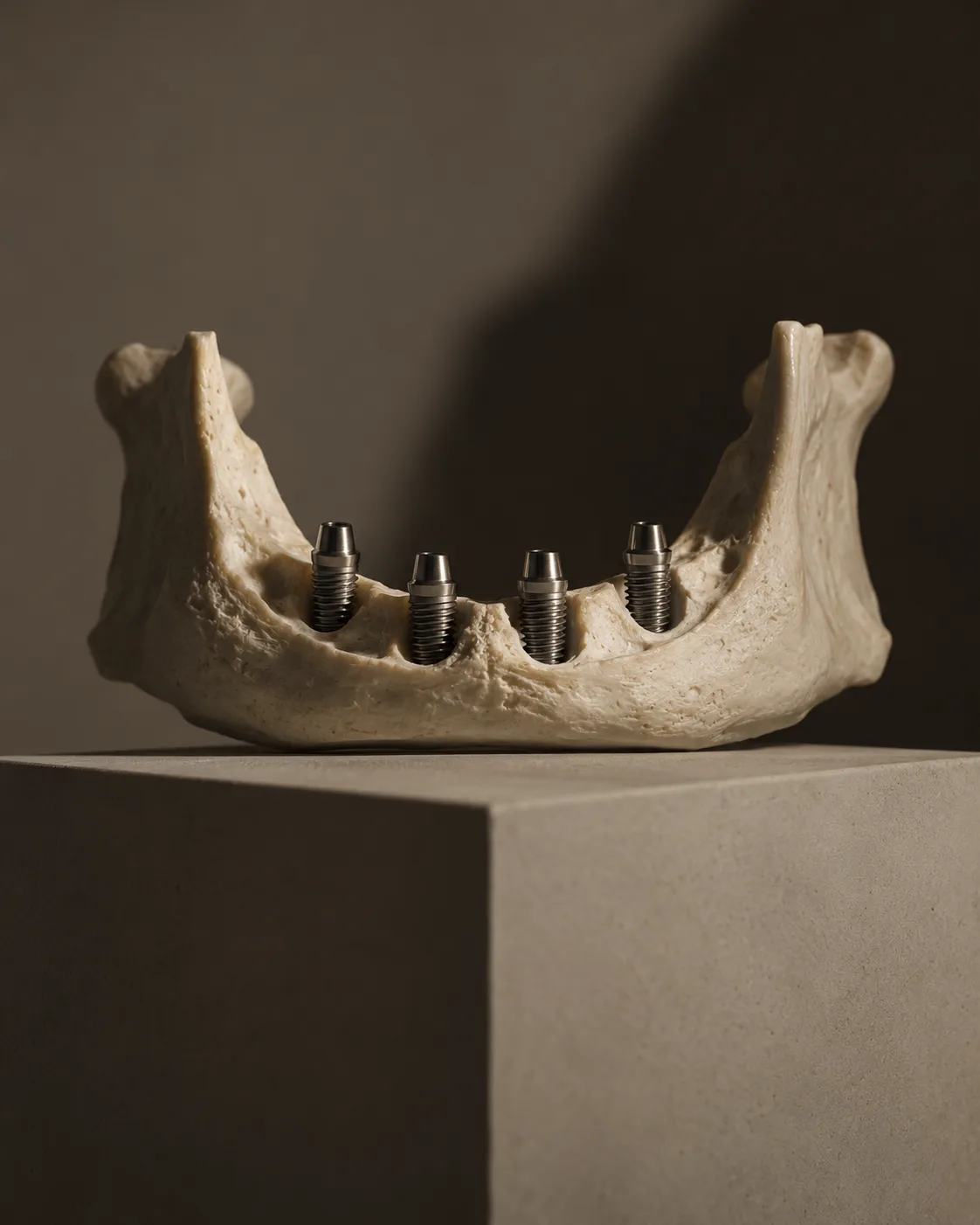
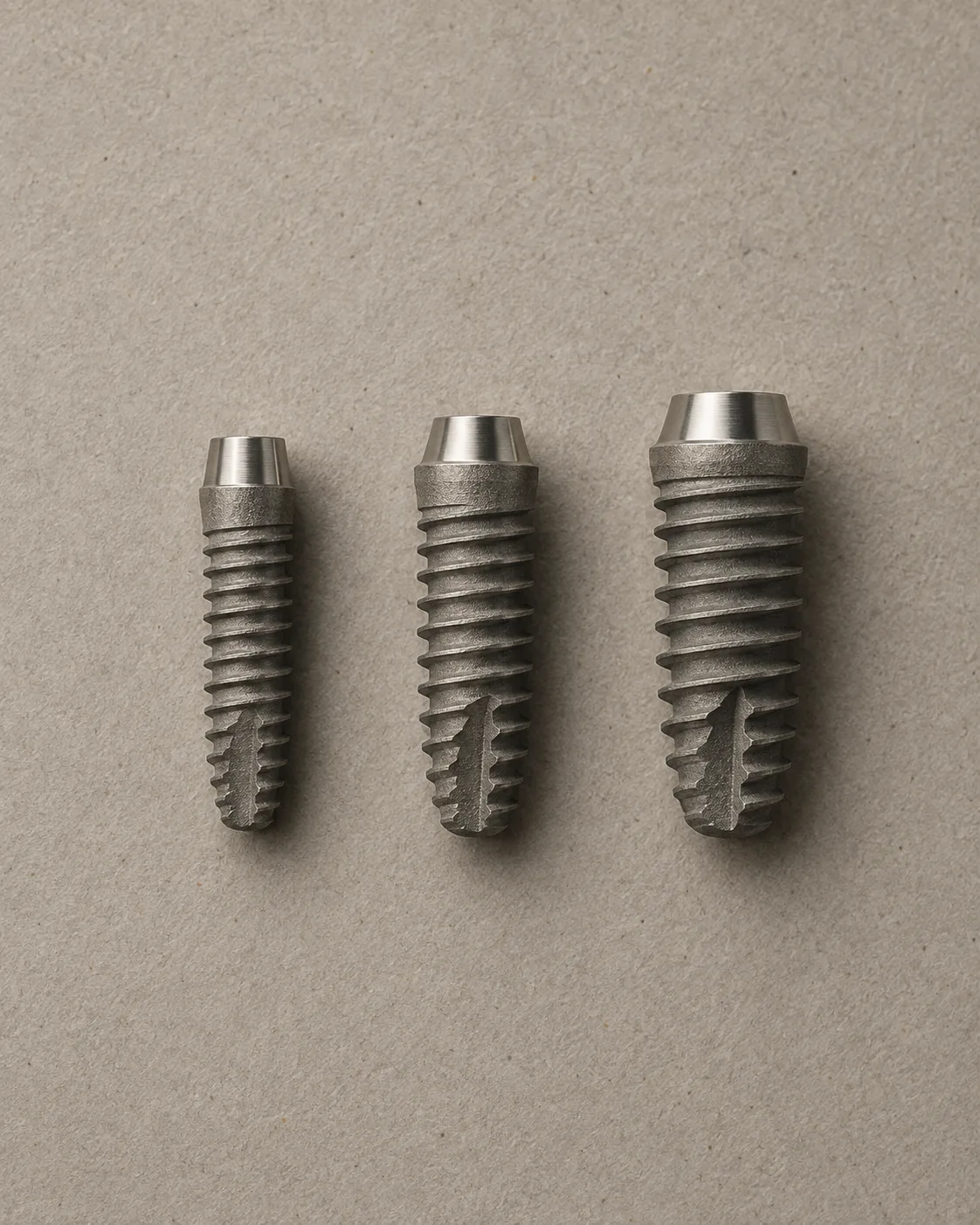
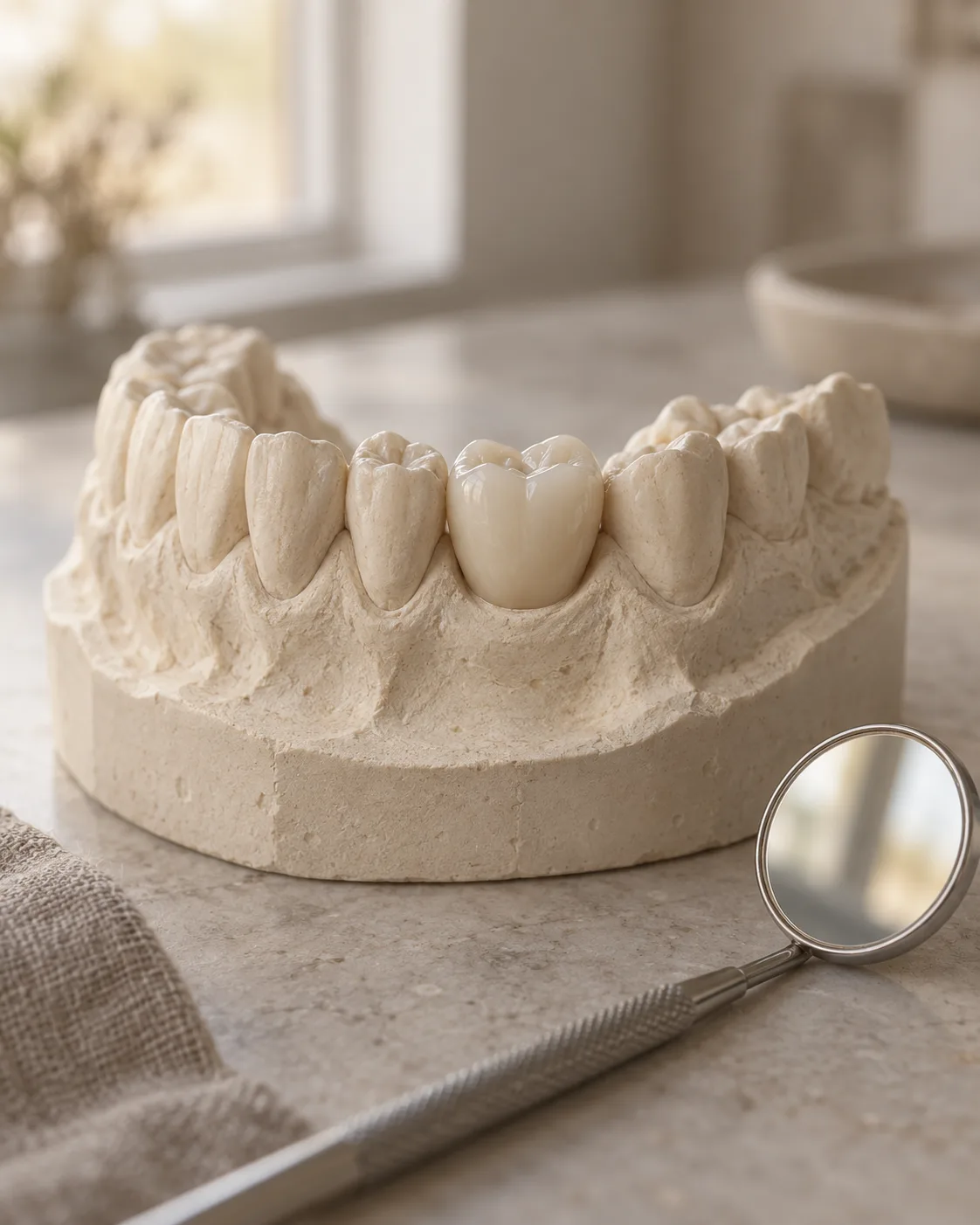
A dental implant is a titanium screw placed in the jawbone to replace the root of a missing tooth. A crown is fitted on top, and that is the part you see. People use the one word for both, which is why quotes from different clinics are so hard to compare.
No payment taken here. Your price is confirmed after a clinical assessment - and that is the price you pay.
01
What a dental implant actually is
A dental implant is a titanium screw placed in the jawbone to replace the root of a missing tooth. A crown is fitted on top, and that is the part you see. People use the one word for both, which is why quotes from different clinics are so hard to compare.
The short answer. Dental implants in Antalya start at £300 a tooth for the fixture. The same tooth quotes at around £2,500 privately in the UK. Allow two trips a few months apart, and expect the abutment and crown to be priced separately - by us and by everyone else.
We price the parts separately and show you all of them, because that is the only way to tell whether you are comparing like with like. A single implant is £300 on the S-Pure fixture, £410 on the standard NTA and £750 if you want Straumann. The abutment and the crown are extra, and they are on the same published list.
02
The problem a missing tooth causes
A gap is not only a gap. The teeth either side of it drift, the tooth above it drops down looking for something to bite against, and the bone that used to hold the root starts to shrink because nothing is pushing on it any more. That is why a missing back tooth nobody can see still matters, and why leaving it costs more later: the longer you wait, the more likely you need a bone graft before an implant can go in at all.
An implant is the only replacement that puts load back through the bone. A bridge grinds down two healthy teeth to carry a false one. A denture sits on the gum and lets the bone carry on shrinking underneath it. Neither is wrong, and for some people they are the right answer - but only the implant stops the bone loss.
03
Who is a good candidate for dental implants?
You are likely suitable if your gums are healthy and there is enough bone where the tooth is missing. If the bone is thin or soft we can add graft material to build support first - a graft is £120 per cc here against about £650 in the UK, so it is not the trip-ending expense people fear.
Some things genuinely slow healing: uncontrolled diabetes, heavy smoking, certain bone medications. We ask about your medical history before you book, not after you land, and if a dentist thinks implants are the wrong plan for you we say so while you can still change your mind for free.
04
Full mouth dental implants: All-on-4 and All-on-6
If most or all of a jaw is gone, you do not need an implant per tooth. Four or six implants can carry a fixed bridge for the whole arch. All-on-4 is £3,099 an arch and All-on-6 is £3,950, both including the twelve zirconium teeth on top.
For comparison, the same All-on-4 arch quotes at around £14,500 privately in the UK. That gap is the reason most people reading this page are reading it, and it is worth saying plainly that the gap is mostly wages, rent and lab costs rather than anything to do with the titanium.
05
Your Journey to a New Smile
A clear, step-by-step guide to your dental implant treatment in Turkey. From your first scan to your final smile.
01Start
Consultation & Scan
We examine your mouth and take X-rays and a 3D scan if needed. We measure bone levels and plan the exact implant position. We also discuss all options, costs, and timings in writing.
02Prepare
Planning & Consent
We confirm the plan that suits you. If a tooth must be removed, we may place the implant on the same day (immediate placement). Otherwise, we allow healing first.
03Action
Surgery Day
The area is numbed with local anesthetic. Most people feel pressure, not pain. We ensure the implant fits gently and precisely. A small healing cap or gum is placed over the implant.
04Recover
Healing Period
The gum implies normal tenderness for a few days. The implant then fuses with the bone (osseointegration). This usually takes 8–12 weeks, but can be longer if bone grafting was needed.
05Reveal
Abutment & Impression
Once the implant is firm, we uncover it and attach the abutment. We take an impression or a digital scan so the lab can create your custom crown or bridge.
06Finish
Fit & Fine Tune
We fit your crown or bridge and check your bite. We adjust until it feels natural and even. We show you how to clean around the implant and book your review.
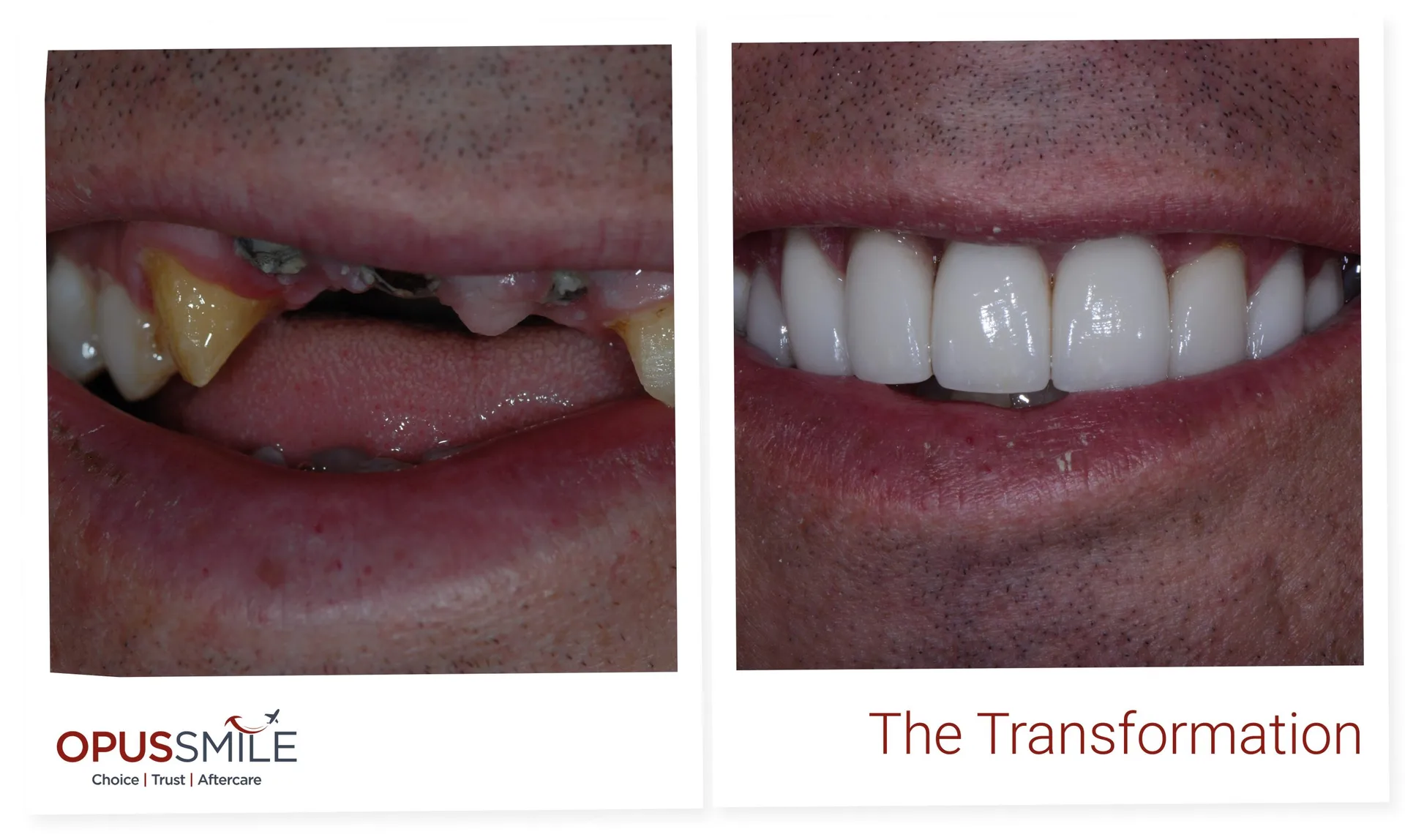
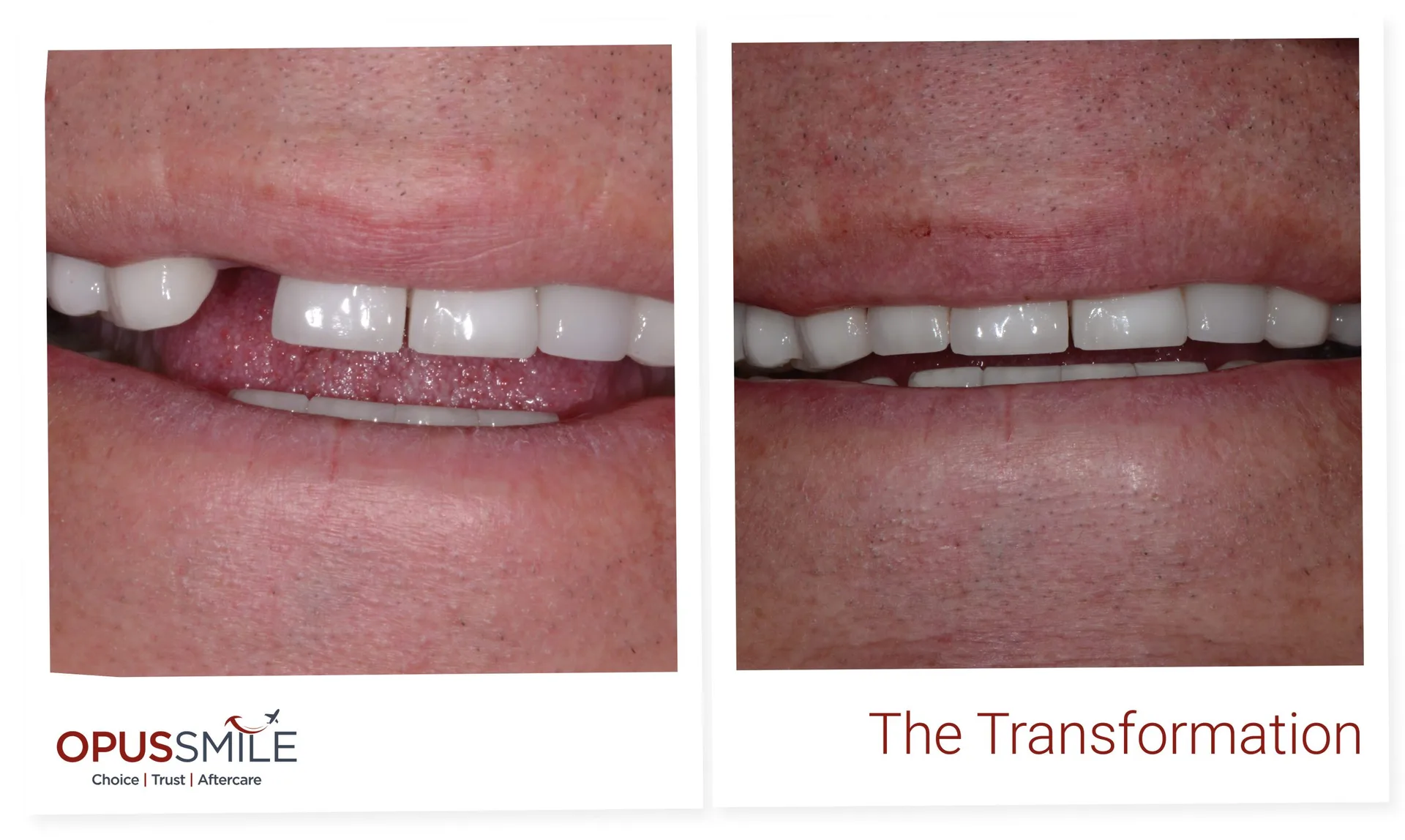
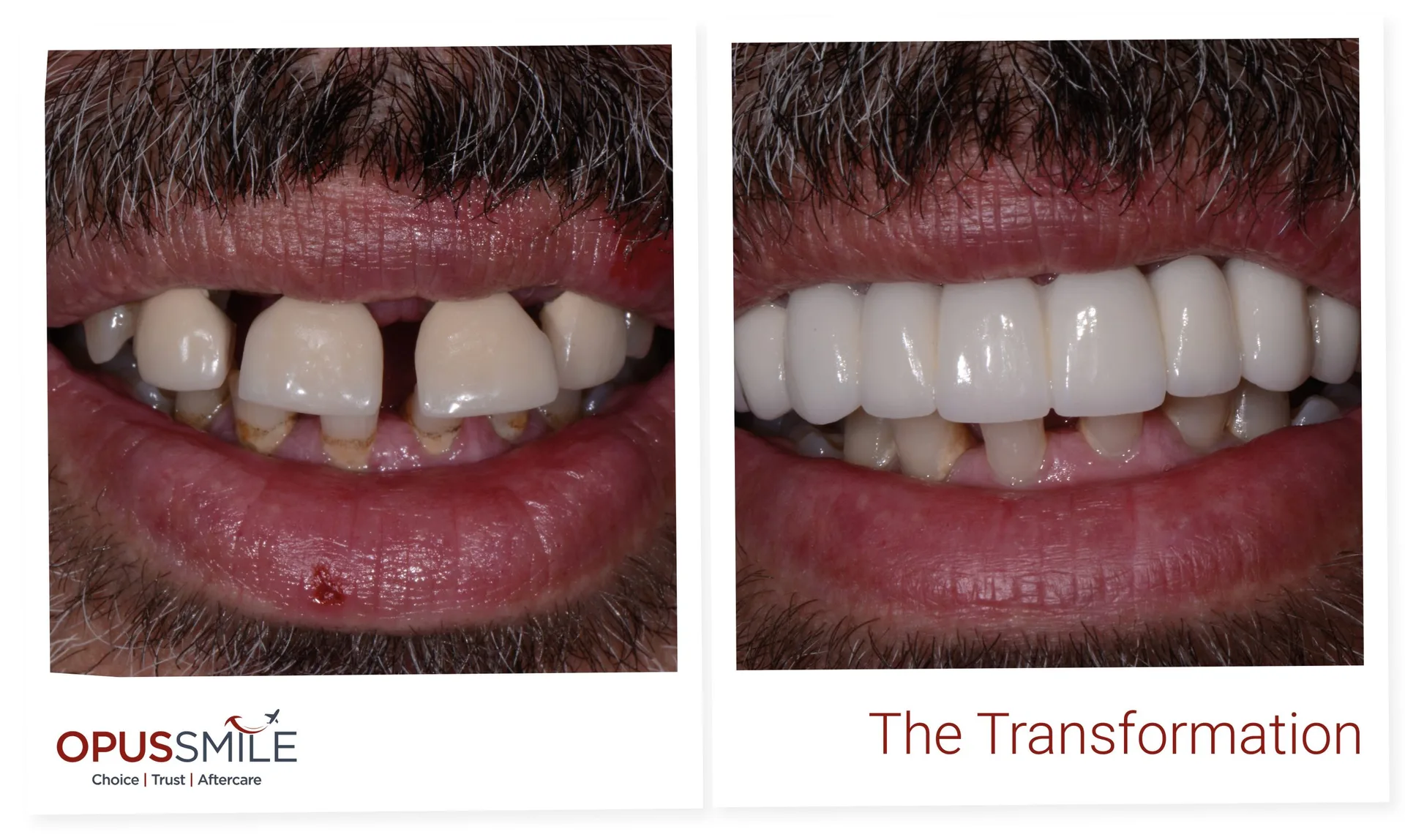
The record
Before & After Photos
07
Does it hurt, and what does an implant feel like?
Placement is done under local anaesthetic. You feel pressure and hear the drill; you should not feel pain. Most people describe the days afterwards as sore rather than painful, in the way an extraction is sore, and manage on ordinary painkillers for two or three days.
Once it has healed, an implant feels like a tooth. It does not move, you do not take it out, and you clean it with a brush and an interdental brush like everything else in your mouth. The one thing it does not have is a nerve, so it will not tell you when something is wrong - which is why the check-ups matter more than they do on a natural tooth.
08
Implants vs bridges vs dentures
A bridge is quicker and cheaper up front, and it is a reasonable answer when the teeth either side already need crowns. It costs you those two teeth: they are drilled down to carry the span, and if the bridge fails you have three problems instead of one.
A denture is the cheapest and the least invasive, and for a full arch it can be the right call while bone heals. It also moves, covers your palate, and lets the ridge underneath keep shrinking, which is why dentures need remaking every few years.
An implant costs more on the day and less over twenty years, and it leaves the teeth either side alone. That is the whole trade, and any clinic that tells you implants are always the answer is selling, not advising.
09
How long dental implants last, and the aftercare
The screw is guaranteed for life against failure to integrate. The crown on top carries our five-year guarantee against breakage, chipping and cement failure, with a contribution of up to £90 toward a local repair if getting back to Antalya is not practical.
What keeps that cover live is ordinary: brush twice a day, clean between the teeth, and have a hygienist see it once a year. Implants do not decay, but the gum and bone around them can become inflamed - peri-implantitis - and that is the thing that loses implants a decade in. It is preventable and it is visible on an X-ray long before it hurts.
10
One implant, several, or a whole arch?
One gap. One implant, one crown.
Two or three missing in a row. Two implants can carry a bridge across three teeth, so you do not pay for a third fixture.
Most or all of a jaw. Four or six implants carrying a fixed arch - see All-on-4 and All-on-6.
Which of those you need is a decision for a dentist with your scan in front of them, not something to settle from a price list. We will give you a written plan before you book, and it will say which of these it assumes.
Fixture, abutment and crown
How your implant is planned and made
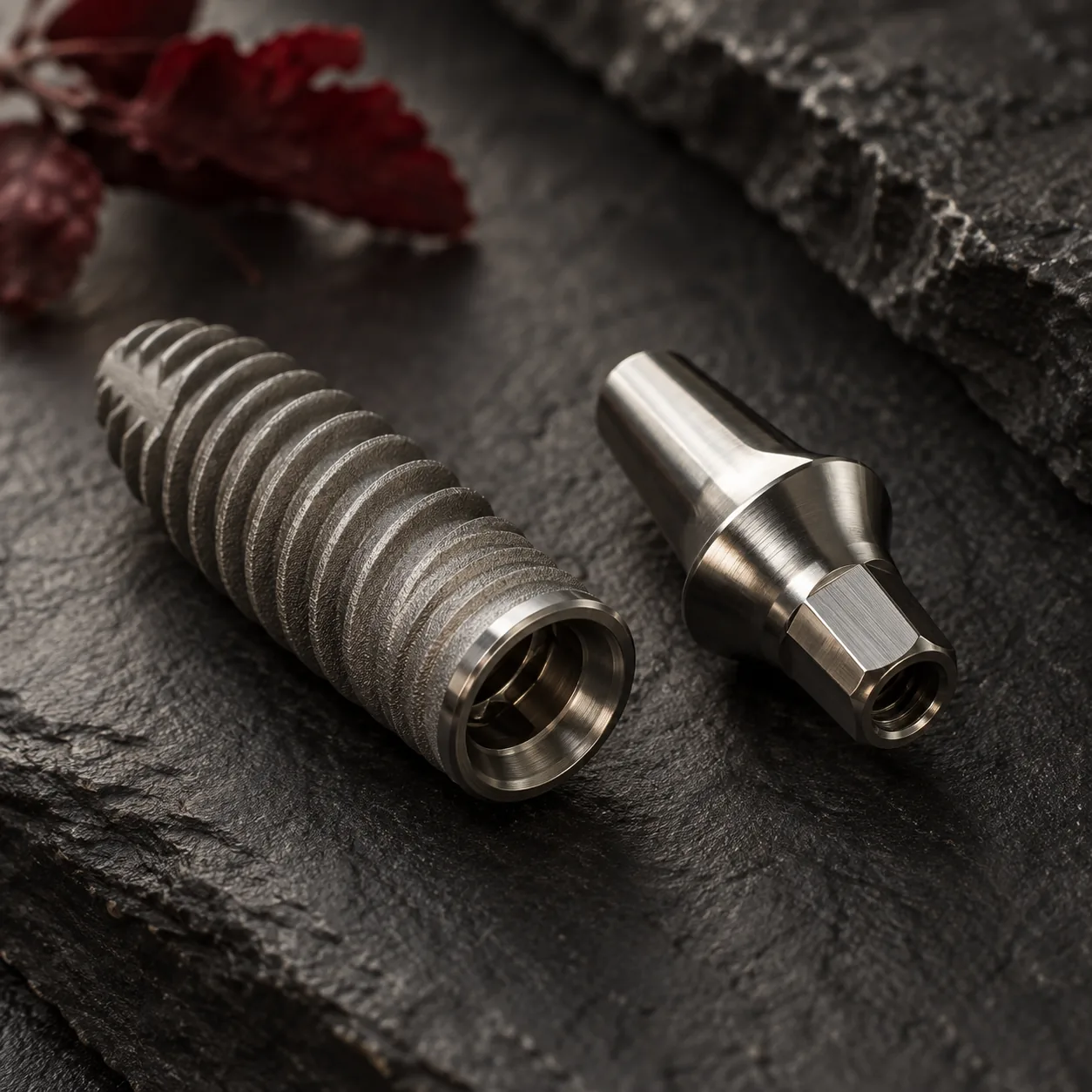
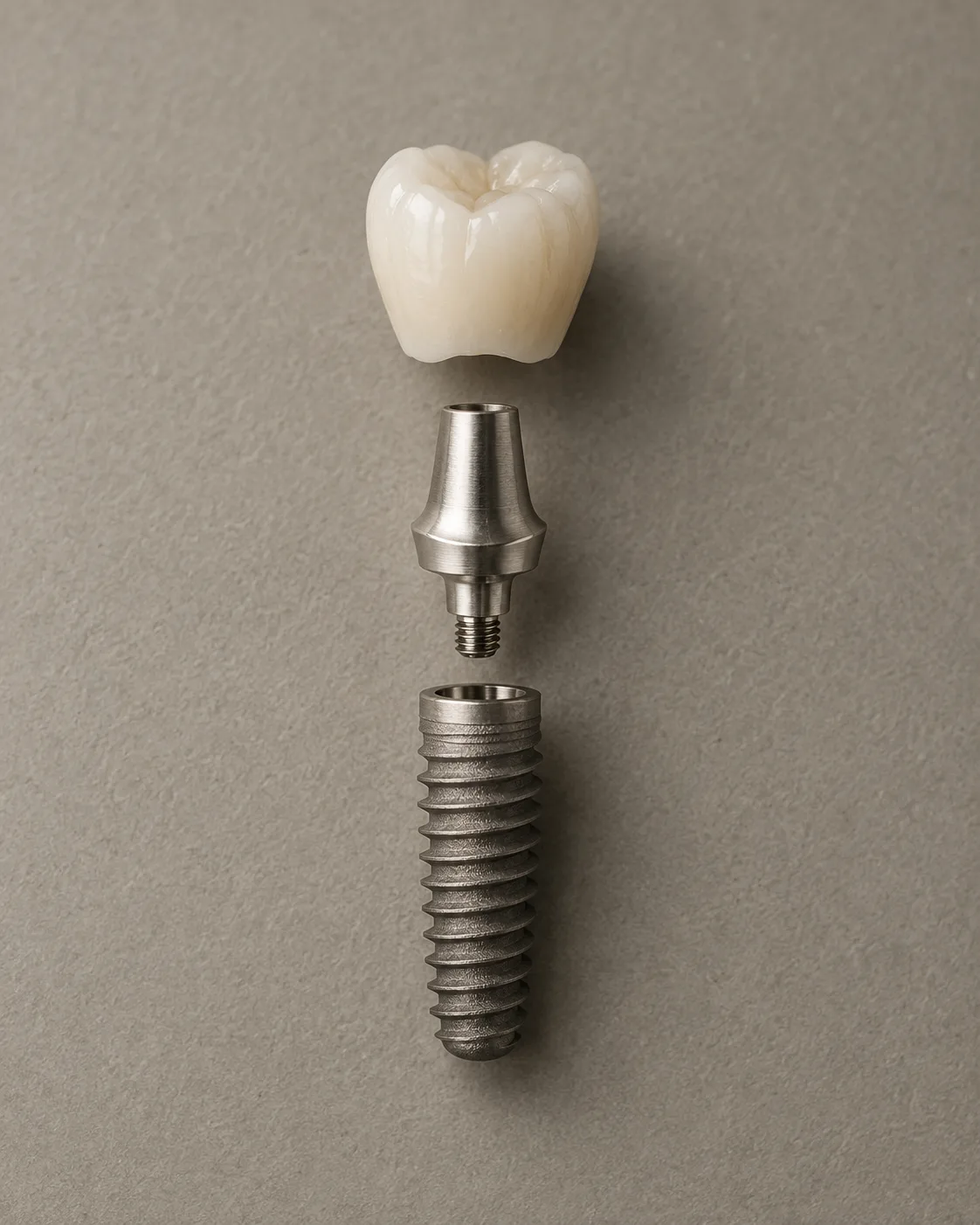
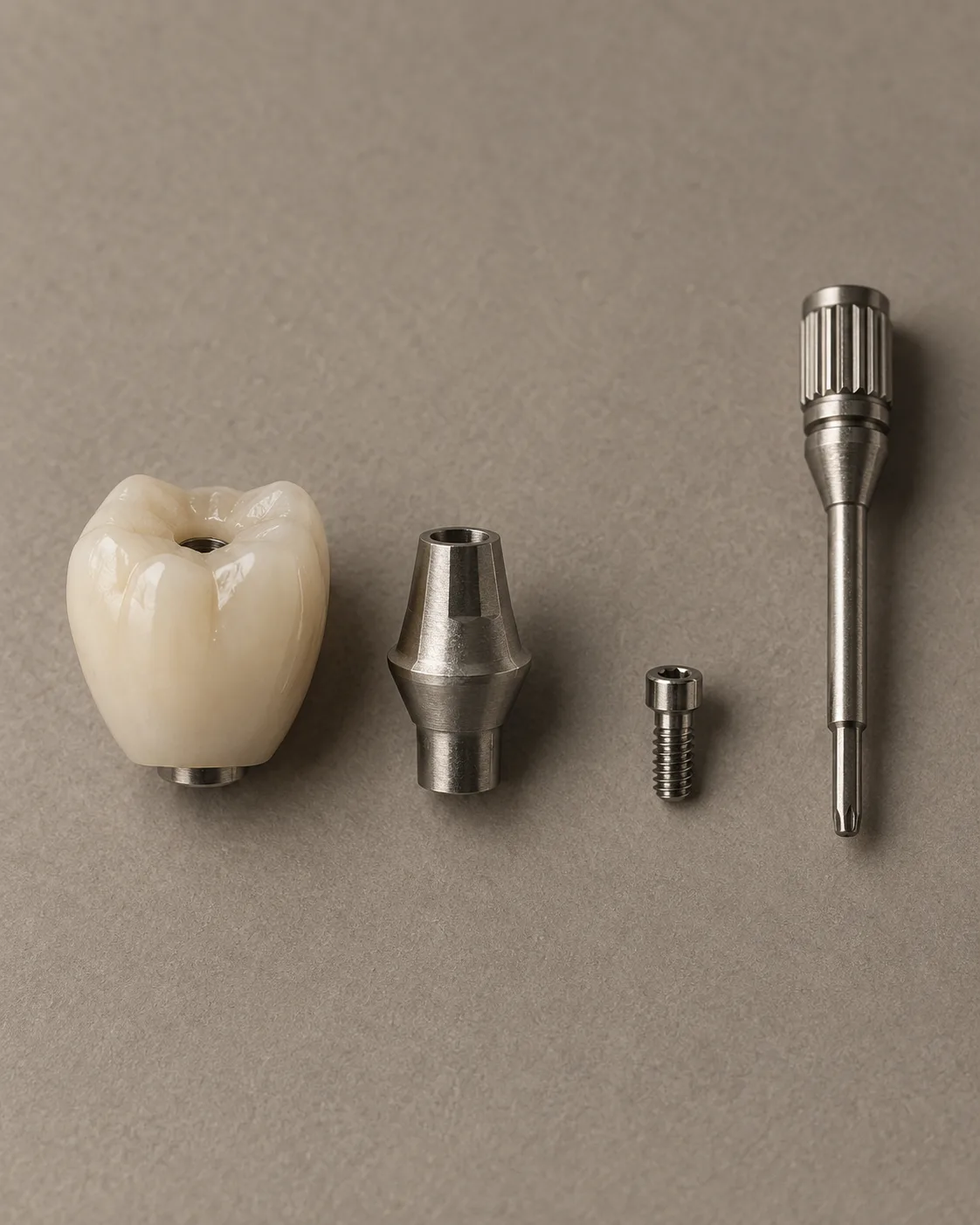
An implant is three parts: a titanium fixture in the bone, an abutment that rises through the gum, and a crown on top. The position is planned on a scan before anything is done, the fixture is a named brand on your plan, and the crown is made for that one gap. This is what each part involves.
01
The fixture
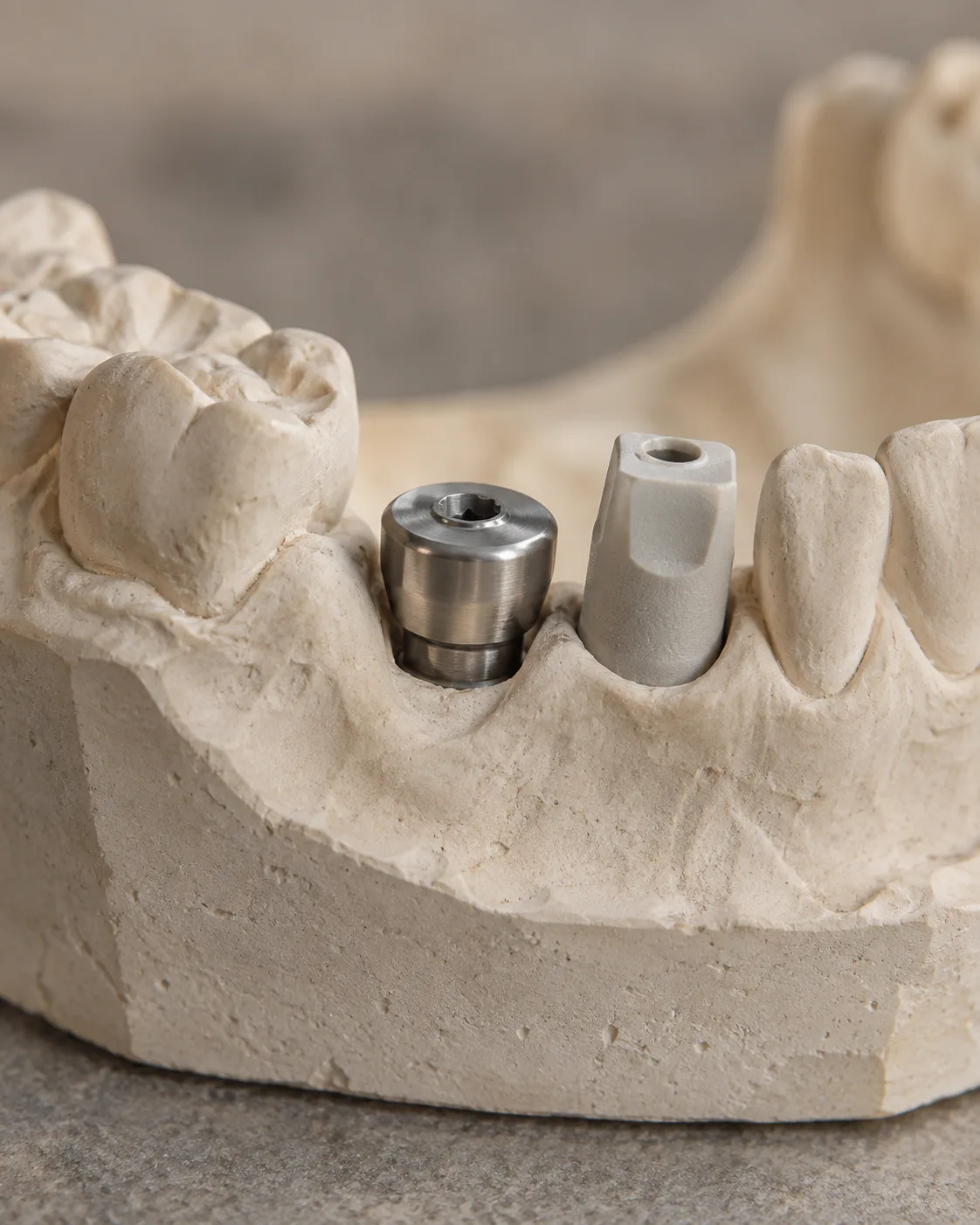
A threaded titanium post, chosen in length and width for the bone you have, not from one size. Titanium is used because bone grows onto it and locks it in place over a few months. The brand and size are written on your plan, so you know exactly what is in your jaw.
02
The abutment and the crown
The abutment connects the fixture to the crown and shapes the gum around it. The crown is zirconia or E-max, matched to the teeth beside it and screwed or cemented on. If the crown ever needs replacing, the fixture stays.
03
Planned on a scan
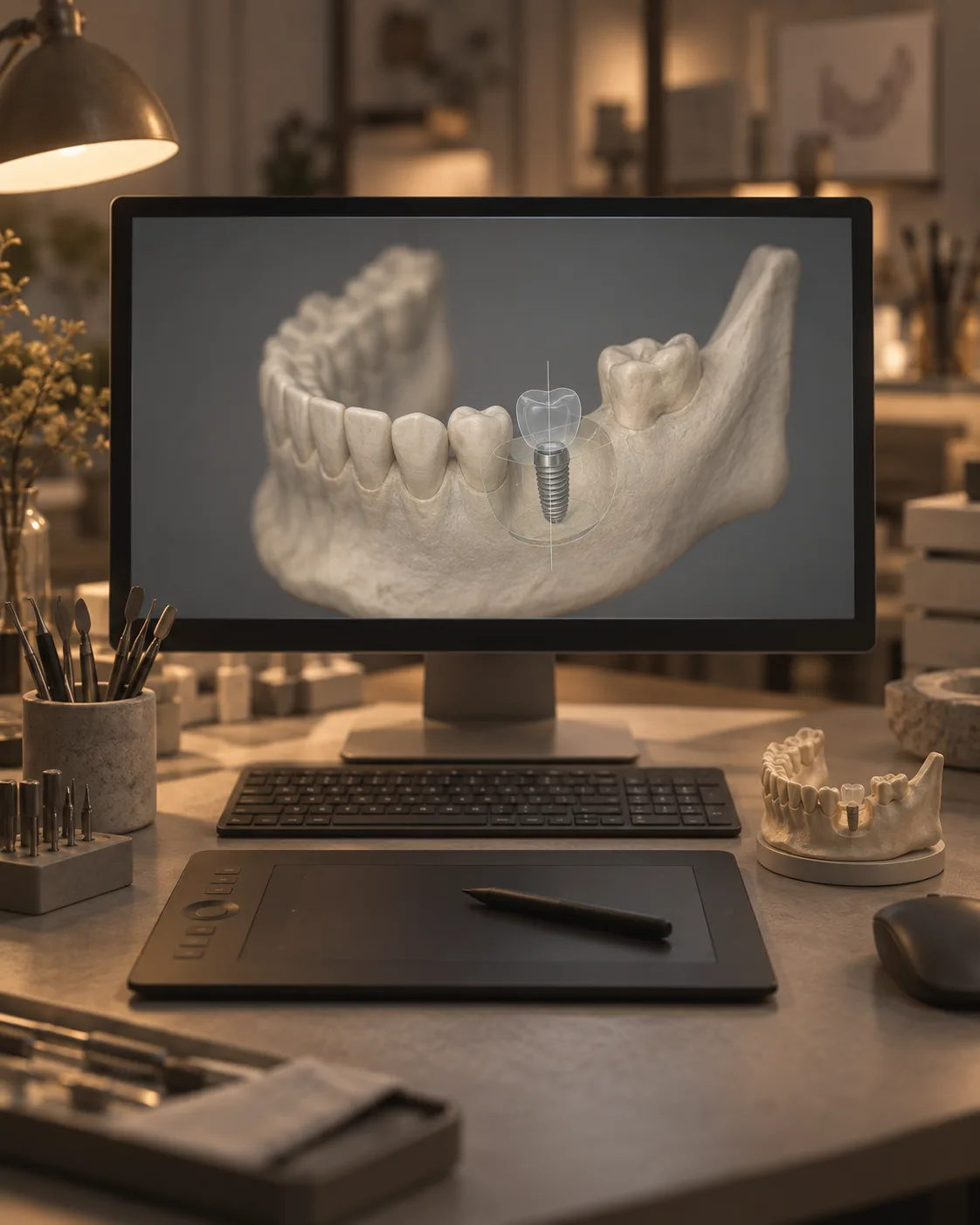
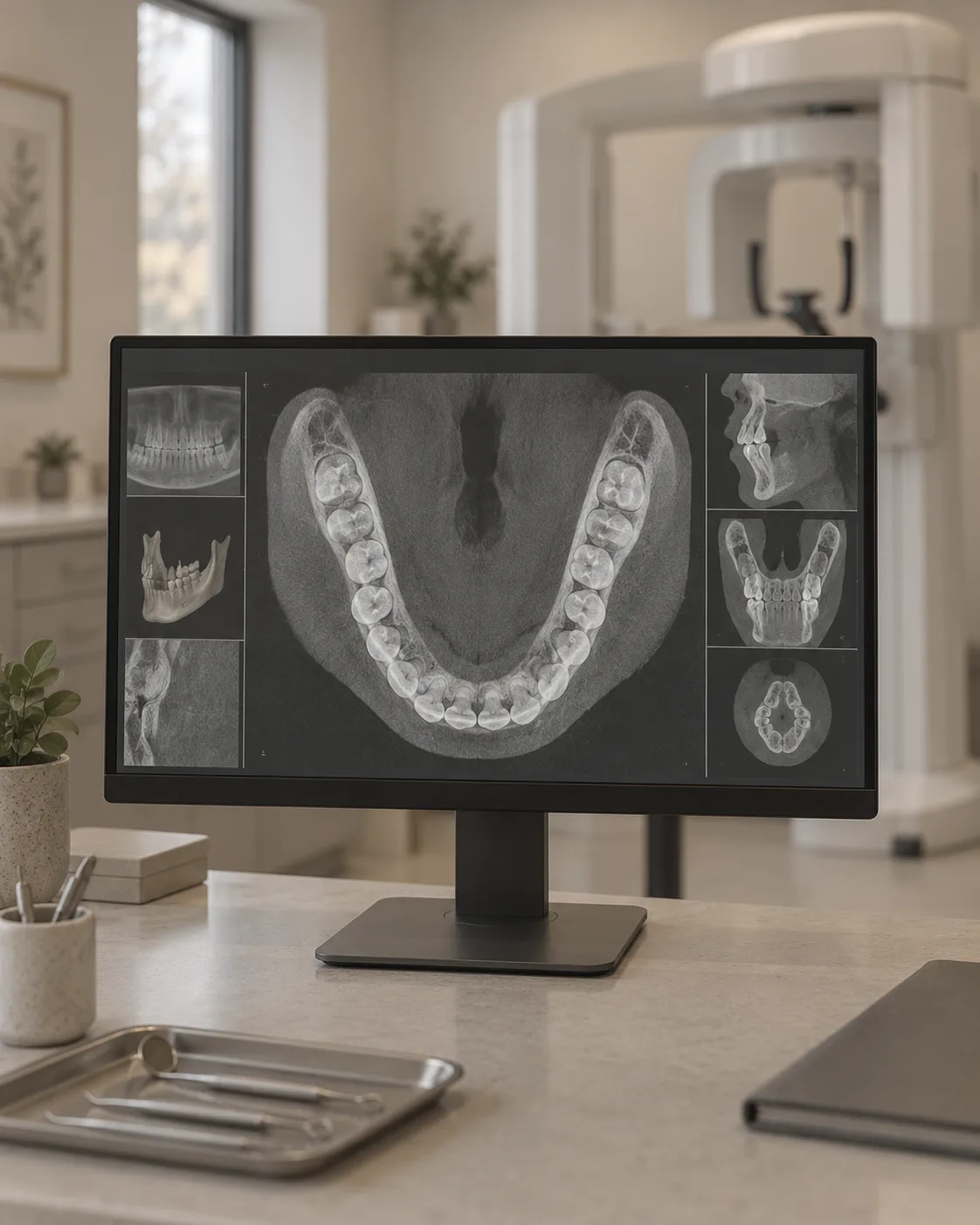
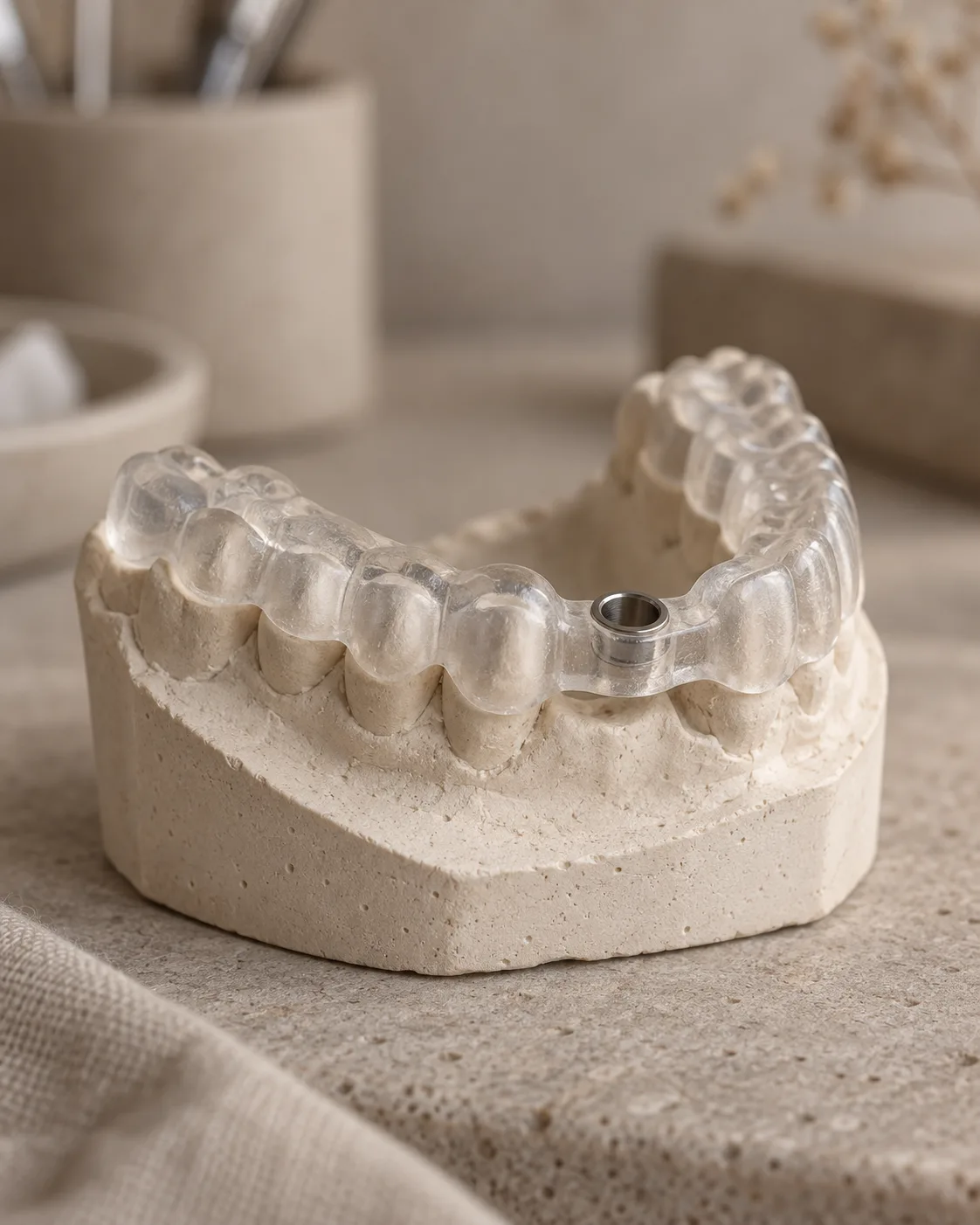
A cone-beam CT shows the bone in three dimensions: how deep, how wide, and where the nerve and the sinus sit. The fixture is placed on the scan first, and a printed guide carries that position into your mouth to the millimetre.
04
Placed in one appointment
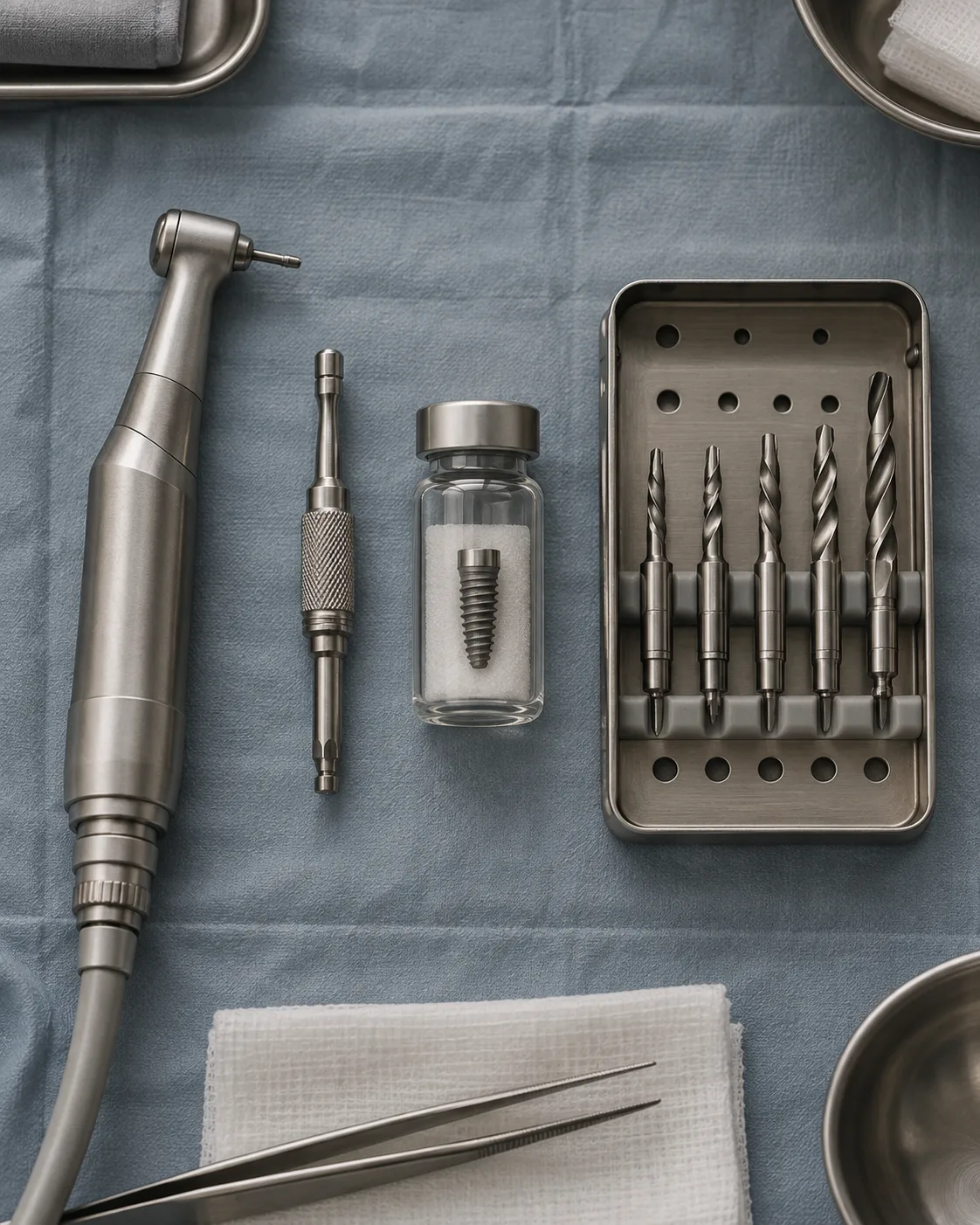
The placement itself usually takes less than an hour for a single tooth, under local anaesthetic, with a sterile kit opened for you alone. Most people describe the day after as an ache rather than a pain.
05
The materials
The fixture is titanium in nearly every case. Where the choice lies is in the grade of titanium and in what the crown is made of, and both are on your plan.
Material
What it is
How it behaves
Best for
Titanium (grade 4)
Commercially pure titanium, the standard fixture.
Decades of evidence; bone bonds to it reliably.
Almost every implant.
Titanium-zirconium alloy
A stronger titanium alloy for narrower fixtures.
Allows a slimmer implant where the bone is thin.
Narrow gaps and thin ridges.
Zirconia crown on top
A white ceramic crown, screw-retained where possible.
Strong, no metal showing, easy to retrieve.
Back teeth and most single implants.
E-max crown on top
Lithium disilicate, the most lifelike ceramic.
Light passes through it like enamel.
Front teeth where the crown will show.
Six steps from scan to crown
How an implant is placed and restored
Two visits, months apart: the fixture goes in and heals, then the crown is made and fitted. Machines do the measuring and the cutting; people do the placing, the colour and the final check.
01The scanA cone-beam CT maps the bone, the nerve and the sinus in three dimensions.
02The planThe fixture is positioned on the scan for depth, angle and the crown that will sit on it.
03Guided placementA printed guide with a metal sleeve holds the drill to the planned position.
04HealingA healing cap sits on the fixture while the bone grows onto it, usually three to six months.
05The crown madeA scan of the fixture goes to the laboratory; the abutment and crown are milled and layered to match.
06The fitTried in, the bite checked, torqued to the fixture and the screw hole sealed.
Answered plainly
Dental implants in Turkey: your questions answered
Still not sure? A clinician talks it through before you commit to anything.
From £300 a tooth for the fixture, with the abutment and crown priced separately and published on the same list. A full arch on four implants is £3,099. The figure you are quoted in writing before you fly is the figure you pay.
Why are dental implants cheaper in Turkey than the UK?
Wages, premises and laboratory costs, and an exchange rate that has moved a long way. The fixtures are the same brands sold in Britain - Straumann is Swiss wherever it is placed. If a price is low because the fixture is unbranded or the lab is offshore, that shows up on the plan, which is why we publish which fixture you are getting.
Is it safe to have dental implants in Turkey?
The procedure is the same procedure. The risk in dental travel is not the surgery, it is what happens when something needs attention after you are home - which is why our guarantee is administered from the UK and why we would rather you read it before you book than after.
Will the surgery hurt?
No. Placement is under local anaesthetic, so you feel pressure rather than pain. Soreness for two or three days afterwards is normal and ordinary painkillers handle it.
How long does the whole thing take?
Three to six months from first trip to final crown, in two visits of about five days and a week. Longer if a bone graft is needed first.
Can I have an implant the same day the tooth comes out?
Often, if the socket is clean and there is enough bone. It is confirmed on the scan, not promised beforehand.
What if I do not have enough bone?
A graft builds it up: £120 per cc, or a sinus lift in the upper back jaw from £150. Both add healing time rather than making implants impossible.
Antalya or Istanbul for dental implants?
Antalya, for the reasons in the section above: direct UK flights, short transfers, and somewhere to recover between appointments. Istanbul is a bigger city with more traffic between the hotel and the chair.
How long do dental implants last?
The screw is guaranteed for life against failure to integrate; the crown carries five years. Beyond that it is down to cleaning and hygiene visits, the same as for natural teeth.
What happens if something goes wrong when I am home?
You message your patient manager in the UK. If a repair is needed and returning is impractical, we contribute up to £90 toward having it done locally, once it is agreed in writing.
Do you take payment for flights and hotels?
No. We show you real availability and you book it yourself, in your own name. That keeps your money with the airline and the hotel, where the consumer protection is.
Can I get implants on the NHS?
Very rarely, and only where there is a clinical need such as after trauma or cancer treatment. Cosmetic replacement of a missing tooth is not routinely funded.
12
Dental implants in Antalya: how the trip works
Implants are two trips. The first places the fixtures and takes about five days; you go home while the bone integrates, which is three to six months. The second fits the crowns and takes about a week. Between them you are living normally, with a temporary in place if the gap shows.
Antalya rather than Istanbul is a deliberate choice: direct flights from most UK airports, a clinic and a hotel ten minutes apart rather than an hour of traffic each way, and somewhere you can actually convalesce between appointments. Search flights and hotels once you have registered, and the choices you make save into your patient portal alongside the treatment plan.
13
What dental implants cost in Antalya
Every chargeable item is published. A single implant runs from £300 to £750 depending on the fixture, the abutment is £95, and a zirconia crown on top is £170. An extraction, if the tooth is still there, is £60.
Put your own case together in the plan builder and it will total in pounds beside what the same work costs privately in the UK. It is for planning only: your actual plan and price are confirmed after a clinical assessment, and that is the number that goes in writing before you fly.
Our focus is your result. We stand apart through clear expectations, honest guidance, and full support from first message to final review. Every clinic partner is vetted for safety, outcomes, and patient experience. Your plan is digitally designed and delivered by internationally trained clinicians.
You keep the best of both worlds: significant savings versus typical UK private fees plus a written warranty and UK-based aftercare. No bait pricing. No pressure. We assess first, explain options, and confirm exact costs only after proper diagnostics.
Hear it from real patients. Explore verified reviews on Trustpilot and see before-and-after stories that show natural, lasting smiles.
The gentlest way to start
Tell us what you need. We will price it in writing.
One message and a coordinator replies with an indicative plan and price. Send a photograph of your smile if you have one - it makes the answer better, and it is never a call unless you ask for one.
We use a few cookies to keep the site working - your language, your currency, and your
session if you are signed in. Those are always on because the site cannot work without them.
We would also like to use one that measures how people find us and pays us a commission
on travel booked through the site. That one is entirely your call.
Read the privacy policy.