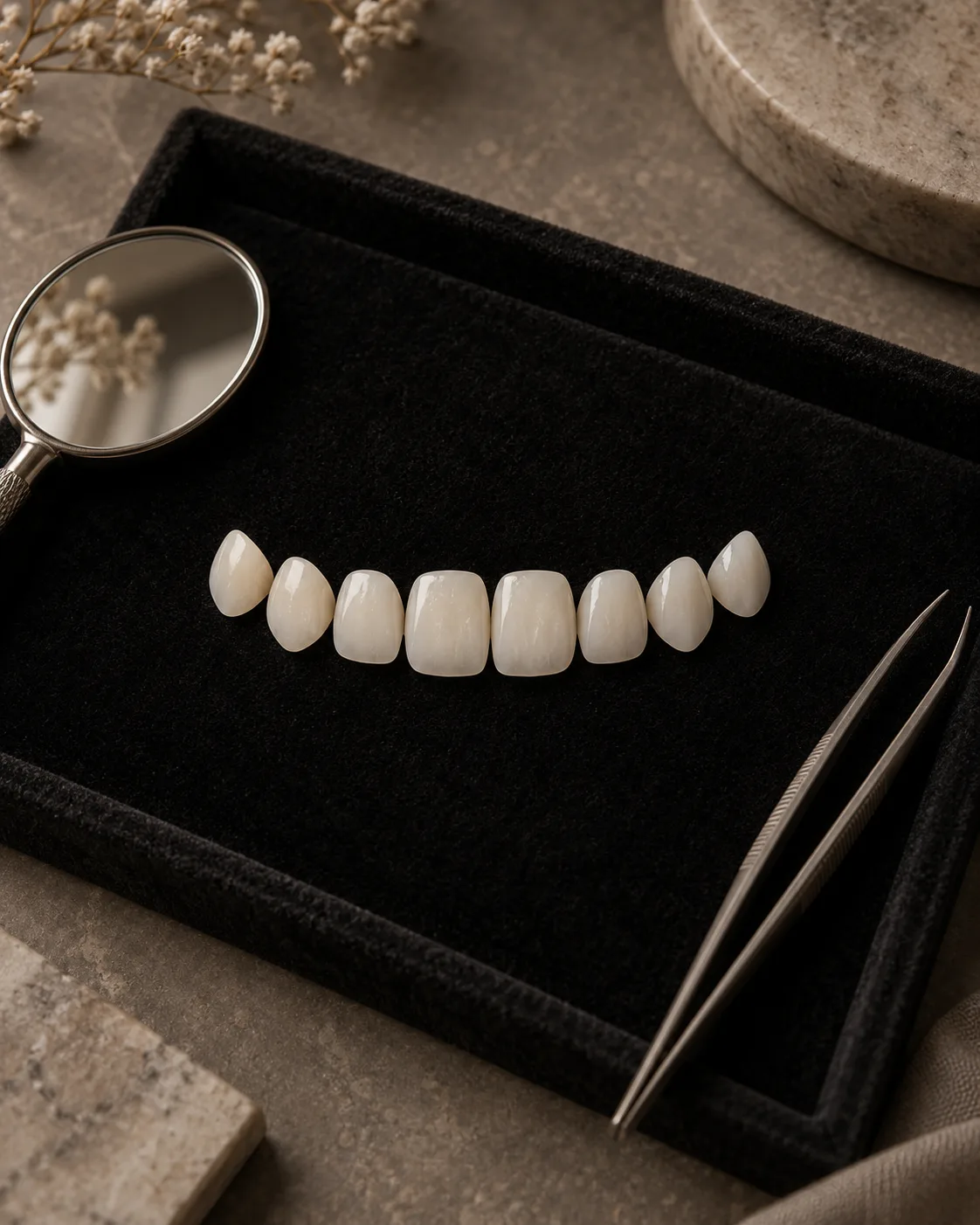
A zirconia crown is milled from a single block of zirconium dioxide - a ceramic strong enough to take the full force of a back tooth without a metal core underneath it. It is the crown we fit most often, and for most people it is the sensible default.
No payment taken here. Your price is confirmed after a clinical assessment - and that is the price you pay.
01
What a zirconia crown is
A zirconia crown is milled from a solid block of zirconium dioxide - a ceramic, not a metal, despite how often it is called "zirconium". There is no metal core, so no dark line ever appears at the gum.
The short answer. A zirconia crown in Antalya is £170 a tooth, against about £850 privately in the UK. It is the strongest tooth-coloured crown available and the usual choice for back teeth.
It is milled in one piece from a single block, which is why it does not have a weak join between core and covering the way a porcelain-fused-to-metal crown does.
02
Why people choose zirconia
Strength, mostly. It withstands the force of molar chewing better than any other tooth-coloured option, so it suits back teeth, heavy bites and anyone who grinds.
It is also kind to the gum, does not stain, and needs slightly less tooth removed than a metal-based crown because it does not need room for a core plus a covering. For a full mouth in one material, it is usually the sensible answer.
03
Zirconia or ZirCad Prime?
Standard zirconia - £170. Maximum strength, slightly more opaque. Ideal for molars, where nobody is examining translucency.
ZirCad Prime - £200. Graded through its thickness: tougher at the base, more translucent at the biting edge. It reads more like enamel, so it is the better choice further forward.
The extra is small and it only buys something on teeth people can see. On a second molar it buys nothing, and we will tell you that.
04
How a zirconia crown is made
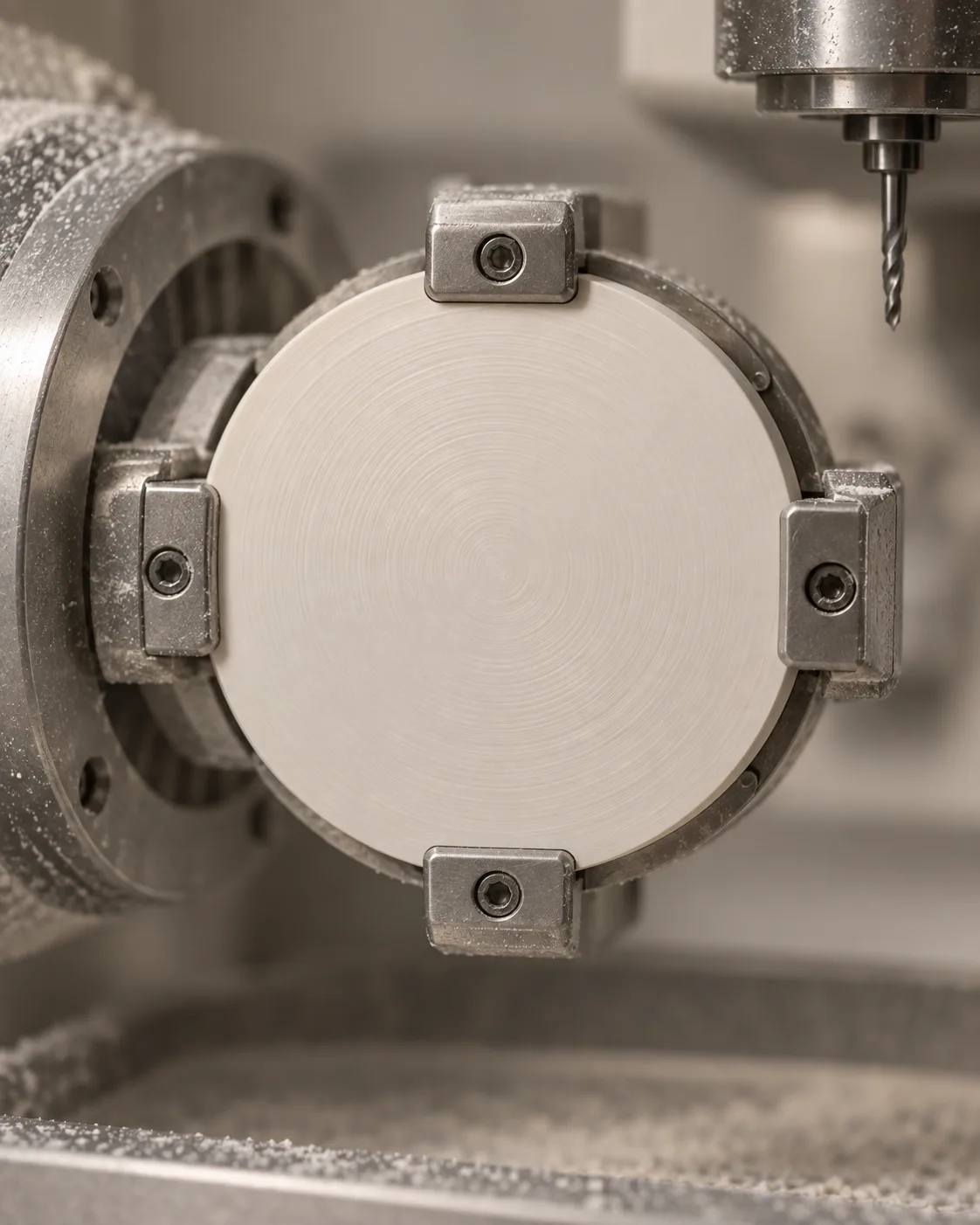
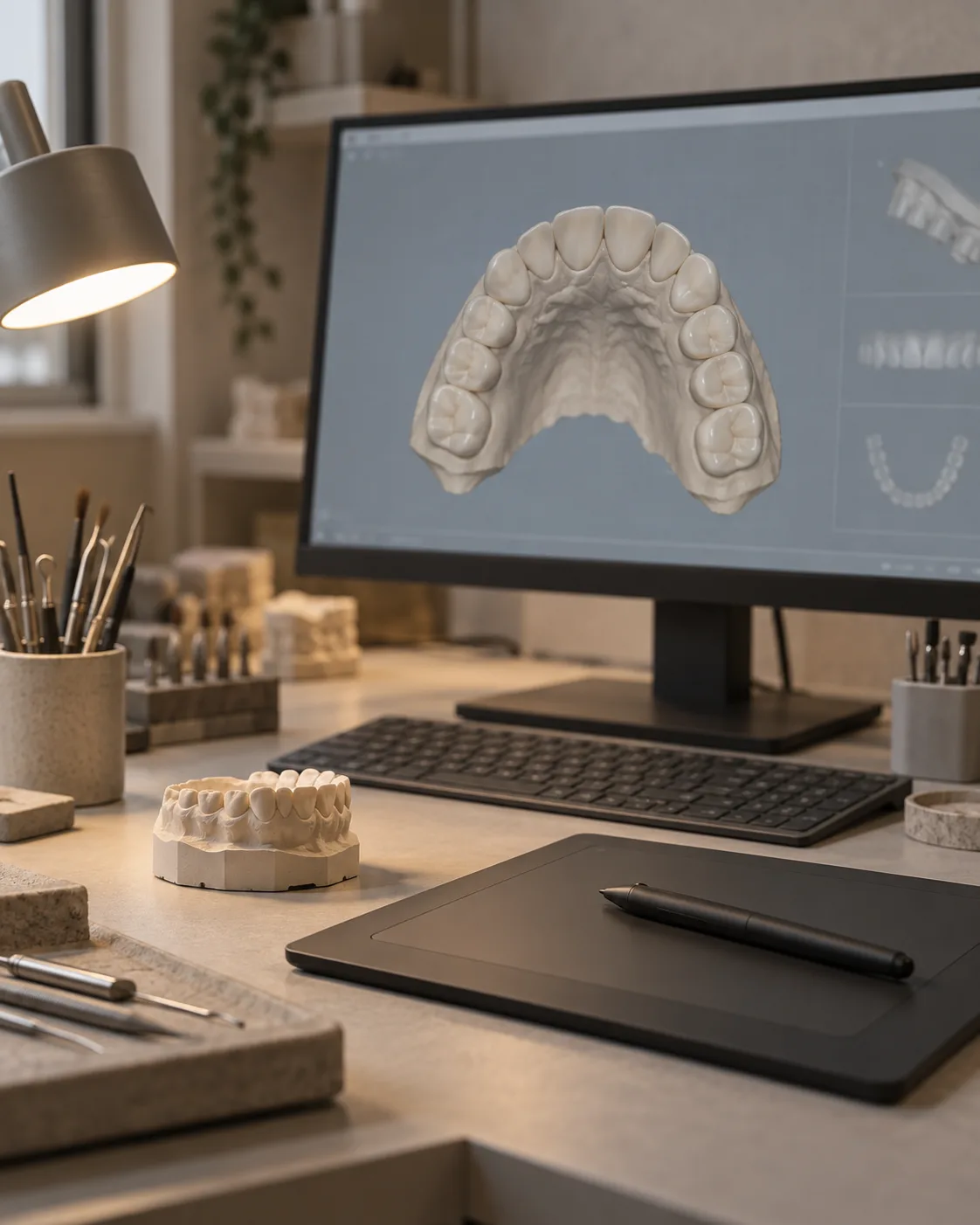
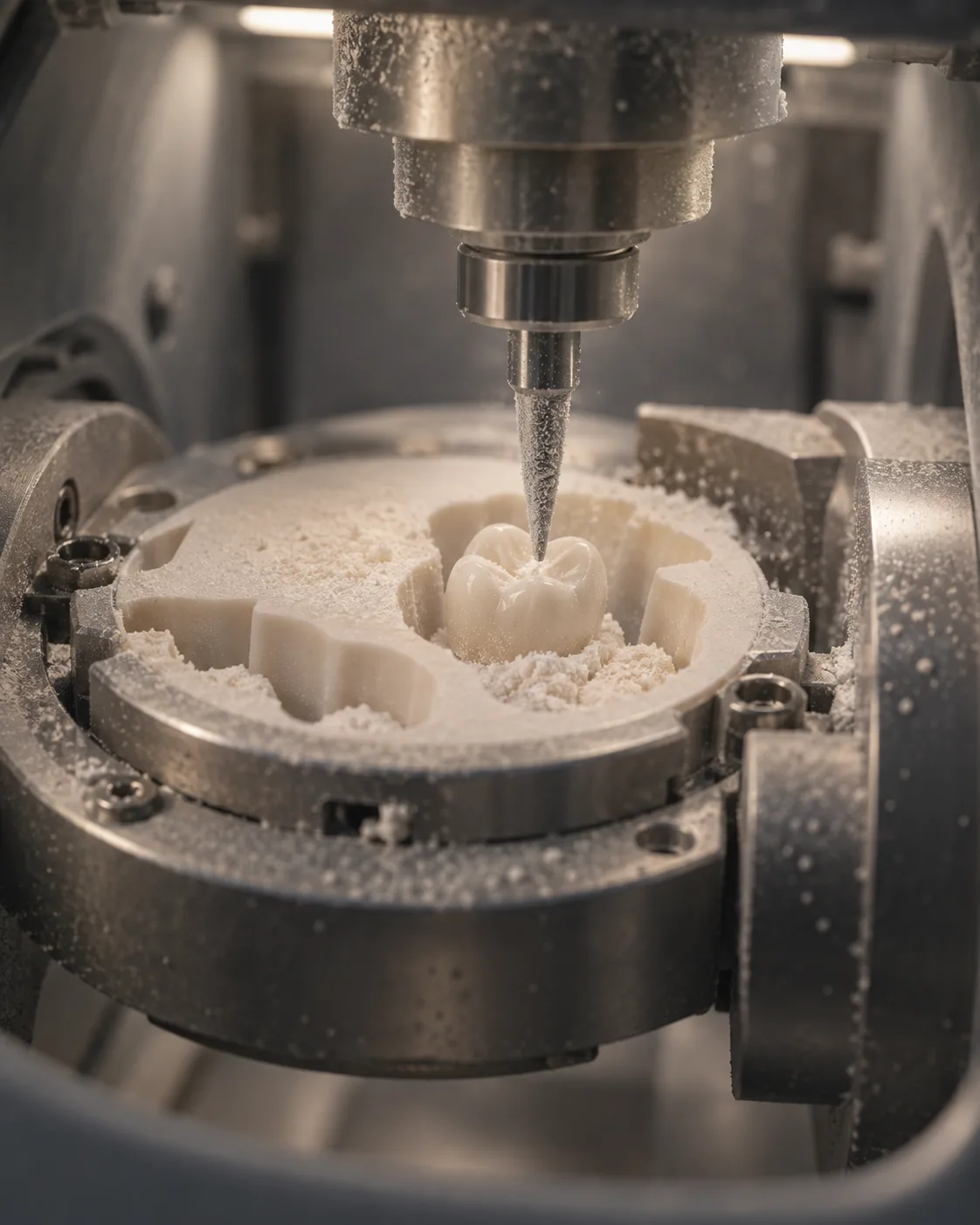
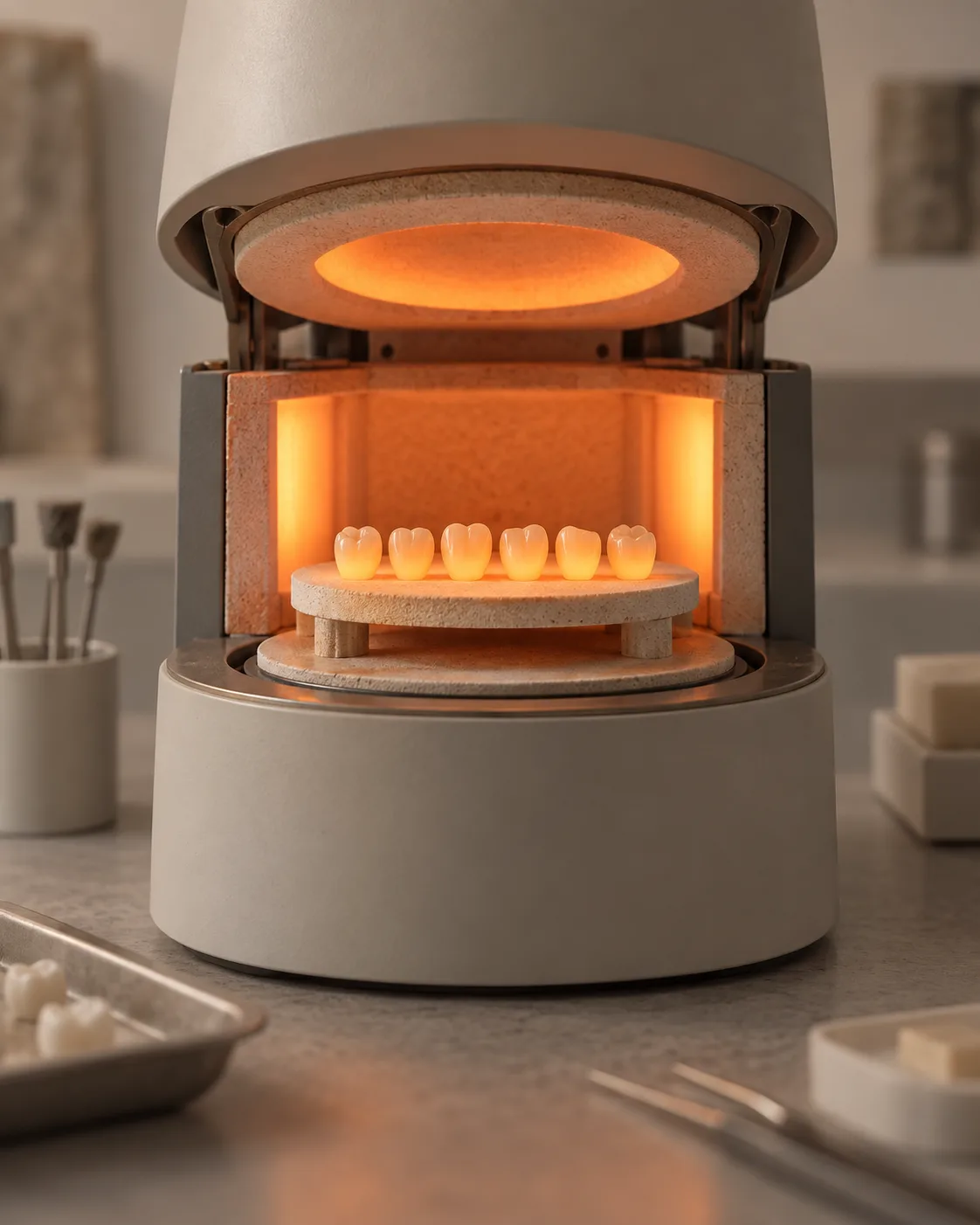
The tooth is prepared and scanned digitally. The crown is milled from a solid disc by machine, then sintered in a furnace at around 1,500°C, which shrinks it by roughly a fifth to its final dimensions - the milling allows for that shrinkage.
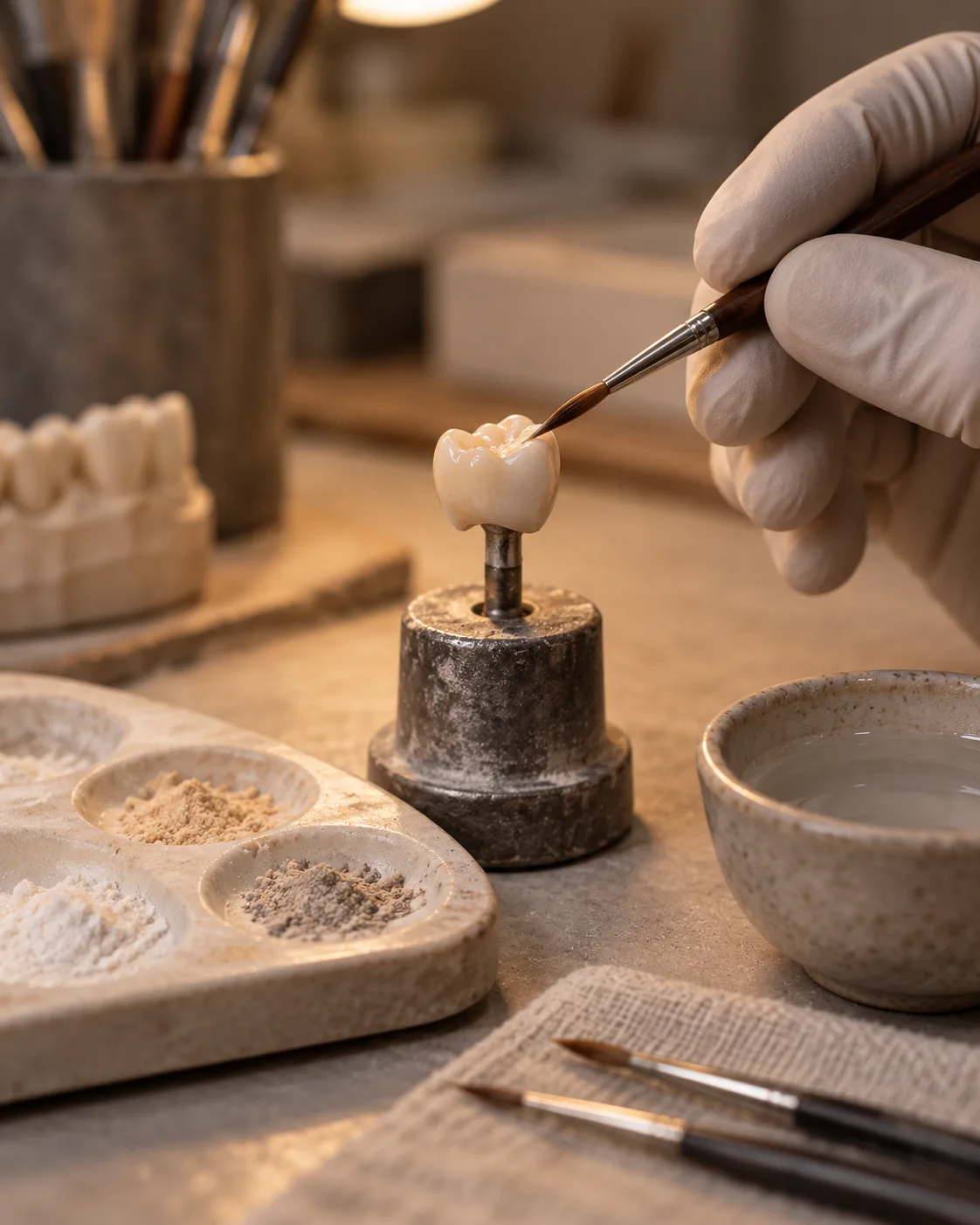
Then it is stained and glazed by hand to match your own teeth. That last stage is where a crown either disappears or announces itself, and it is done by a person, not a machine.
05
What zirconia crowns cost
A zirconia crown is £170 a tooth with us and a ZirCad Prime is £200. The same crowns quote at around £850 each privately in the UK.
If a root canal is needed first that is £120, and a fibre post to build the tooth back up is £85. All published, all on the plan before you fly.
06
How long zirconia crowns last
Five years of guarantee from us against breakage, chipping and cement failure. Realistically, ten to fifteen years and often longer, because zirconia rarely fails on strength.
What ends a crown is decay at the margin, which is invisible to you and obvious on an X-ray. Brush the gum line properly, clean between the teeth, keep the annual hygiene visit, and wear a night guard at £120 if you grind.
07
Having zirconia crowns fitted in Antalya
One trip of about a week. Consultation and X-rays early, preparation and digital scans the same day or the next, temporaries while the lab mills and glazes, then a try-in and the final fit before you fly home.
Antalya rather than Istanbul means direct flights from most UK airports and ten minutes between hotel and clinic, which matters when you are going back and forth for a try-in. Search flights and hotels once you have registered.
Shade, shape and material
How your new smile is designed and made
Nothing is taken off a shelf. The colour, the shape of each tooth and the material are decided with you at the planning stage, then each piece is made for you in the laboratory inside the clinic building and tried in before it is fixed. This is what each of those decisions involves.
01
The shade
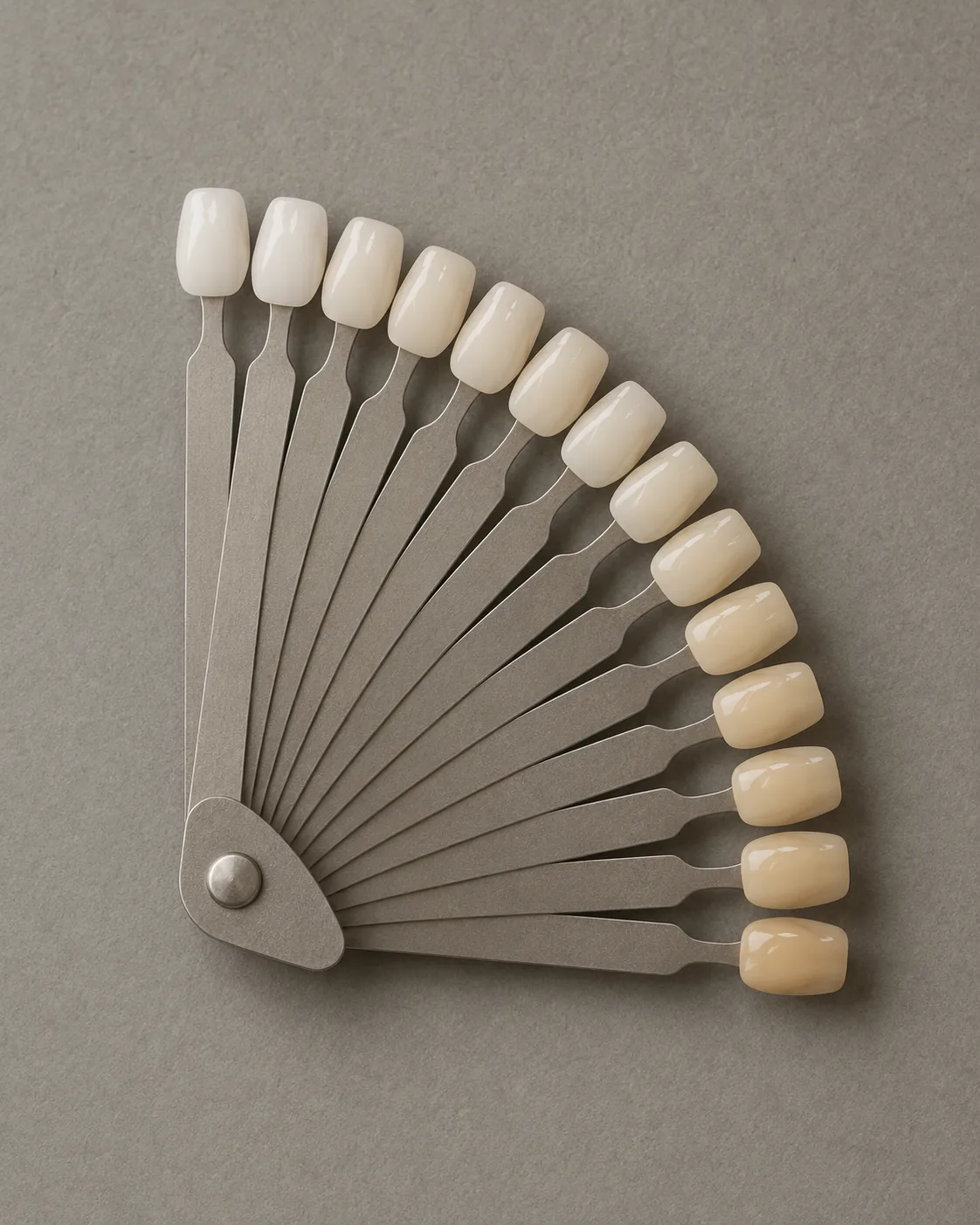
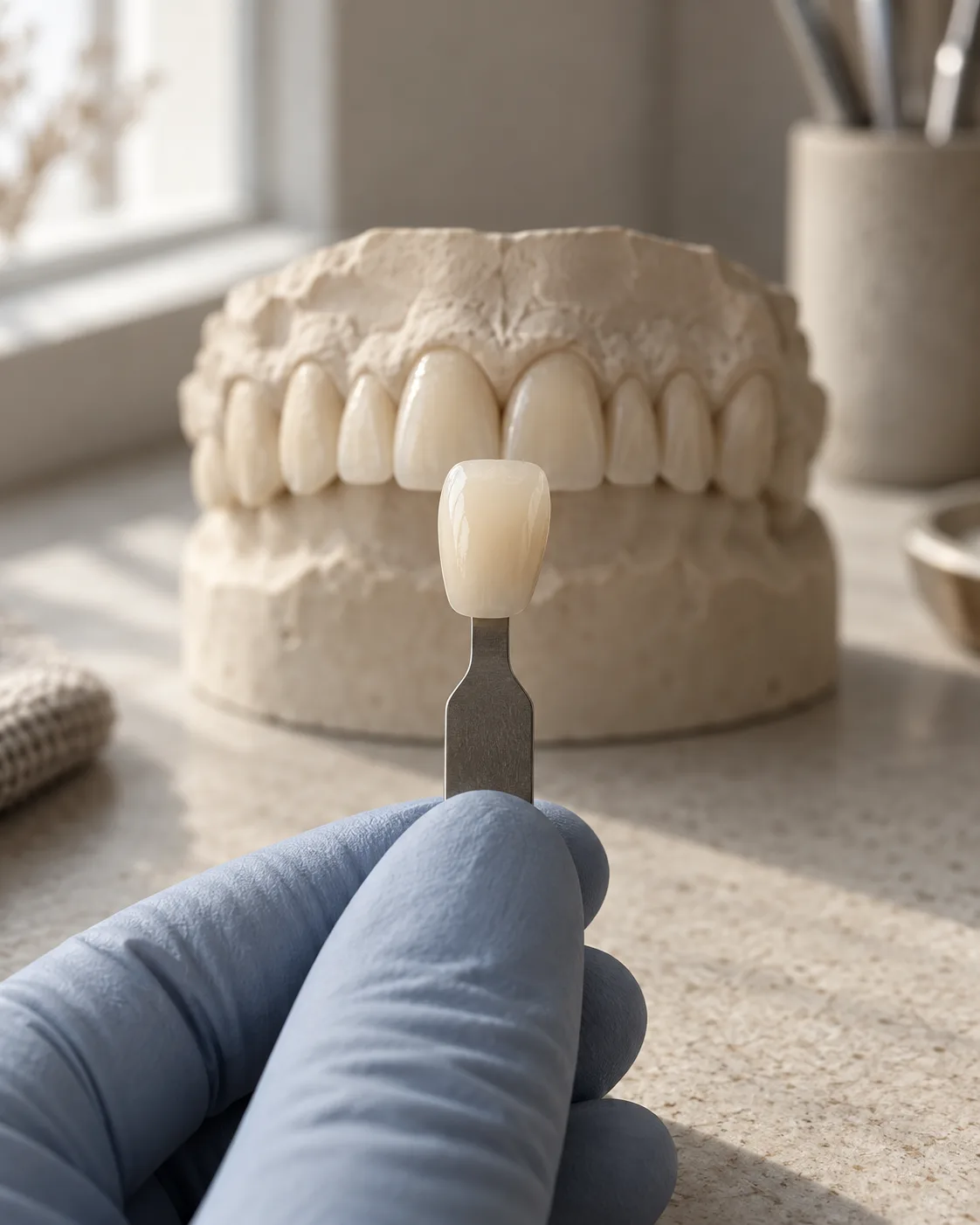
Tooth colour is chosen from a standard shade guide, the same one dentists and laboratories use worldwide. It runs from the bleached whites, BL1 to BL4, into the natural range, where B1 and A1 are the brightest shades a tooth is born with and A2 is the most common colour in adults. The tabs are held against your own teeth, your skin and the whites of your eyes in daylight, because a shade that looks right under a lamp can look wrong outside.
Bleached shadesNatural shades
BL1
BL2
BL3
BL4
B1
A1
B2
D2
A2
C1
C2
D4
A3
D3
B3
A3.5
Where most patients landThe most common natural shade
02
Choosing yours
Two or three steps brighter than your ownThat reads as fresh. Much more than that, and the teeth start to look brighter than the face around them.
Bleached shades suit a full setA single veneer or crown is matched to the teeth beside it, not to the chart, so it disappears among them.
Whiten first if you are keeping natural teethPorcelain does not change colour later. If some of your own teeth stay, they are whitened first and the shade is chosen against the result.
03
The shape
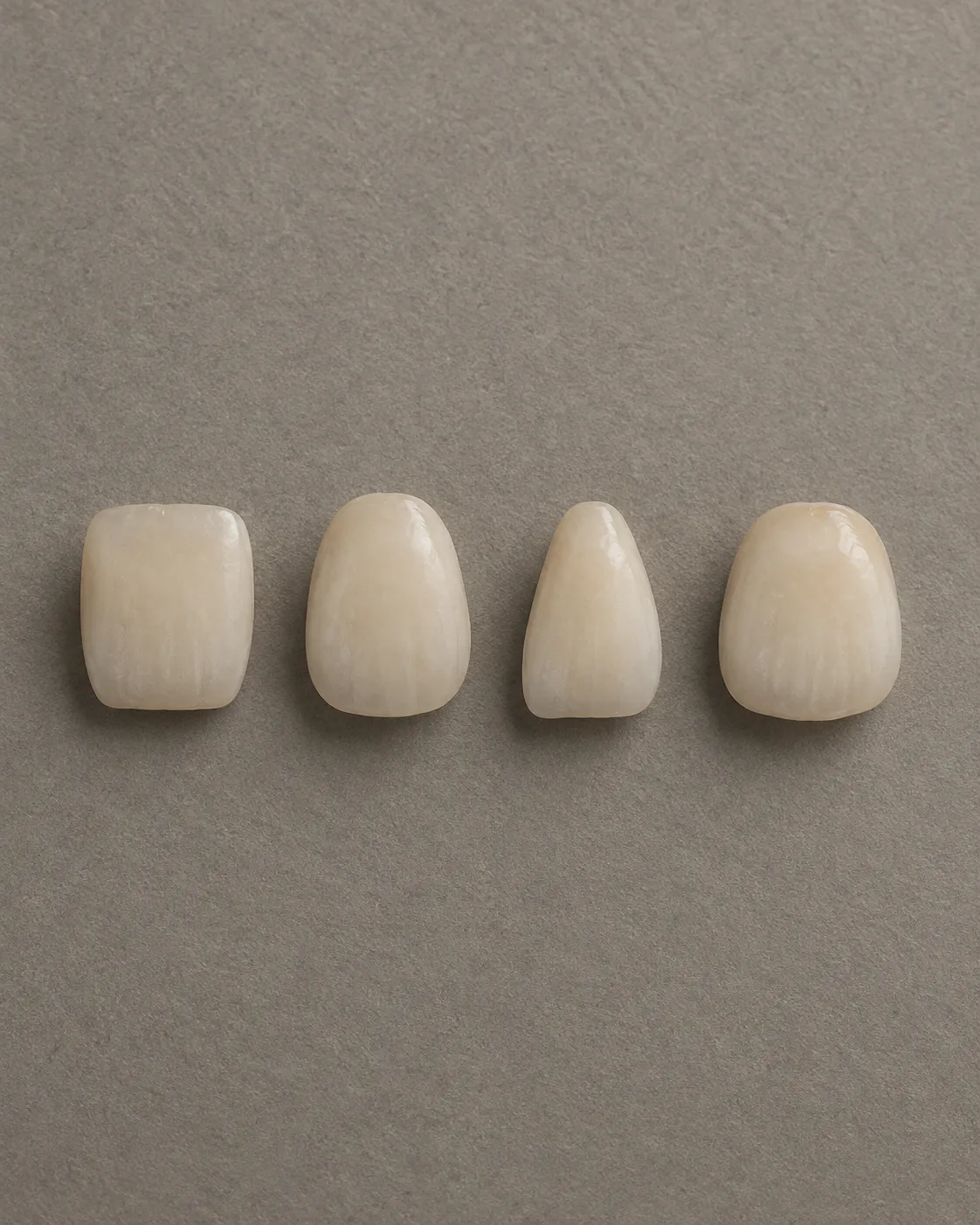
Front teeth come in four broad families, and a smile design starts by choosing the one that suits your face. Length, width and how the edges sit against your lip when you speak are set at the same time.
SquareStraight edges and flat corners. Reads as strong and assured, and suits a broad or angular face.
OvoidSoftly rounded corners on a longer body. The most natural choice for most faces, and the most often chosen.
TaperedNarrower at the gum, widening towards the edge. Delicate and youthful, and suits a slim face.
RoundedFull curves at every corner. Gentle and friendly, often chosen to soften a strong jaw.
04
The trial smile
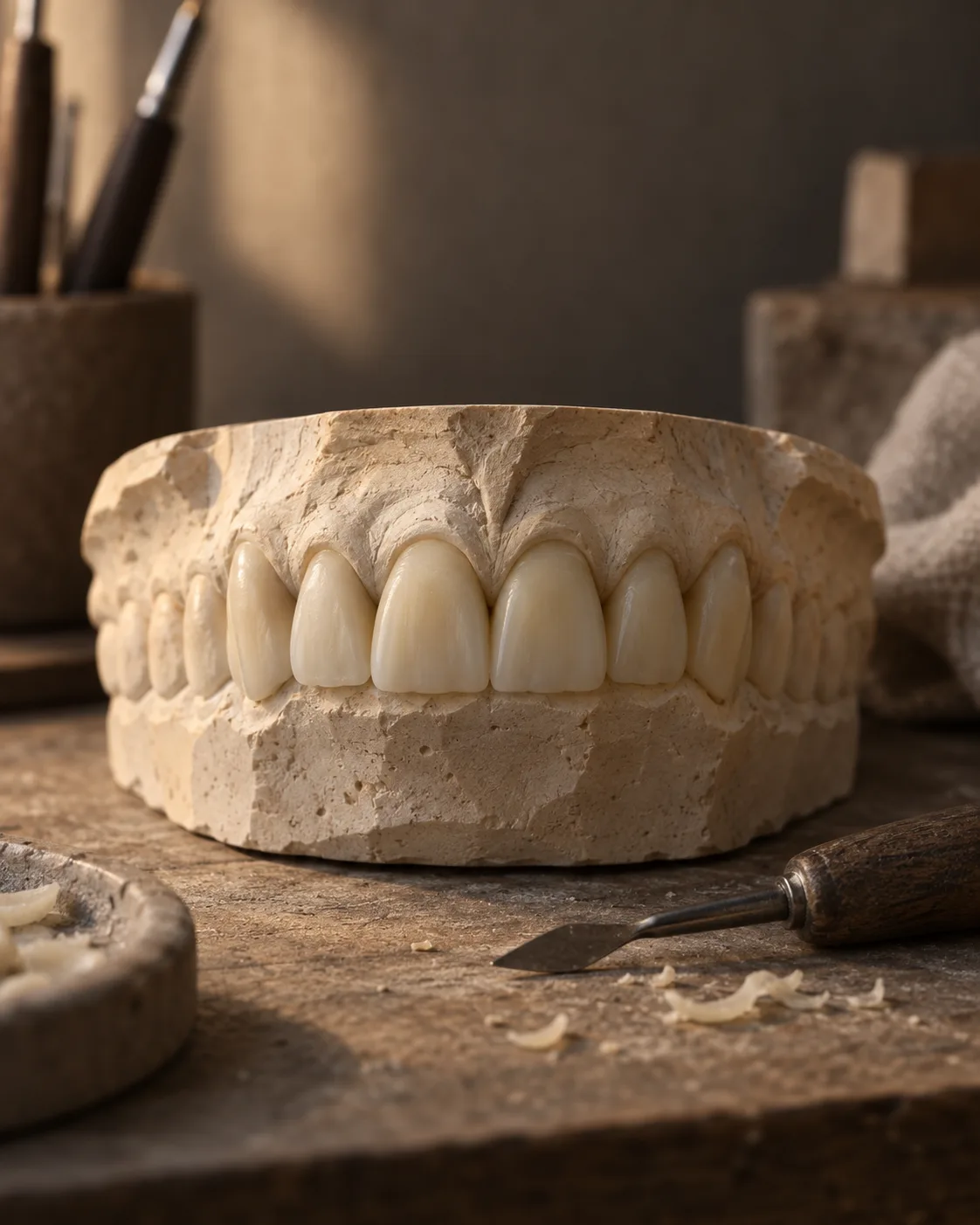
Before any tooth is prepared, the design is built in wax on a model of your teeth and then placed over your own teeth as a temporary mock-up. You see the shade, the shape and the length in your own mouth and in your own photographs. Anything you want changed is changed then, before the porcelain is made, not after.
05
The material
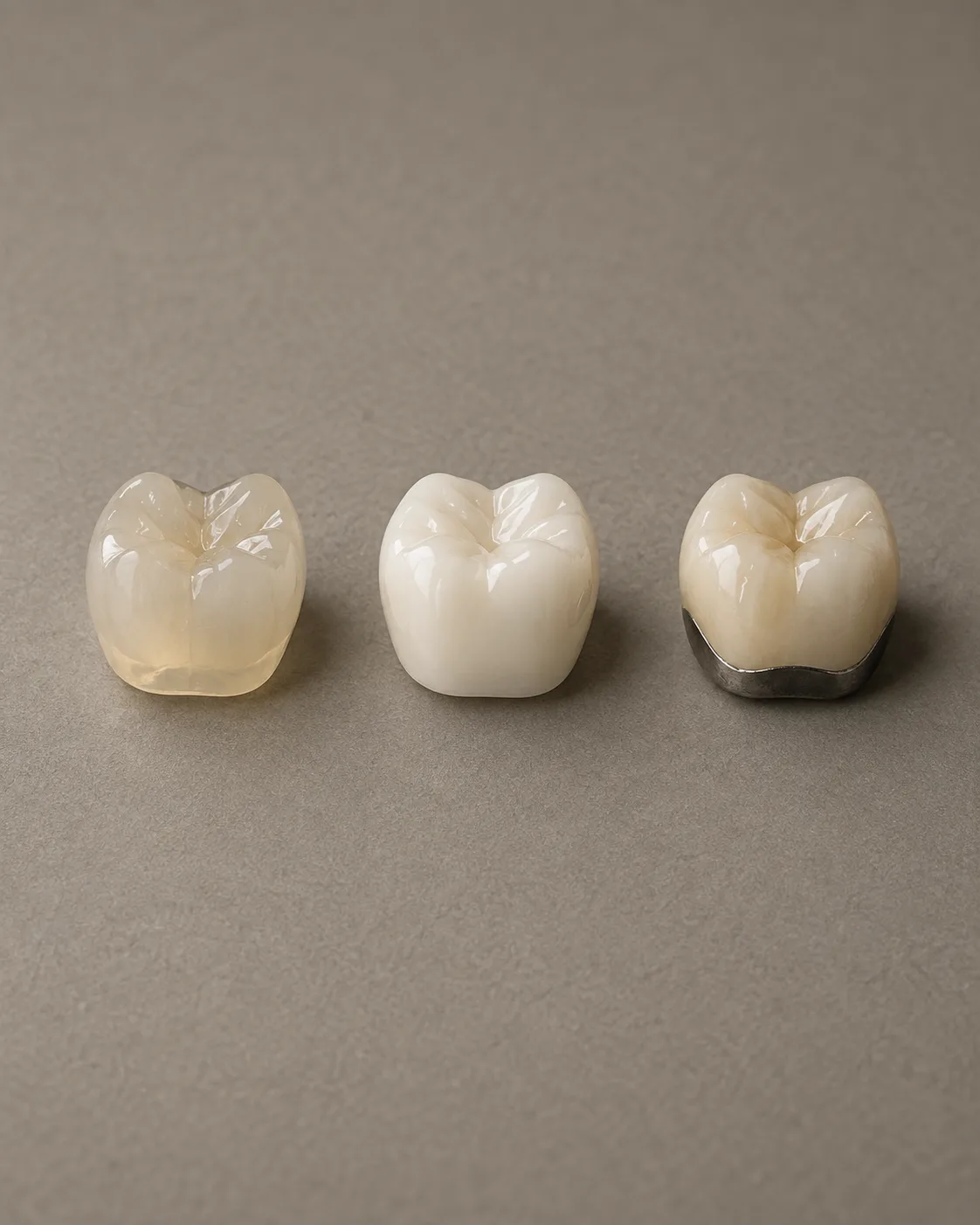
There is no best material, only the right one for each tooth. Front teeth are usually about how the light passes through; back teeth are about the bite. Your plan names the material for every tooth before you pay anything.
Material
How it looks
How strong
Best for
E-max (lithium disilicate)
The most lifelike. Light passes through it the way it passes through enamel.
Strong enough for any front tooth and for single crowns.
Veneers and front crowns, where looks matter most.
Zirconia
Bright and slightly more opaque, which is useful over a dark tooth.
The strongest ceramic there is. It does not chip.
Back teeth, bridges, full arches and heavy biters.
Layered zirconia
A zirconia core with porcelain layered on by hand for a natural surface.
The strength of zirconia underneath, the finish of porcelain on top.
Full smile makeovers that need both strength and looks.
Metal-ceramic
Porcelain over a metal cap. A dark line can show at the gum in time.
Proven over decades.
Back teeth where cost matters more than looks.
Six steps in the laboratory upstairs
How each piece is made
Every veneer and crown is made for one tooth in one mouth, in a laboratory inside the clinic building, so a try-in and an adjustment happen the same day rather than after a courier. Machines do the measuring and the cutting; people do the colour, the surface and the final check against your own teeth.
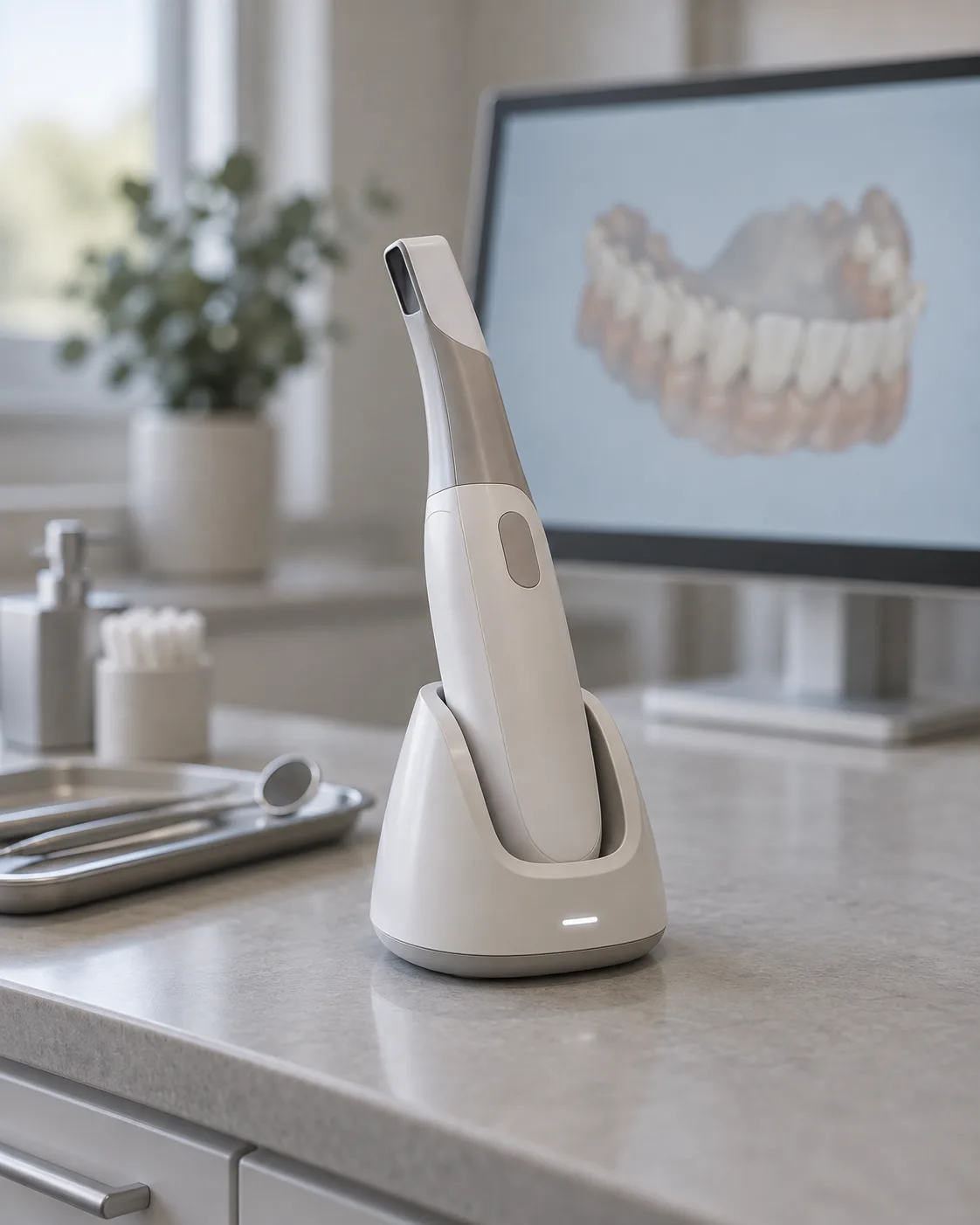
01The scanA digital scanner records your prepared teeth in a few minutes. No trays of impression putty.
02The designA technician designs each tooth on screen against your photographs and the trial smile you approved.
03MillingThe design is cut from a solid disc of zirconia, or pressed from an E-max ingot, to a tenth of a millimetre.
04LayeringPorcelain is painted on by hand in thin layers to build the depth and translucency of a real tooth.
05Firing and glazingEach piece is fired, then stained and glazed by hand and checked against your shade tab in daylight.
06The try-inEvery piece is tried in and adjusted before it is bonded. You approve it in the mirror first.
Answered plainly
Zirconia crowns: your questions answered
Still not sure? A clinician talks it through before you commit to anything.
£170 a tooth, or £200 for ZirCad Prime. UK private is around £850.
Is zirconia better than E-max?
Stronger, yes. Better looking, no - E-max is more translucent, which matters on front teeth. Zirconia for molars, E-max for the smile line is the usual split.
Will it look fake?
Not if it is stained and glazed properly and the shade is matched in daylight. Standard zirconia is more opaque than enamel, which is why ZirCad Prime exists for visible teeth.
Does zirconia wear the opposing teeth?
Modern polished zirconia is gentle on them. A rough or unpolished surface is not, which is why the glaze stage matters.
Is zirconium the same as zirconia?
In dental marketing the words are used interchangeably. Strictly, zirconium is a metal and zirconia is the ceramic made from its oxide. Your crown is the ceramic.
Can I have zirconia if I grind my teeth?
Yes - it is the best tooth-coloured option for grinders. Wear the night guard anyway at £120 a jaw.
How much tooth is removed?
Less than for a metal-based crown, because there is no core plus covering to make room for. Still meaningful, and not reversible.
What if it chips?
Covered by the guarantee. If returning is impractical we contribute up to £90 toward a local repair, agreed in writing first.
The gentlest way to start
Tell us what you need. We will price it in writing.
One message and a coordinator replies with an indicative plan and price. Send a photograph of your smile if you have one - it makes the answer better, and it is never a call unless you ask for one.
We use a few cookies to keep the site working - your language, your currency, and your
session if you are signed in. Those are always on because the site cannot work without them.
We would also like to use one that measures how people find us and pays us a commission
on travel booked through the site. That one is entirely your call.
Read the privacy policy.